
Electric guitar for beginners
How to Play Electric Guitar: From Your First Guitar to Your First Riff
From your first guitar and amp to power chords, bends and riffs, with an article at every step that takes you further.
Short answer: Learning to play electric guitar starts with a well set-up guitar, a small practice amp or headphone amp, a cable and a tuner. Then you learn the right posture, how to tune and your first power chords. You build on that with palm muting, bends and simple riffs. Twenty minutes of practice every day works better than two hours once a week.

At a glance
What you should know before you start
Without an amp you hear very little
Pickups turn the vibration of the strings into a signal. An amp (or headphone amp) makes it audible.
A short list of gear
Guitar, amp, instrument cable, tuner, picks and a guitar strap.
Get it set up properly
Low string action makes playing much easier.
Three techniques for rock
With power chords, palm muting and bends you can already play lots of rock riffs.
The basics
What is an electric guitar?
If you want to learn electric guitar, start with the instrument itself. An electric guitar has steel strings and magnetic pickups that turn the vibration of the strings into an electrical signal.
The sound comes from the amp
A cable carries the signal to an amplifier. Without an amp, the body, which is usually solid, sounds very quiet. Through the amp, the same guitar can sound clean for pop and funk, or full and distorted for rock and metal. With the pickup selector you choose the warmer neck pickup or the brighter bridge pickup.
Electric guitar for beginners
Thinner strings, a slimmer neck and low action: pressing the strings down takes less strength. Also read is electric guitar hard to play? and electric or acoustic guitar: which is easier?
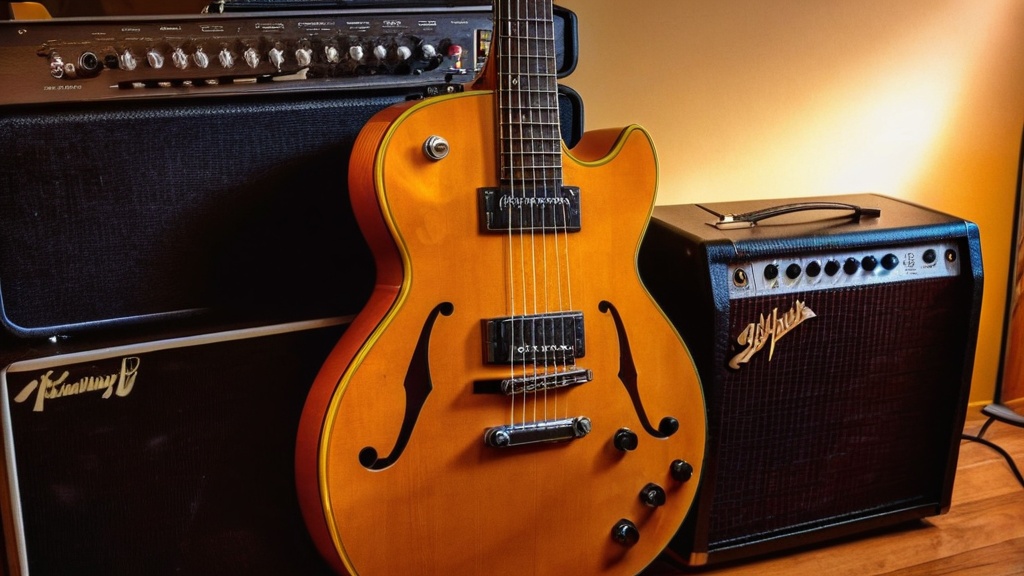
Types of electric guitars
Electric guitars differ mainly in how the body is built and what type of pickups they have. Together, these shape most of the tone.
| Type | Build | Tone | Often suits |
|---|---|---|---|
| Solid body | Solid wood, like the Stratocaster, Telecaster or Les Paul style | Tight and direct, little feedback | Rock, pop, blues, metal |
| Semi-hollow | Hollow sides with a solid center block | Warmer and a bit more open | Blues, indie, jazz, rock |
| Hollow body | Fully hollow, with f-holes | Round and warm, prone to feedback | Jazz, rockabilly |
Single coil
One coil: bright and open, but it can hum a little. A Stratocaster-style guitar usually has three.
Humbucker
Two coils that cancel the hum: fuller and more powerful. A Les Paul-style guitar usually has two.
Semi-acoustic
A (partly) hollow body sounds warmer and a bit more open than a solid body.
The type matters less than you think
Above all, choose a guitar that feels good in your hands and suits the music you want to play.
Step 1
Your first electric guitar and gear
For your first electric guitar you need an amp, a cable and a tuner besides the instrument itself. Picks, a guitar strap and spare strings complete the set.
| Item | What it’s for | What to look for |
|---|---|---|
| Electric guitar | The instrument itself | Comfortable neck, stays in tune, properly set up |
| Practice amp or headphone amp | Makes the signal audible | Small, with a headphone jack for quiet practice |
| Instrument cable (6.3 mm / 1/4 inch) | Connects the guitar and amp | Sturdy plugs, long enough to move around |
| Tuner | Tuning accurately every time | A clip-on tuner on the headstock is the most convenient |
| Picks | Striking the strings | Try a few thicknesses |
| Guitar strap | Playing standing up | Adjustable and wide enough |
| Spare strings | For when a string breaks | The same gauge as your current set |
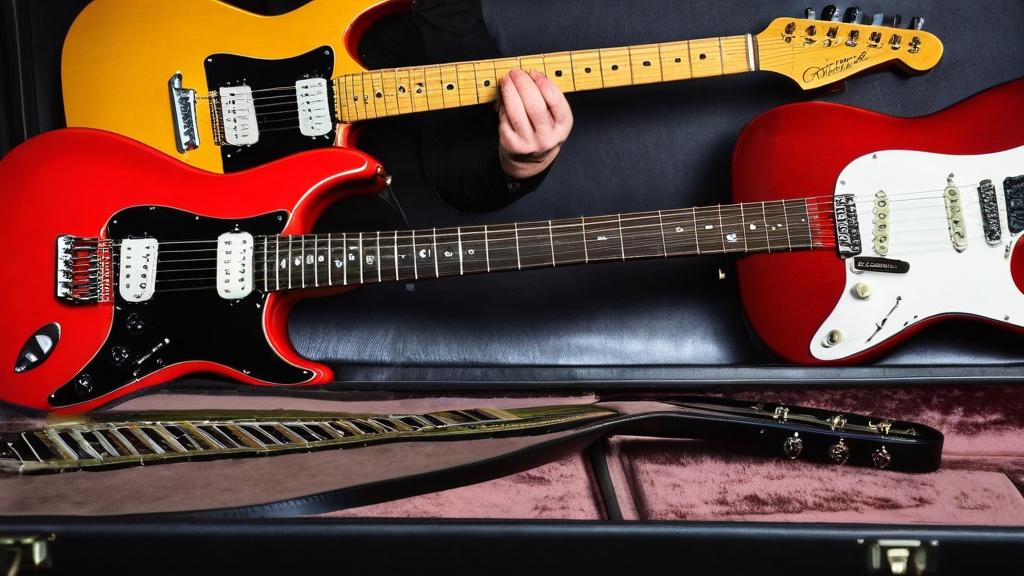
What to look for in your first guitar
- Playability: strings that are easy to press down and don’t buzz. Try it in the store if you can.
- Tuning stability: a guitar that keeps going out of tune takes the fun out of practicing.
- Setup: ask whether the store will set it up before you take it home.
A starter pack with a guitar and a small amp is a practical choice. Also read how much does a good beginner guitar cost? and an electric guitar for beginners.
Light strings
A 9-42 set plays more easily than 10-46, especially for bends.
Step 2
Setup and tuning
A well set-up, accurately tuned guitar plays more easily and sounds better, and as a beginner you notice that right away. A setup comes down to three things.
String height (action)
The closer the strings are to the fretboard, the less strength you need. Too low causes buzzing.
Neck relief
The neck needs a very slight bow. You adjust it with the truss rod.
Intonation
The 12th fret should sound exactly one octave higher than the open string. Otherwise, chords higher up the neck sound out of tune.
Have the setup done by a guitar tech or music store, especially if you don’t know yet how it should feel. See how often should you get a guitar set up?
How to tune your electric guitar
Standard tuning, from thick to thin, is: E, A, D, G, B, e. Tune every time before you start.
1
Connect a tuner
Put a clip-on tuner on the headstock or plug the guitar into a tuner.
2
Play the low E
Check which note the tuner shows.
3
Tune up to the note
Tune up from below the note until the tuner is centered. That way the string stays in tune better.
4
The other strings
Do the same for the A, D, G, B and high e strings.
5
Check everything again
Tuning changes the tension on the neck. Check all the strings one more time.
You’ll find a detailed explanation in how to tune a guitar with a tuner and in the tips for tuning with a clip-on tuner.
Step 3
How do you hold an electric guitar?
A relaxed posture prevents pain and makes your playing faster and more precise. When sitting, rest a right-handed guitar on your right thigh, with the neck angled slightly up.
Thumb behind the neck
Roughly behind your middle finger. Don’t squeeze harder than you need to.
Fingertip just behind the fret
Press with your fingertip just behind the fret. That takes the least strength.
Holding the pick
Between your thumb and the side of your index finger, with a small tip sticking out.
Loose wrist and shoulder
If you notice you’re tensing up, take a short break.
Same height standing as sitting
Adjust the strap so the guitar hangs at about the same height standing up as it sits when you’re seated. Then you don’t have to learn your technique twice.
Read more in how do you hold a guitar with good posture? For the picking hand, alternate picking is the foundation: always alternating a downstroke and an upstroke. That gives you an even rhythm and saves energy. Riffs are almost always written in tabs, so also learn how to read guitar tabs step by step.
Step 4
First techniques: power chords, palm muting and bends
These three techniques get you making music on an electric guitar fastest. You’ll find them in countless rock, punk and metal songs.
Power chords
A power chord is made of the root and the fifth, sometimes with the octave added. There’s no third, so it’s neither major nor minor, and it sounds tight with distortion. Your index finger is on the root, your ring finger two frets higher on the string below, and your pinky on the octave if you add it. Mute the other strings with your index finger.
Read the diagrams from the low E string (left) to the high e string (right); an x means you don’t strike that string. For G5, the root is on the 3rd fret. That shape is movable, so with one shape you can play any power chord. You’ll find exercises in learning power chords for rock music.
Palm muting
Rest the edge of your picking hand lightly on the strings near the bridge. They then sound muted and rhythmic.
Bends
Push the string sideways across the fretboard. A half-step bend goes up one fret, a whole-step bend two frets.
How to find the right spot for palm muting
Too far toward the neck and you hear almost no note; too far onto the bridge and your hand mutes nothing. Start with downstrokes on the low E string, then play power chords.
How to play an in-tune bend
Bend with your ring finger, with your middle and index fingers behind it for extra strength. First play the target note, for example the 9th fret of the G string, then bend from the 7th fret until you hear that same note.
Step 5
Your first riffs
A riff is a short, repeated motif that makes a song recognizable. Start with riffs built from power chords or single notes on the low strings, at a slow tempo.
1
A power chord riff
Play E5, G5, A5 and back to E5, four times each with palm muting. Let the last strum of each chord ring out.
2
A riff in E minor pentatonic
Low E string open and 3rd fret, A string open and 2nd fret, D string open and 2nd fret. Up and back, with a varied rhythm.
3
A famous riff
Many beginners choose “Smoke on the Water” by Deep Purple or “Seven Nation Army” by The White Stripes: easy to follow at a slow tempo.
You’ll find more riffs with explanations in rock guitar riffs for beginners and learning metal riffs on electric guitar. Practical playing tips are in playing electric guitar: tips and techniques.
Slow and clean first
Play a new riff slowly and without distortion first, so you can hear whether every note sounds clean. Only then turn on the overdrive.
Tone
Effects and your own sound
Effects change the signal between the guitar and the amp and add color to your playing, but they don’t replace technique. Start with the sound of your amp and add pedals later.
| Effect | What it does |
|---|---|
| Overdrive and distortion | Distortion, from lightly gritty to heavy. This is the sound of rock and metal. |
| Delay | Repeats what you play, like an echo. |
| Reverb | Ambience, as if you’re playing in a bigger room. |
| Chorus | Makes the sound wider and shimmery. |
| Wah-wah | A foot pedal that makes the tone “talk”. |
A common pedal order is: tuner, wah, overdrive or distortion, chorus, delay and reverb last. A multi-effects unit or modeling amp has everything in one box, which can be simple and affordable. Read the beginner tips for effects pedals first.
Practice quietly with headphones
If your walls are thin, practice with headphones. See practicing guitar quietly without disturbing the neighbors.
Practice
A practice routine for the first few months
Twenty to thirty minutes a day gets you further than the occasional long session, because your fingers and memory need repetition. One possible routine:
3 minutes
Tune up and gently loosen your fingers and wrists.
5 minutes
Frets 1 through 4 on every string, with alternate picking to the metronome.
5 minutes
Switch between two or three power chords without stopping.
5 minutes
Palm muting or bends, one technique at a time.
7+ minutes
A riff or song you enjoy.
How to build it up
- First weeks
Posture, tuning, single notes and your first power chords on the low strings. - After that
Moving power chords around, palm muting and simple riffs. - Next
Bends, the pentatonic scale and your first short solos.
Practice with a metronome
Only raise the tempo once you can play it without mistakes. See learning guitar with a metronome and how do you make an effective guitar practice schedule?
Go deeper
More reading about electric guitar
Learn electric guitar online for free →
Free resources to teach yourself.
Practicing hammer-ons and pull-offs →
Connecting notes without picking them.
Improvising with the pentatonic scale →
The basis of rock and blues solos.
Learning tapping on electric guitar →
A two-handed technique for later.
Playing guitar with sound effects →
Using effects creatively.
How does a looper pedal work? →
Recording your own backing.
Connecting your guitar to your computer.
How often should you change guitar strings? →
Recognize dull, out-of-tune strings.
Learn to play Metallica on guitar →
An approach to well-known metal songs.
Funky riffs for timing and picking.
Short exercises for every day.
Playing together with others.
Read more
New in Guitars, Gear and Care
-
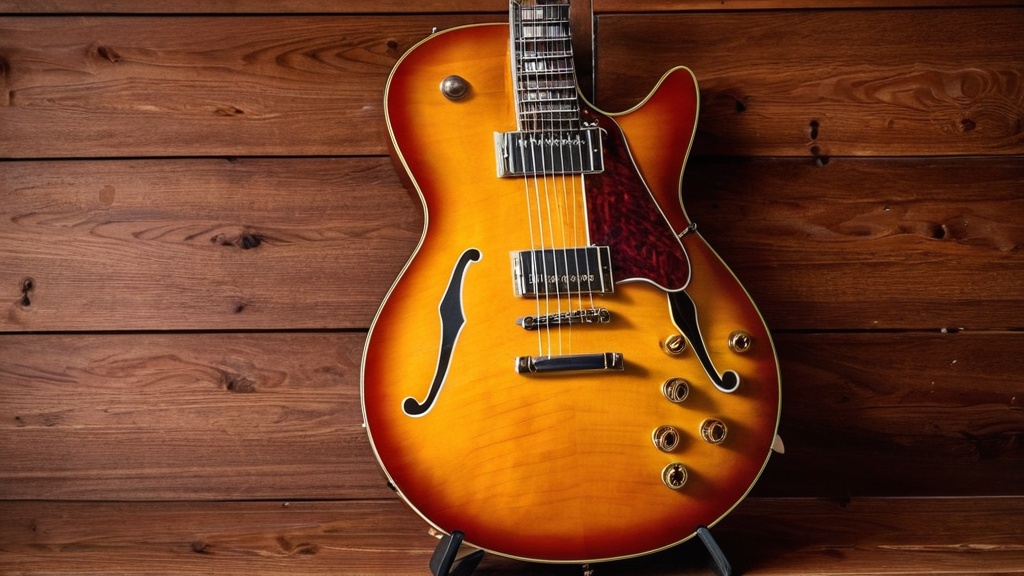
Why Choose a Hollow Body Guitar
You choose a hollow body guitar when you want a warm, open and slightly acoustic tone, especially for…
-
How Much Does a Good Beginner Guitar Cost?
How much does a good beginner guitar cost? As a rough guide, expect to pay about 100 to…
-

Playing Guitar With Sound Effects
Playing guitar with sound effects starts with three basic effects: overdrive or distortion for more power, delay for…
-
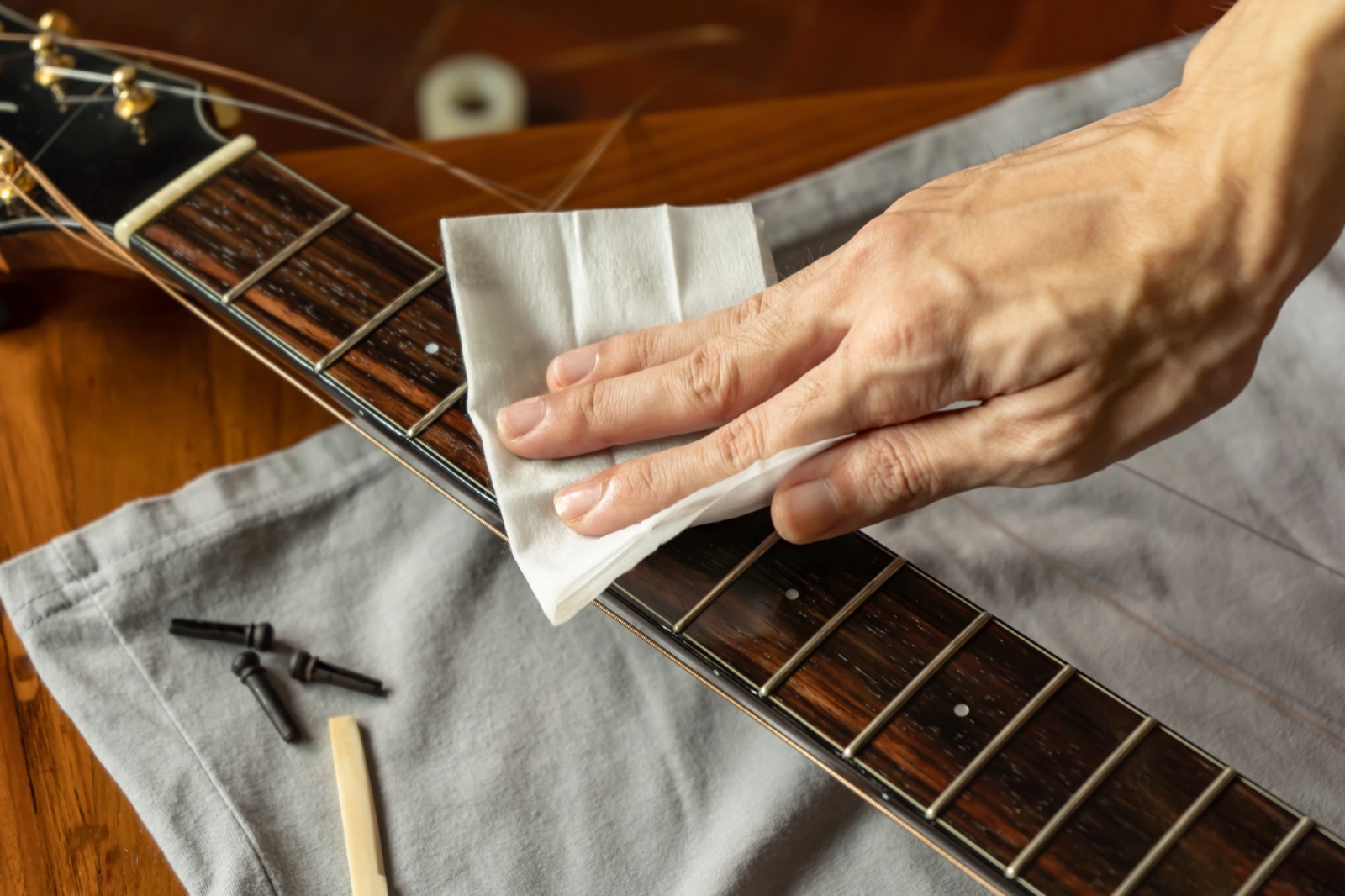
How to Clean Your Guitar Fretboard and Frets
The best way to clean your guitar’s fretboard and frets is with the strings off. Wipe away loose…
-

What to Do About Squeaky Guitar Strings
What should you do about squeaky guitar strings? Most of the time, what you hear is your fingers…
-
How to Repair Small Scratches on Your Guitar
How do you repair small scratches on your guitar? Superficial scratches in a gloss finish can be buffed…
FAQ
Frequently asked questions about learning electric guitar
Is your question not listed? Browse all articles or pick a topic in the menu.
How do I learn to play electric guitar?
Get a well set-up guitar, an amp (or headphone amp) and a tuner. Then learn posture, tuning and power chords, and build on that with palm muting, bends and riffs. Practice briefly every day with a metronome.
What is an electric guitar?
A guitar with steel strings and pickups that turn the vibration of the strings into an electrical signal. An amp makes that signal audible. Without an amp, the body, which is usually solid, sounds very quiet.
What is a good first electric guitar for a beginner?
A guitar that feels good in your hands, stays in tune and is properly set up. The model matters less than the playability.
What types of electric guitars are there?
The main types are solid body, semi-hollow and hollow body. Single-coil pickups sound bright, humbuckers sound fuller and without hum.
Is an electric guitar good for beginners?
Yes. Thinner strings and lower action make the strings easier to press down than on an acoustic guitar. You do need extra gear, and you have to learn to mute strings you don’t want to ring.
Can you play an electric guitar without an amp?
You can practice on it, but you’ll only hear a quiet, thin sound. For the real tone you need an amp, a headphone amp or an audio interface with software.
How long does it take to learn electric guitar?
That depends on how often and how purposefully you practice. With short daily sessions, you usually get to your first power chords and riffs quickly; bends and solos take more time.
Ready for your first riff?
Tune your guitar and play E5, G5 and A5 with palm muting. After that, it’s a matter of practicing a little every day.