
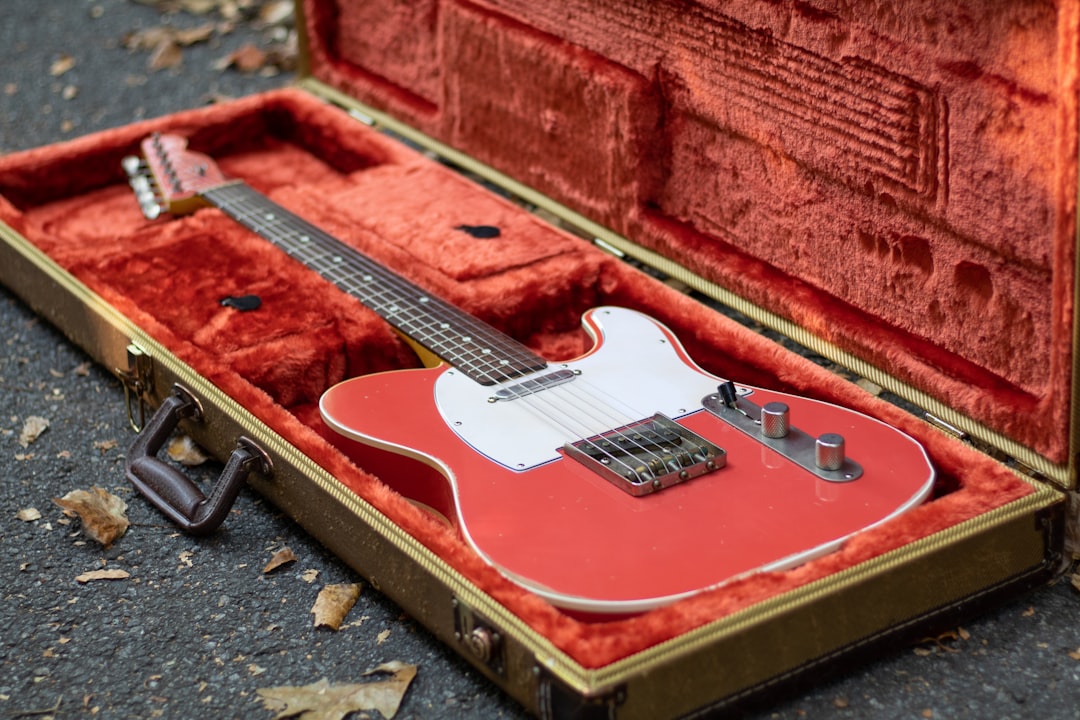

Short answer: The most important electric guitar techniques for beginners are power chords, palm muting, alternate picking, muting strings that should not ring, hammer-ons and pull-offs, slides, bends and vibrato. The best way to learn them is one at a time, slowly and with a metronome. Below you will find what to do for each technique and how to practice it.
Are you looking for the complete route, from choosing a guitar and amp to your first songs? Then start with the guide learning to play electric guitar. This article goes deeper into the techniques and the basics around them.
Summary
- Choose a guitar and amp that suit your music style and build.
- Tune your guitar before every practice session.
- Pay attention to a relaxed posture to prevent injuries.
- Learn to read tabs and chord diagrams, so you do not need sheet music.
- Practice open chords, power chords and scales.
- Play with a metronome for a tight rhythm.
- Experiment with effects pedals and amp settings.
- Play well-known songs and play together with others for inspiration.
The 8 most important electric guitar techniques
You will come across these eight techniques in almost every rock, blues and pop song on electric guitar. Learn them roughly in this order: the first four give you a tight, rhythmic sound, and the last four make your melodies and solos more expressive.
| Technique | What you do | Exercise |
|---|---|---|
| 1. Power chords | You play only the root and the fifth, on two or three strings. With distortion that sounds full and tight. | Switch every four beats between E5 (022xxx) and A5 (x022xx). Then slide the same shape up the neck, for example to G5 (355xxx). |
| 2. Palm muting | You rest the side of your picking hand lightly on the strings, close to the bridge. The strings then sound short and dull: the typical sound of rock and metal. | Pick the open low E string in eighth notes (1-and-2-and) with palm muting. Lift your hand away on beat 4 and hear the difference. |
| 3. Alternate picking | You pick alternately down and up with your pick. That is faster and more even than downstrokes alone. | On one string, play frets 5, 6, 7 and 8 in down-up-down-up. Start at a low metronome tempo and only speed up when it sounds even. |
| 4. Muting strings | You keep strings that should not ring silent, with the fingers of your fretting hand and with your picking hand. With distortion you would otherwise hear every unwanted string. | Play G5 (355xxx) and let your fingers rest loosely on the higher strings. Strum all six strings: only the power chord should sound. |
| 5. Hammer-on and pull-off | With a hammer-on you bring a finger down on a higher fret without picking again. With a pull-off you pull it off, so the lower note sounds. | On the G string: pick fret 5, hammer on fret 7 and pull off back to fret 5. Repeat this ten times in a row. |
| 6. Slides | You glide one finger from one fret to another while the string keeps ringing. | Slide on the A string from fret 5 to fret 7 and back. Keep the pressure even, otherwise the tone dies away. |
| 7. Bends | You push the string sideways, so the pitch goes up. With a full bend, the pitch sounds two frets higher. | Play fret 9 on the G string as a reference, then bend fret 7 until you hear the same pitch. Bend with your ring finger, supported by your middle and index fingers. |
| 8. Vibrato | You make a note shimmer by bending the string a tiny bit again and again and letting it go back. That brings long notes to life. | Play fret 7 on the B string and add vibrato at an even pace: start with two oscillations per beat on a slow metronome. |
Want to go deeper into a technique? Then read more about palm muting, alternate picking, practicing hammer-ons and pull-offs for solos, slides and bends on electric guitar and improving your vibrato technique.
What do you need to get started?
Besides the guitar itself, you need an amp, a guitar cable, a pick and a tuner. Still unsure between acoustic and electric? Then read which is easier: electric or acoustic guitar. An acoustic guitar works without an amp, which makes it handy for home or around a campfire. An electric guitar offers a wide range of sounds and effects and is popular in rock, metal, blues and jazz. So first think about what music you want to play. What types there are and how a guitar amp works is covered in a separate article.
Also pay attention to size and weight when choosing. For young players or people with smaller hands, a smaller model is often more comfortable. With acoustic guitars, solid wood usually sounds richer than laminated wood, but it is also more expensive. Try out different guitars in a music store: the right guitar should not only sound good, but also feel good in your hands. For home, a small practice amp for electric guitar is usually enough.
The parts of an electric guitar and tuning
An electric guitar consists of the body, the neck with frets, the strings, the pickups and controls such as volume and tone knobs and a pickup selector switch. With that switch you choose which pickup picks up the sound: the neck pickup sounds warmer, the bridge pickup brighter.
Tune your guitar before every practice session. An out-of-tune guitar makes even well-played chords sound off. The standard tuning, from thick to thin, is E-A-D-G-B-E. How to do that quickly and accurately is explained in tuning a guitar with a tuner.
The right posture and hand technique

Poor posture can lead to back pain, shoulder problems and even injuries to your hands. Sit or stand upright with relaxed shoulders, so you can move freely and your breathing is not restricted. When sitting, plant your feet firmly on the floor and let the guitar rest on your thigh, usually the right one for right-handed players. You will find more explanation in how to hold a guitar for good posture.
| Category | Tips |
|---|---|
| Posture | Keep your back straight and your shoulders relaxed while playing. |
| Hand technique | Keep your hands relaxed and play with curved fingers to produce a good tone. |
| Chair | Choose a comfortable chair at the right height to prevent back problems. |
| Wrist | Keep your wrists relaxed and in a neutral position to prevent injuries. |
For right-handed players, the left hand presses the strings onto the frets and the right hand picks or strums the strings. Keep your left hand in a natural position on the neck, with curved fingers, and use all four fingers for chords and scales. That way you move smoothly across the frets without constantly having to reposition your hand. Your right hand stays relaxed, whether you play with a pick or fingerstyle. Practice different pick and picking techniques, depending on the music style.
Check your posture regularly, especially during long practice sessions, and warm up your hands and fingers before you start. That prevents injuries and keeps your fingers supple.
Reading guitar tabs and chord diagrams

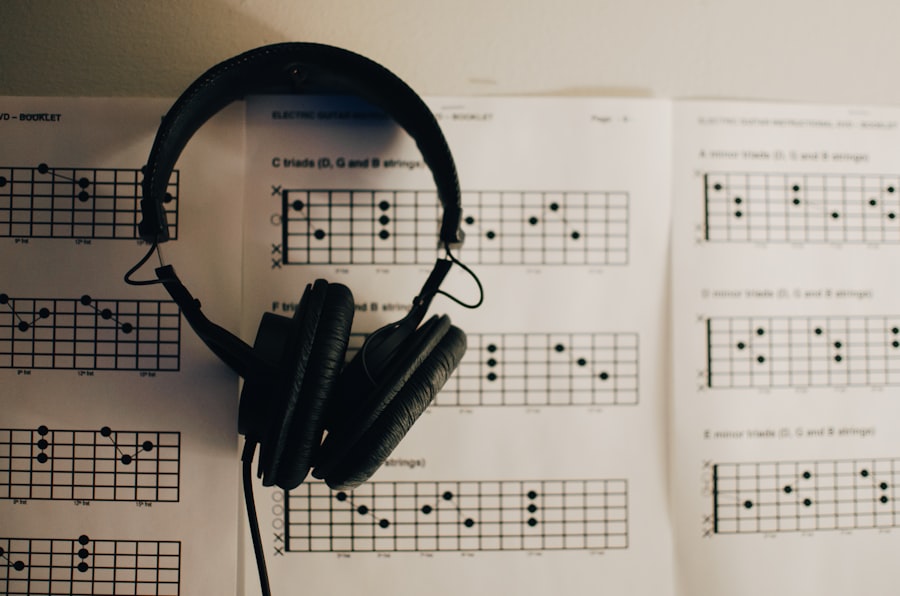
Guitar tablature, or tabs for short, is a notation designed especially for guitar. Each line stands for a string and the numbers show which fret you press. So you do not need to read sheet music to learn songs and melodies. You will find an explanation with examples in how to read guitar tabs.
Chord symbols, such as Am or G, tell you which chords appear in a song. Chord diagrams show where to place your fingers. Start with simple songs, play them slowly and listen along to the original to hear rhythm and timing. As you get better at reading tabs, you can take on more complex pieces and even make your own tabs of songs you like.
Practicing chords, power chords and scales
Start with the open chords C, G, D, A and E. They appear in countless songs and are relatively easy. Practice switching between these chords until it goes smoothly, without a pause between the changes. The numbers below run from the thick low E string to the thin high E string; x means do not strum and 0 means play open. For handy exercises to speed that up, read this article on smooth chord changes.
- C: x32010
- G: 320003
- D: xx0232
- A: x02220
- E: 022100
Typical of electric guitar are power chords: a root with the fifth above it, often played with distortion in rock and metal. You play E5 as 022xxx and A5 as x022xx. Read more about them in learning to play power chords for rock music.
Scales help you develop your technique and musical knowledge. The major and minor scales are used most; practice them in different positions on the neck. That improves your fingering and speed, and you understand better how music is built. Also play arpeggios: the notes of a chord one by one instead of all at once.
Backing tracks are recordings with accompaniment but without lead guitar. With them you can practice chords and scales over different styles and rhythms and improvise. That often gives you new ideas for your own playing.
Rhythm and timing: play with a metronome
Beginning guitarists often overlook rhythm and timing. Practice regularly with a metronome or drum track, so you play in the right meter and tempo. Start slowly and only raise the tempo when a passage goes without mistakes. In learning guitar with a metronome you can read how to approach that step by step.
Also work on strumming patterns and rhythmic variations in different music styles. Listen actively to the rhythm section in songs: you can get inspiration from there for your own rhythm playing.
How to practice a new technique

While practicing, isolate one technique at a time, so you work on it in a focused way. This is how to approach a new technique:
- First play the technique without a metronome until you know how it should sound.
- Set the metronome to a low tempo and play the exercise four times in a row without mistakes.
- Raise the tempo in small steps.
- Use the technique in a riff or song you already know.
Once you master the eight basic techniques, tapping is a logical next step: you sound notes on the neck with a finger of your picking hand. Read how to learn tapping on electric guitar. Consistency matters more than quantity: short daily practice sessions often work better than an occasional long session.
Effects and amps for your own sound
With effects pedals you give your sound character. Well-known effects are distortion, delay, reverb, chorus and wah-wah. Experiment with different pedals and amp settings to discover what suits your playing style and genre. You will find handy starting points in these beginner tips for effects pedals.
The amp determines a large part of your tone. Tube amps are known for their warm tone and dynamic response, while digital amps often offer more versatility with built-in effects and presets. Try different amps and choose solid equipment: a good amp and good-quality pedals make a big difference to your sound. By combining pedals and amps, you find your own tone step by step.
Learning to play well-known songs
Playing well-known songs keeps you motivated. Start with simple songs with only a few chords, so you make progress quickly. With more experience you can take on more complex songs with trickier chords, fingerpicking or solos. Live performances and tutorials on YouTube show how other guitarists apply their techniques.
That way you not only learn how music is built, but also develop a feel for style and expression. Do you like grunge? Then these Nirvana guitar lessons will help you get started.
Developing your own style and staying motivated

Developing your own style is an ongoing process. Listen to different music genres and bring influences from them into your playing. By combining styles, a sound emerges that sets you apart. Live music or online concerts often give extra energy and inspiration too.
Also play together with other musicians, for example in jam sessions, band rehearsals or a local music group. You pick up new ideas, learn from other playing styles and discover how to communicate with other musicians live. Do not compare yourself too much with others: keep practicing regularly, keep learning new techniques and enjoy everything the electric guitar has to offer. Also read how to improvise during a jam session.
Frequently asked questions about learning to play electric guitar
What is an electric guitar?
An electric guitar is a string instrument that is amplified electronically. Most electric guitars have a solid body without a soundbox. Pickups convert the vibrations of the strings into an electric signal, which the amp makes audible.
What do I need to learn to play electric guitar?
You need an electric guitar, a guitar amp, a guitar cable, a pick and a tuner. Learning material or an online lesson is handy too.
Do I need experience with acoustic guitar before I learn electric guitar?
No, you can start with electric guitar right away. The chords are the same. An electric guitar usually has thinner strings and lower string action, so pressing down is often easier.
Is it necessary to read music to learn to play electric guitar?
No. Reading music can be handy, but many guitarists learn with tabs, chord charts and by ear. Whether you need it, you can quickly decide with this decision guide on learning to read music for guitar.
What are the basic skills for learning to play electric guitar?
The basics are playing chords, playing melodies, understanding guitar tabs and developing a good sense of rhythm.
What are popular techniques for playing electric guitar?
The eight basic techniques are power chords, palm muting, alternate picking, muting strings, hammer-ons and pull-offs, slides, bends and vibrato. After that come techniques such as tapping and sweep picking.
What are the benefits of learning to play electric guitar?
You can play many different music styles, from rock and blues to jazz and metal. With effects pedals and amps you can also create all kinds of sounds and sound effects.
Do I have to take lessons to learn to play electric guitar?
It is not required, but lessons help you master techniques faster. There are also many tutorials for self-study, and you can learn to play electric guitar online for free just fine.
How long does it take before I can play electric guitar?
That differs per person and depends mostly on how regularly you practice. Short daily sessions work better than an occasional long session. That way your fingertips get stronger and switching between chords gets smoother and smoother.
Can I practice electric guitar without an amp?
Yes, without an amp you hear the strings softly, and that is enough to practice chords and technique. You just will not hear how your tone and effects really sound. Many practice amps have a headphone jack, so you can also play quietly with full sound.
What is palm muting on electric guitar?
With palm muting you rest the side of your picking hand lightly on the strings, close to the bridge. The strings then sound short and muted. In tabs it is marked with PM above the notes.
What is the difference between a hammer-on and a pull-off?
A hammer-on goes up: you bring a finger down on a higher fret of the same string, without picking again. A pull-off goes down: you pull a finger off the string, so a lower note sounds.




Leave a Reply