
Chord charts for beginners
Guitar Chords for Beginners: All the Basic Chords with Diagrams
All the basic chords with a diagram and fingering, the order to learn them in and which chords go together.
Short answer: The basic guitar chords for beginners are E, Em, A, Am, D, Dm, C and G. You play these open guitar chords with two or three fingers in the first three frets. Start with Em and E, then add A, Am and D, and learn G and C last. With three or four chords you can already play many well-known songs.
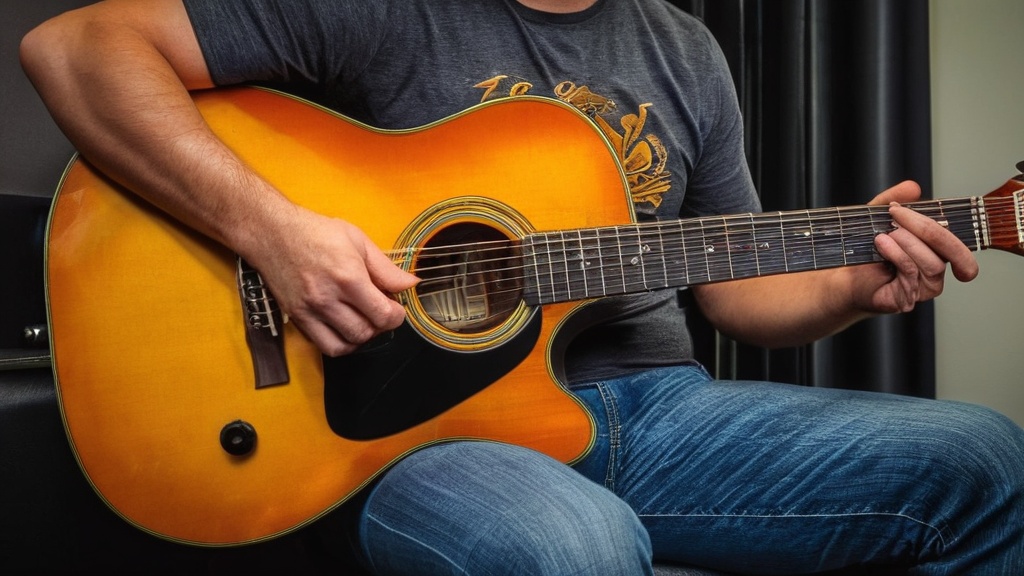
At a glance
What to know about guitar chords
How to read 022000
From low E to high e: the number is the fret, 0 is open, and you don’t play an x.
Start with Em
E minor (022000) is the easiest first chord: two fingers, and all six strings ring.
One finger apart
The difference between major and minor is often one finger, as with E (022100) and Em (022000).
One key
Chords that fit together come from the same key, like G, D, Em and C.
Overview
The basic chords with fingerings
The most important guitar chords for beginners are the open chords E, Em, A, Am, D, Dm, C and G. They’re called open chords because one or more strings always ring open.
| Chord | Fingers | Tip |
|---|---|---|
| Em | Middle finger A string fret 2, ring finger D string fret 2 | Easiest start |
| E | Like Em, plus index finger G string fret 1 | Shape of Am, one string lower |
| Am | Index finger B string fret 1, middle finger D string fret 2, ring finger G string fret 2 | Don’t play the low E string |
| A | Index, middle and ring finger side by side on fret 2 (D, G and B) | Tight: angle your fingers |
| D | Index finger G string fret 2, middle finger high e fret 2, ring finger B string fret 3 | Four thinnest strings |
| Dm | Index finger high e fret 1, middle finger G string fret 2, ring finger B string fret 3 | Sounds sadder than D |
| C | Ring finger A string fret 3, middle finger D string fret 2, index finger B string fret 1 | Similar to Am |
| G | Middle finger low E fret 3, index finger A string fret 2, ring finger high e fret 3 | Biggest stretch: open up your hand |
Does a string sound muted or buzz?
Then another finger is touching that string. Keep your fingertips upright and press just behind the fret. To practice on your phone, try apps to learn guitar chords. More explanation is in learning guitar with chords.
Notation
How do you read a chord chart?
A chord chart shows which strings and frets you put your fingers on: as numbers like 022000 or as a drawn diagram.
A number
The fret where you press that string. Each number stands for one string, from thickest to thinnest: E-A-D-G-B-e.
0 or a circle
The string rings open. In a drawn diagram, there’s an o above the string.
x or a cross
You don’t play that string, or you mute it. In a diagram, there’s an x above it.
Example: C = x32010
You don’t play the low E, you press the A string at fret 3 and the D string at fret 2, the G string is open, the B string is at fret 1 and the high e rings open.
The drawn diagram
A diagram is the neck stood upright: vertical lines are strings, horizontal lines are frets. Dots show your fingers, sometimes with a number from 1 (index finger) to 4 (pinky).
Tablature looks similar, but it’s a different notation. Read about the difference in how to read guitar tabs.
Learning path
In what order should you learn chords?
Learn chords from easy to hard. That way you can play something after every step, and you gradually build strength and stretch in your hand.
1
Em and E
Two and three fingers, all strings ring.
2
Am and A
Am is the same shape as E, moved over one string. A needs three fingers on one fret.
3
D
With D, A and E (or A7 and E7) you can already play along with many songs in the key of A or D.
4
G and C
Together with D and Em, the best-known combination in pop music.
5
Dm and seventh chords
E7, A7 and D7 are often even easier than their regular versions.
6
Fmaj7, then F
Start with Fmaj7 and then work toward the full barre chord.
Take your time with each chord
Only learn a new chord once the previous one sounds clean. Sore fingertips are normal at the start; you’ll find tips in preventing sore fingers. If the pain persists, have it checked by your doctor or a physical therapist. If you have small hands, read playing guitar with small hands.
The best start
E chord and E minor: the best start
The E chord (022100) and E minor (022000) are the best first chords: you play them with two or three fingers and strum all six strings.

Em chord on guitar
Put your middle finger on fret 2 of the A string and your ring finger on fret 2 of the D string. The other strings stay open. Strum all six strings and listen to whether each string rings clearly.
E chord on guitar
Keep the Em shape and add your index finger on fret 1 of the G string. That one note makes the chord sound brighter. A full explanation with common mistakes is in learning your first chord: E major for beginners.
Switching exercise
Alternate four beats of Em and four beats of E, lifting only your index finger up and down. Then go from E to Am: it’s the same shape, but you move all three fingers one string toward the high e.
Chord types
What’s the difference between major, minor and seventh chords?
Major sounds bright and cheerful, minor sounds sadder, and a seventh chord has tension that wants to move to the next chord. On guitar, the difference is often one finger.
| Major | Minor | Seventh | What changes? |
|---|---|---|---|
| E = 022100 | Em = 022000 | E7 = 020100 | Minor: G string open. Seventh: D string open. |
| A = x02220 | Am = x02210 | A7 = x02020 | Minor: B string at fret 1. Seventh: G string open. |
| D = xx0232 | Dm = xx0231 | D7 = xx0212 | Minor: high e at fret 1. Seventh: B string at fret 1. |
A capital letter (E) is major, an m after it (Em) is minor and a 7 (E7) is a seventh chord. You hear seventh chords in blues and country, and as a transition: D7 naturally leads to G, A7 to D and E7 to A.
Why that works is explained in music theory for guitarists and what harmony is in guitar music. Want to go beyond the basics? Then jazz chords, with their maj7 and m7 sounds, are a logical next step.
Barre
Harder chords: F, Eb and barre chords
In their standard shape, you play F and Eb as barre chords: your index finger presses down several strings at once. Luckily there are easier versions for beginners.
F without a barre
Fmaj7 (xx3210) sounds a little softer than F and works in most songs with F. The full F (133211) is the E shape, one fret higher.
Eb chord (E flat)
Eb is E flat and has no open shape. The easiest version is xx1343, on the four thinnest strings.
Eb with a capo
Put a capo on fret 1 and play the D shape, or a capo on fret 3 and play the C shape. Both sound as Eb.
If you really want to master barre chords, follow the steps in barre chords for beginners, with the E shape, the A shape and exercises for strength. With the same two shapes you also play Bm (x24432) and any other chord on the neck. You can build extra finger strength with the exercises in building finger strength.
Progressions
Which chords go together?
Chords go together when they come from the same key. In every major key, chords I, IV and V are major and chord vi is minor. With those four you can play most pop and campfire songs.
| Key | I | IV | V | vi | For beginners |
|---|---|---|---|---|---|
| G | G | C | D | Em | All four are open chords: the easiest key |
| C | C | F | G | Am | Play F as Fmaj7 at first |
| D | D | G | A | Bm | Bm is a barre chord |
| A | A | D | E | F#m | A, D and E are open, F#m is a barre chord |
| E | E | A | B | C#m | E and A are open, B and C#m are barre chords |
A series of chords in a row is called a chord progression. The explanation for each key is in which guitar chords go together. These are the progressions you’ll come across most:
I-IV-V
G-C-D or A-D-E: the basis of rock ‘n’ roll, country and folk.
I-V-vi-IV
G-D-Em-C or C-G-Am-F: the best-known progression in pop music.
vi-IV-I-V
Em-C-G-D: the same four, but more melancholic.
I-vi-IV-V
G-Em-C-D: the classic from the 1950s.
Andalusian
Am-G-F-E: descending chords with a Spanish sound.
12-bar blues
In A: four bars of A7, two bars of D7, two bars of A7, then E7, D7, A7 and E7, one bar each.
The theory behind it is in understanding chord progressions, and the Andalusian progression in Spanish chord progressions. If you write music yourself, writing songs with 4 chords and making chord charts for your own songs will help you further.
Chords by style
Songs with three chords
The most commonly used chord shapes, put to use in songs.
Practice
How do you change chords faster?
You change chords faster by practicing two chords at a time and leaving fingers that stay in the same place where they are. Only then do you put the changes into a song.
1
Practice each chord on its own
Pick the strings one at a time and check that everything rings clearly.
2
Choose one change
For example Em to G or Am to C. Switch back and forth for a minute.
3
Use anchor fingers
From Am to C, your index and middle fingers stay put and you only move your ring finger.
4
Move as a group
From E to Am, keep the shape and slide your whole hand over one string.
5
Play to a metronome
Four strums per chord at a relaxed tempo; only speed up once it works every time.
6
Let go in time
Lift your fingers off the old chord on the last beat. That keeps you in time.
You’ll find more techniques in changing guitar chords faster and in the finger exercises for smooth chord changes. Learn to work with a click in learning guitar with a metronome.
Strumming and rhythm
Start with four downstrokes per bar and count out loud. Once that works, try down, down-up, up-down-up.
Playing string by string
Playing chords one string at a time instead of strumming.
Practice with real songs
With G, C and D, or A, D and E, you can already play a lot of songs. Choose a relaxed tempo and use a capo if it doesn’t suit your voice.
Go deeper
Further reading
Rock classics with beginner chords →
Well-known rock songs with chords you can already play.
Combining chords and vocal lines →
Choosing chords that fit a melody.
Singing while playing guitar →
Playing chords while you sing.
Moving from one key to another within a song.
The scales that the chords of a key come from.
Theory without mechanical playing.
Open chords and rhythms from folk music.
Chord charts for worship songs →
Common progressions with a capo.
Keeping your chords in shape every day.
Loosening up your fingers before you play.
Read more
New in Chords and music theory
-

Ear Training Exercises With Guitar
Ear training exercises on guitar teach you to hear what you play: the difference between major and minor,…
-
Exercise to Make Your Barre Chords Stronger
You make a barre chord stronger by pressing smarter, not harder. Place your index finger right behind the…
-
Finger Exercises for Smooth Chord Changes
With targeted finger exercises for smooth chord changes, you train your fingers to move from one chord to…
-

What Is Harmony in Guitar Music?
What is harmony in guitar music? Harmony is the sound of several notes played at the same time,…
-

Learning to Modulate on Guitar
Learning to modulate on guitar comes down to one skill: switching smoothly to another key in the middle…
-
Understanding Chord Progressions on Guitar
A chord progression is the order in which chords follow one another in a song. The fastest way…
FAQ
Frequently asked questions about guitar chords
Is your question not listed? Browse all articles or pick a topic in the menu.
Which basic chords should you learn first on guitar?
Start with E minor and E major, because you play them with two or three fingers and strum all the strings. Then learn A, Am and D, followed by G and C.
How do you play the E chord on guitar?
You play the E chord as 022100: middle finger on fret 2 of the A string, ring finger on fret 2 of the D string and index finger on fret 1 of the G string. You strum all six strings.
How do you play the Em chord on guitar?
You play E minor as 022000: middle finger on fret 2 of the A string and ring finger on fret 2 of the D string. The other four strings ring open.
How do you play the A chord on guitar?
You play the A chord as x02220: index, middle and ring finger sit side by side on fret 2 of the D, G and B strings. Too cramped? Then play A7 (x02020) as an in-between step.
How do you play the Eb chord on guitar?
Eb (E flat) has no open shape. The easiest version is xx1343 on the four thinnest strings. You can also put a capo on fret 1 and play the D shape, or put the capo on fret 3 and play the C shape.
Which chords are used most in pop music?
The chords on the first, fourth, fifth and sixth degrees of a key. In G those are G, C, D and Em; in C they are C, F, G and Am. The I-V-vi-IV order, for example G-D-Em-C, is the best-known pop progression.
How do you learn guitar with chords?
First learn a few open chords until they ring clearly, then practice one change between two chords at a time. Start slowly with a metronome and put the chords into a song as soon as you can.
Which chords go together on guitar?
Chords go together when they come from the same key. In G, for example, G, C, D, Em and Am work well together; in A, these include A, D and E.
Grab your guitar
Start with Em and E, practice one change at a time and put your chords into a song you love as soon as you can.