
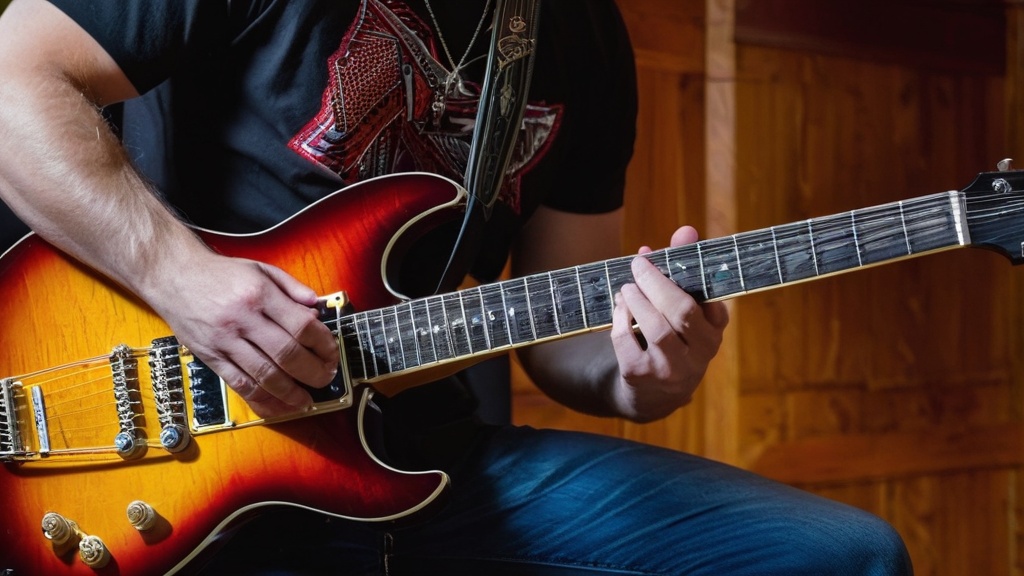

Learning tapping on an electric guitar starts with one simple pattern on a single string. You tap a note onto the fretboard with a finger of your picking hand and then pull that finger off the string, so that a note your fretting hand is already holding sounds. That way you play fast, flowing runs that are hard to play with a pick alone. Below you can read how the technique works, which exercise to start with and which mistakes to avoid.
Tapping on electric guitar is a technique in which you tap on the neck of the guitar with your fingers to produce notes, instead of only picking or plucking the strings. It lets you play melodies and riffs quickly and smoothly, which makes it a popular choice among guitarists looking for a unique sound and playing style. Tapping can express both simple and complex musical ideas, and it offers a wide range of possibilities for creativity and expression.
In tapping you usually use your right hand to tap on the strings, while your left hand presses down the notes on the neck. This gives a smooth transition between notes and makes it possible to play fast arpeggios and melodies that would otherwise be hard to reach. The technique can range from simple patterns to intricate solos, depending on your skill level and musical preferences.
It is a versatile technique that can be used in many styles of music, from rock and metal to jazz and fusion.
Summary
- Tapping on electric guitar is a playing technique in which the guitarist taps on the neck of the guitar with both hands to produce notes.
- Tapping on electric guitar existed before, but it only became truly popular in the late 1970s thanks to Eddie Van Halen.
- The technique behind tapping on electric guitar requires coordination between both hands and control of timing and force.
- Well-known songs with tapping include “Eruption” by Van Halen and “Midnight” by Joe Satriani.
- Tips for learning tapping on electric guitar include starting with simple exercises and using a metronome to improve your timing.
The history of tapping on electric guitar
Tapping existed before it became known in rock. In the 1950s and 1960s, a few guitarists were already experimenting with notes they tapped on the fretboard with their picking hand, and in the early 1970s Steve Hackett of Genesis, among others, used the technique in his solos. For a long time it remained a fringe technique.
In the late 1970s, Eddie Van Halen made tapping world famous with “Eruption,” the guitar piece on Van Halen’s first album from 1978. Van Halen’s use of tapping inspired a whole generation of guitarists and made it an essential part of rock music. His influence is still felt in the music of many artists today, who use tapping to create their own style and sound. Since then the technique has spread to different genres and keeps evolving as musicians find new ways to apply it.
The technique behind tapping on electric guitar
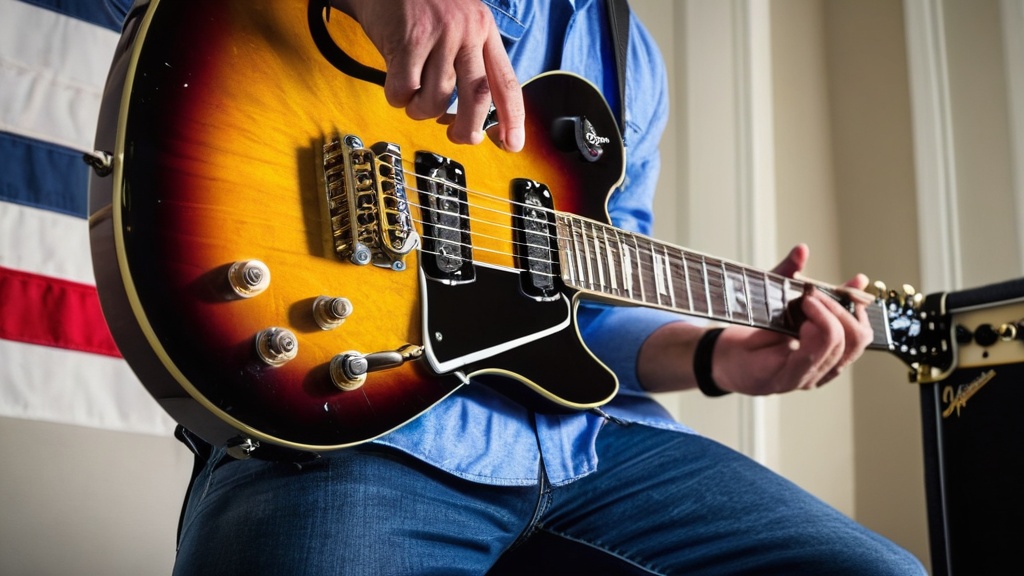
The basis of tapping is using your fingers to play notes on the neck of the guitar. To get started with tapping, you first need to get comfortable with the right finger placement and technique. It is important to let your fingers rest lightly on the strings, so that you get a clear tone without unwanted noise.
Start by choosing a note on the neck with your left hand, and then use your right hand to tap on the same string, usually with your index finger or middle finger. A common exercise is to play a series of notes by alternating between your left and right hand. This helps you improve the coordination between both hands and makes it easier to move smoothly across the neck.
As you get more comfortable with the technique, you can start adding bends, slides and other embellishments to make your playing more interesting. It is also useful to explore different positions on the neck, so that you can experiment with different sounds and melodies.
Examples of well-known songs with tapping
There are countless songs in which tapping plays a prominent role, and these songs are often a source of inspiration for guitarists who want to learn the technique. One of the most iconic examples is “Eruption” by Eddie Van Halen, which is considered a masterpiece of guitar technique. In this piece Van Halen combines tapping with fast licks and the tremolo arm, resulting in an explosive, energetic solo that still influences many guitarists.
If you want to hear how far you can take the technique, listen to “Midnight” by Joe Satriani, which is largely tapped with two hands. Jazz guitarist Stanley Jordan also plays entire pieces by tapping on the neck with both hands, using his touch technique. Examples like these show that tapping is not just an effect for fast solos, but also a way to play melody and accompaniment at the same time.
Basic exercise: tapping on the B string
Place your index finger on the 5th fret of the B string and keep your ring finger or pinky ready for the 8th fret. With a finger of your picking hand, tap firmly on the 12th fret and pull that finger off the string with a small downward motion, so that the 5th fret sounds (a pull-off). Then hammer on the 8th fret and tap the 12th fret again. Repeat that pattern in triplets: tap, 5, 8. The notes B, E and G together form an E minor chord, so the exercise sounds musical right away. Mute the other strings with the heel of your picking hand and the free fingers of your fretting hand. If the pull-offs still feel stiff, first practice hammer-ons and pull-offs without tapping.
Tips for learning tapping on electric guitar
If you want to start learning tapping on electric guitar, a few important tips can help you make progress faster. First, it is essential to be patient and give yourself time to master the technique. Start with simple exercises and gradually build up to more complex patterns as you gain confidence in your skills.
It is better to play slowly and accurately than fast and sloppy. It is also useful to practice regularly with a metronome. This helps you improve your timing and rhythm, which is crucial when playing fast passages with tapping. You will find a concrete plan for raising your tempo in practicing fast solos with a metronome.
Also try different styles and genres to diversify your playing technique. By challenging yourself with new pieces of music, you not only develop your skills but also discover new ways to apply tapping in your own playing. Set your amp to a light overdrive: tapped notes sound fuller that way. If you are still looking for a suitable amp, see the best practice amps for electric guitar. If you are not sure yet what gain and the tone knobs do, take a look at this explanation of the guitar amp.
Common mistakes when learning tapping on electric guitar
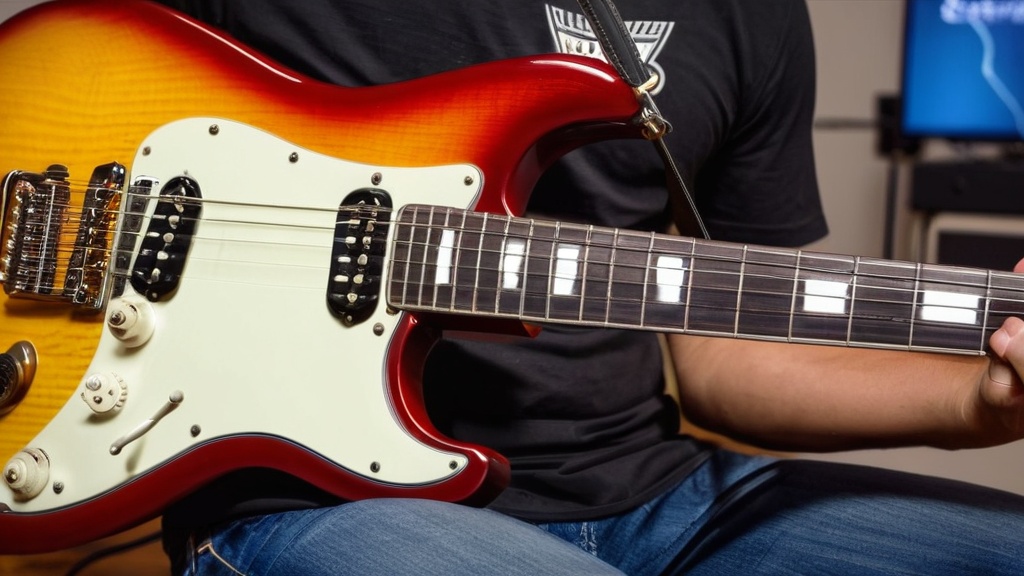
When learning tapping, many guitarists make a few common mistakes that can hold back their progress. One of them is ignoring proper finger placement and technique. It is important to make sure your fingers are positioned well on the strings, so that you can produce clear tones without unwanted noise.
Take the time to work on your finger technique before you try to play complex licks or solos. Another common mistake is trying to progress too fast. Many beginners want to be able to play impressive solos right away without mastering the basics first. Your fretting hand above all needs to be strong enough for clear hammer-ons; you will find exercises for that in building finger strength for guitar playing.
This can lead to frustration and loss of motivation. It is crucial to work step by step and not put too much pressure on yourself. Focus on small wins and celebrate your progress, however small.
The importance of practice and perseverance when learning tapping
Practice is the key to success when learning tapping on electric guitar. It takes time and dedication to master this technique, but with consistent practice you will notice your skills steadily improving. Try to spend a few minutes on tapping every day, even if it is only a short practice session.
Regular practice not only helps you build muscle memory, but also strengthens your confidence as a guitarist. Perseverance is also crucial during this learning process. There will be moments when you get frustrated or feel like you are not making progress.
It is important not to see these obstacles as insurmountable, but as chances to challenge yourself and come back stronger. Stay motivated by setting goals for yourself and challenging yourself with new techniques or songs you want to learn.
Integrating tapping into your own guitar playing
Once you are comfortable with tapping, it is time to integrate the technique into your own guitar playing. Start by experimenting with simple licks or riffs that include tapping and try adding them to existing songs you play. This not only helps you develop your own style, but also helps you understand how tapping can be used in different musical contexts.
You can also try writing original melodies or solos in which tapping plays a central role. This not only stimulates your creativity, but also helps you develop a unique voice as a guitarist. Don’t forget that making music should above all be fun, so don’t be afraid to step off the beaten path and try out new ideas.
By working tapping into your playing this way, you will notice that it is not just a technique, but also a valuable tool for musical expression.
If you want to go further after this basic introduction, learning tapping solos on guitar shows how to work the technique into complete solos. Other techniques that go well with tapping are legato and sweep picking, because they also involve playing fast runs with few picked notes.
Frequently asked questions about tapping
What is tapping on electric guitar?
Tapping is a technique in which the guitarist taps on the strings with both hands to produce notes, instead of striking the strings with a pick or fingers.
Which hands are used when learning tapping on electric guitar?
Both the left and the right hand are used when learning tapping on electric guitar. The left hand frets the notes on the neck of the guitar, while the right hand taps on the strings.
Is tapping hard to learn on electric guitar?
Tapping can be hard to learn at first, because it requires coordination and timing between both hands. With regular practice and patience, though, it can be learned.
Which techniques are important when learning tapping on electric guitar?
When learning tapping on electric guitar, it is important to pay attention to the right hand position, to control the force of the tap and to develop good timing.
Are there specific exercises that help with learning tapping on electric guitar?
Yes, there are specific exercises that can help you develop the tapping technique, such as practicing simple patterns and slowly building up speed and complexity.
Which finger do you tap with?
Many guitarists tap with their middle finger, so they can keep holding the pick between thumb and index finger. Eddie Van Halen tapped with his index finger instead and then held the pick between his thumb and middle finger. Choose whatever lets you switch fastest between tapping and picking.
Do you need distortion for tapping?
No, but with some gain or a compressor, tapped notes sound fuller and sustain longer. On a clean sound you have to tap harder and more precisely. So start with a light overdrive and practice clean later too, to check your technique.





Leave a Reply