

The best practice amp for electric guitar is a compact model of roughly 5 to 20 watts that sounds good at low volume and has a headphone jack. If you live in a small space or an apartment, a mini amp or a 5 to 10 watt model is often enough. Well-known choices include the Fender Champion 20, Boss Katana Mini, Blackstar Fly 3, Roland Micro Cube and Vox Pathfinder 10. Below you can read what to look for, which types exist and how to play at home without disturbing anyone. If you are still not sure you want to play electric at all, first read which is easier: electric or acoustic guitar.
You have a great electric guitar, your fingers are itching to play, but you don’t want to turn half your house into a rehearsal room. Sound familiar? Then a practice amp is exactly what you are looking for. These are compact amps made specifically for playing at home or on the go, without making enemies of your neighbors or needing a truck to move everything around. You can find more ways to play quietly, from string mutes to practicing without sound, in practicing guitar quietly without disturbing your neighbors.
What Is a Practice Amp, Exactly?
At its core, a practice amp is a smaller, lighter amp with less power than a full-size stage amp. Think of a city car versus a truck: both drive, but you don’t need a truck to go to the bakery. For practicing at home, you simply don’t need all that power. For an explanation of how the signal from your guitar is turned into sound in such an amp, read how a guitar amp works.
The nice thing is that you can experiment with sounds and effects on it, and that is exactly what you need to develop your own playing style. Many models have built-in effects and the option to connect your phone or tablet, so you can play along with your favorite songs or lesson material. Because they are light and compact, they are easy to move around, which is especially handy in a small room where every square foot counts.
Why a Practice Amp Is So Handy
There are a few reasons why practice amps are so popular.
- Portability. They are light and compact, so you can lift one with a single hand. A quick trip to a friend’s house, a rehearsal space or the trunk of the car for vacation: it all works without hassle.
- Affordable. A practice amp costs a lot less than its big brother. That makes getting started much easier on your wallet, especially when you are just beginning.
- Good at low volume. This may be the biggest advantage. A good practice amp sounds full and nice even when you keep it quiet. You don’t have to shout over yourself, and the neighbors just keep sleeping.
- Always able to play. Feel like playing late at night? Want to grab the guitar early in the morning? With a headphone jack, you play in complete silence. And being able to practice regularly is what really moves you forward.
- Practicing in your own space. You don’t need to go to a rehearsal room or studio; everything you need is within reach. In a familiar environment you also dare to try new things more easily, which is especially nice for beginners.
The controls are usually pleasantly simple, so you switch quickly between different sounds without wading through a fifty-page manual.
How to Choose the Right Amp
Before you order anything, it is smart to first work out what you need. A few questions that help:
- What are you going to play? Do you mostly play calm, clean tones, or do you want that heavy distortion for rock and metal? Not every amp suits both equally well.
- Where are you going to play? Only at home, or do you also want to jam with others now and then? For pure home use a small model is enough, for playing together you want a bit more power.
- Which features do you really want? Reverb, delay, a built-in metronome, a recording function? Make a list of what matters to you and use it as a compass.
Remember one thing: the best practice amp is not automatically the most expensive one. What matters is that it fits you, your music and the way you play. An expensive amp that doesn’t suit your style is like buying a sailboat when you actually want a motorboat: beautiful, but not what you are looking for. If you still have doubts about the guitar itself, first read the tips on an electric guitar for beginners.
What to Look for When Buying
Let’s get into the technical side for a moment, but we’ll keep it manageable.
- Power (watts). For home use, something between 5 and 20 watts is almost always enough; in a small room you often get by with 5 to 10 watts or a mini amp. If you want to play with others once in a while, a bit more power is nice. It is all about the right balance between volume and portability.
- Size. In a small room you want an amp that fits in a corner and that you can easily move aside.
- Sound quality. Read reviews, listen to demos and try out different models where possible. What sounds great on paper may not have the right tone to your ears.
- Speaker size. A larger speaker often gives a fuller sound. A small difference, an audible result.
- Connections. Look for an aux input for your phone or tablet and a headphone jack for quiet practice. It sounds obvious, but not every model has it.
- Channels, EQ and effects. Some amps have multiple channels, so you can switch quickly between clean and distorted. A tone control (equalizer) and built-in effects such as reverb, delay, chorus or flanger give you extra room to play without having to buy separate gear.
- Build quality and warranty. A sturdily built amp simply lasts longer, especially if you use it every day. So also look at the warranty terms before you buy.
The Different Types of Practice Amps
Not every amp works the same way on the inside. Roughly speaking, there are three flavors.
- Solid-state amps. Reliable, versatile and usually lighter and cheaper than tube amps. They give a clear sound and suit all kinds of music styles. For beginners and for anyone who is often on the move, often a great starting point.
- Tube amps. Praised for their warm, rich tone and that recognizable, authentic sound. They are generally more expensive and heavier, and only really come alive at a somewhat higher volume. There are also low-wattage tube amps, but for quiet practice at home they are not always the most practical choice.
- Hybrid amps. These combine the reliability of solid-state technology with a touch of that warm tube sound. A versatile middle ground.
A Practice Amp in a Small Room or Apartment
If you play in a bedroom, a dorm room or an apartment, you pay attention to a few extra things. Choose a compact model with low power: you don’t need a huge amp to practice well, and a model that is too powerful quickly sounds overwhelming in a small space.
Placement. Don’t put the amp directly against the wall, because that colors the sound. A little distance from the wall usually gives better sound projection. Sometimes moving it to another corner of the room already makes an audible difference: the acoustics of your room matter just as much as the knobs on your amp.
Preventing noise complaints. If you have sensitive neighbors, sound-absorbing panels, carpet and heavy curtains help dampen the sound. The most effective option is headphones or earbuds in the headphone output of your amp: that way you practice without disturbing anyone. With an audio interface you can also play and record through your computer without anyone else hearing it. You can read how to set up such a space in setting up a home studio for guitar players. Also read how to connect your guitar to an audio interface.
Well-Known Brands and Models to Check Out
A few names that have proven themselves in practice:
- Fender with the Champion series, such as the Champion 20: versatile, user-friendly and with several amp models and effects, so you can easily switch between styles. Compact enough for a corner of your room.
- Marshall with the MG series: especially popular with rock guitarists because of the heavy distortion and robust build.
- Vox with models such as the VX I and VX II, known for their vintage sound with modern features, and the Pathfinder 10 with a classic tone and retro look.
- Blackstar, with the Fly 3 among others: a mini amp with surprisingly big sound for its size, a built-in delay and the option to run on mains power or batteries. Handy if you also want to use it on the go.
- Boss, with the Katana Mini among others, and Orange: both brands that combine technology with solid quality, often with handy digital effects or USB for recording.
- Roland with the Micro Cube: popular for its versatility and portability.
Here too, read the reviews and watch demos before you make up your mind. That way you can be sure you are making the right choice.
Common Mistakes (and How to Avoid Them)
Two classics that many guitarists fall for, and that you can easily avoid.
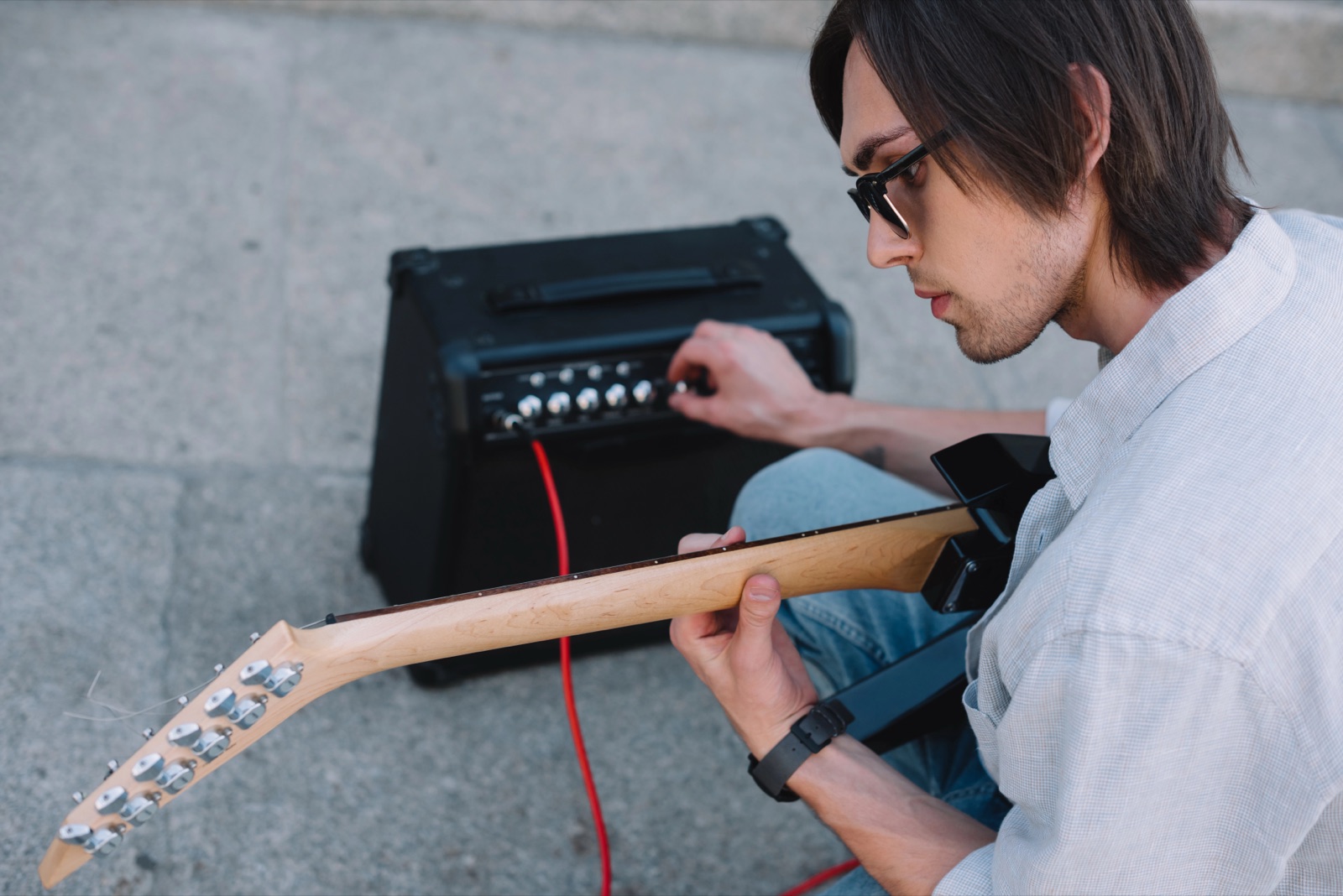
- Ignoring the EQ. Many people turn the amp on and start playing right away, without ever looking at the tone controls. That is a shame, because you leave a lot on the table. Play with the bass, mid and treble controls and you will immediately hear how much difference it makes.
- Overestimating the volume. The temptation is big to turn everything all the way up for a fatter sound. But at full power at home you mostly get unwanted distortion, and in the worst case you damage your speaker. Play at a moderate volume instead. You won’t disturb anyone and you will still enjoy a full sound.
Getting the Most Out of Your Amp
An amp is not a device you set once and then forget. By experimenting you discover everything it can do.
Take the time to try different gain and EQ settings and listen to how they change your sound. Try different pickups on your guitar too, because that also has a big influence on the tone. Do you use effect pedals? Combine them with your amp and discover which sounds you can make; you can find handy starting points in the beginner tips for effect pedals.
Also try practicing with a metronome or with backing tracks through the aux input. That way you work not only on your technique, but also on your timing and on playing with others. You can read how to go about that in learning guitar with backing tracks.
Maintenance: How Your Amp Lasts Longer
An amp is an investment, so a little attention pays off. It doesn’t take much work.
Dust the outside regularly and keep the inside as clean as possible too, because built-up dust can cause overheating. Handle the cables and knobs carefully: don’t pull on cords and don’t force anything, because that easily damages the parts inside.
Notice that something isn’t working right? Then don’t wait too long to have it checked by a repair technician or a good music store. Stepping in early prevents bigger problems later. A bit like with your car: that small dent you ignore rarely gets better on its own.
The Future of Practice Amps
Developments don’t stand still. More and more manufacturers are working with digital technology, including modeling amps. With them you simulate all kinds of amp types and effects in a single device, without needing a whole cabinet of separate gear. As a result, amps can also keep getting more compact without losing sound.
On top of that, wireless technology and app control are playing a bigger role. You play music from your phone or tablet without cable hassle, and through an app you adjust your tones and share settings and presets with other guitarists. For anyone who likes to practice with backing tracks, that is of course ideal.
Final Thoughts
A practice amp doesn’t have to be expensive or complicated to help you move forward. The most important thing is that it fits your style, your space and the way you play. Choose based on what you really need, not just on the price, and you will enjoy it for years.
Are you still putting together your gear for home, then also look at the overview what you need to learn guitar at home. And if you wonder how much time and effort learning takes, read how hard it is to learn guitar.
Frequently asked questions about practice amps
What are practice amps for electric guitar?
They are compact, portable amps designed specifically for home use and practice sessions. They are ideal for small spaces such as a bedroom or practice room and deliver enough sound to practice with.
Which brands make good practice amps?
Well-known and reliable brands include Fender, Marshall, Vox, Boss, Orange, Roland and Blackstar. Each brand has its own character, so it pays to compare different models.
What should I look for when choosing?
Pay special attention to the power (watts), the sound quality, the built-in effects, the equalizer, the portability and the price. Handy extras are a headphone jack for quiet practice and an aux input to connect your phone or tablet.
What are the best practice amps for small rooms?
For small rooms, choose a compact, light model with low power; 5 to 10 watts is usually enough. Examples are the Blackstar Fly 3, Boss Katana Mini and Roland Micro Cube, or, slightly bigger, the Fender Champion 20.
Are tube amps suitable for small rooms?
They can be, but tube amps often have higher power and only really sound good at a somewhat higher volume, which makes them quickly too loud at home. There are low-wattage tube amps that fit better in a small space.
Are practice amps suitable for gigs?
Usually not. They generally don’t have enough power to cut through a live band. For gigs with a band and for professional recordings, you are better off using a bigger, more powerful amp.
Are practice amps affordable?
Yes. Compared with large, professional amps, they are generally a lot cheaper. Brands such as Fender, Marshall, Orange and Blackstar have entry-level models with different features and power levels.
Can you use a practice amp with headphones?
With most practice amps, yes: plug your headphones into the headphone output and the speaker usually switches off automatically. Do check this on the model you have in mind, because not every amp has this connection.
Can you practice electric guitar without an amp?
You can play an electric guitar without an amp, but you will only hear a soft, thin sound and miss what the amp does to your tone. For quiet practice you can also use a small headphone amp that plugs straight into the guitar, or an audio interface with software on your computer. Which programs you can use for free is covered in the overview of the best free software for recording guitar.




Leave a Reply