
Lesson types compared
Guitar Lessons: Online, Private or Music School? How to Choose
All types of guitar lessons side by side, with a comparison table, a five-question decision guide and what you learn in your first lesson.
Short answer: You can take guitar lessons online through videos, a course or an app, privately with a teacher, or at a music school. Online guitar lessons are flexible, and you can often start for free. Private lessons give direct feedback on your posture and technique. A music school offers structure and playing with others. Choose based on your goal, your schedule and how much guidance you want.

At a glance
What to know before you choose
Four lesson types
Free online material, an online course or app, private lessons with a teacher and lessons at a music school, one-on-one or in a group.
Online takes self-discipline
Learning guitar online works well if you can motivate yourself. A teacher catches mistakes in posture and technique sooner.
Combining is fine
Many beginners take a few lessons with a teacher and also practice with videos or an app.
No age limit
Children usually start around age 6 or 7, on a guitar in the right size. For adults there is no limit.
Lesson types
What types of guitar lessons are there?
There are roughly four types of guitar lessons: online lessons through a course or app, private lessons with a teacher, lessons at a music school and teaching yourself with free material. They differ in structure, personal feedback and how free you are in time and pace.
| Lesson type | Strong in | Less strong in | Suits |
|---|---|---|---|
| Online course or app | Fixed structure; an app checks your notes and timing | Little personal feedback; an app can’t see your posture | People who want structure and practice at home |
| Private lessons with a teacher | Personal feedback, lessons tailored to your goal and style | Fixed appointments; the teacher has to be a good fit | People who want to learn fast or have a specific goal |
| Music school (one-on-one or group) | Structure, playing with others, student recitals | Fixed lesson times and usually a full school year | Children and anyone who likes playing with others |
| Teaching yourself with free videos | Start right away, huge choice, your own pace | No fixed order, no feedback on your mistakes | Beginners who want to try it first |
Which type works best depends on you. If you mainly want to play along with songs around a campfire or at a party, online lessons will take you a long way. For classical guitar, jazz or exams, you’ll get more from a teacher who corrects your technique. Just starting out? Read guitar lessons for beginners: what you learn in the first months, whichever lesson type you choose.
Online
Online guitar lessons: videos, courses and apps
You take online guitar lessons over the internet: individual videos, a course, an app or a lesson with a teacher over a video call. You learn when and where you want, at your own pace.
Free videos
YouTube has thousands of lessons for beginners. Nobody sets the order, so make your own plan.
Online guitar course
In an online guitar course, each lesson builds on the previous one. That saves searching and prevents gaps in your basics. Pay attention to level, style and practice material.
Guitar lessons through an app
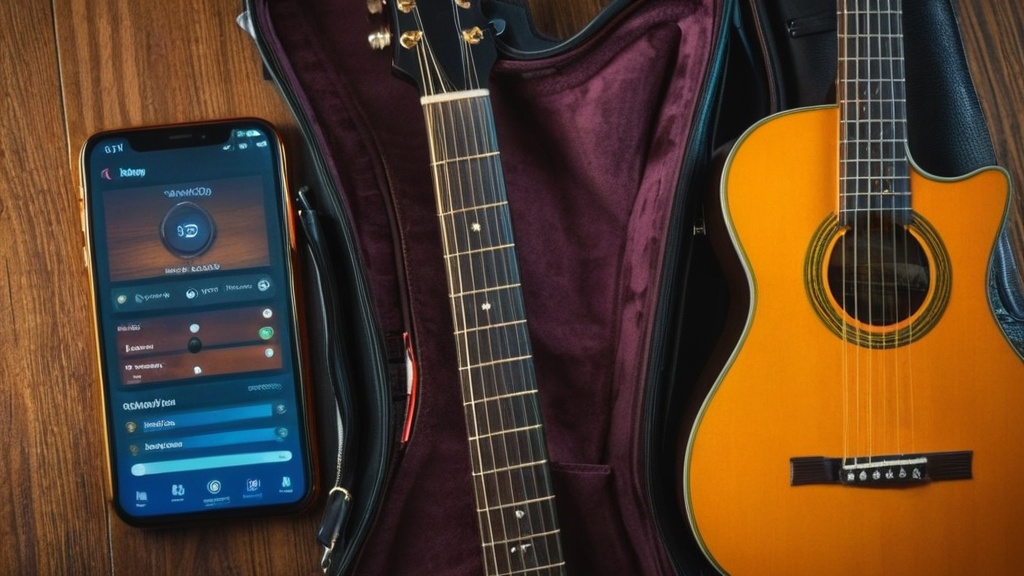
Handy for a short practice every day. Many apps listen through the microphone and show whether you’re playing the right note or chord.
Free online guitar lessons: how to keep structure
Start with tuning, posture and a few open chords, and build on that week by week. Nobody sees your posture and strumming, so film yourself now and then.
- Make it a fixed routine with learning guitar with YouTube tutorials.
- Play electric? See learning electric guitar online for free.
- For a comparison for acoustic players, see the best online courses for acoustic guitar.
- Mainly want to practice chord shapes? See apps to learn guitar chords.
Also read about the benefits of learning guitar online.
With a teacher
Private lessons or music school: learning with a teacher
A teacher watches you play and sees right away that your wrist is bent or that you’re pressing too hard. That way you fix it before it becomes a habit.
Private guitar lessons
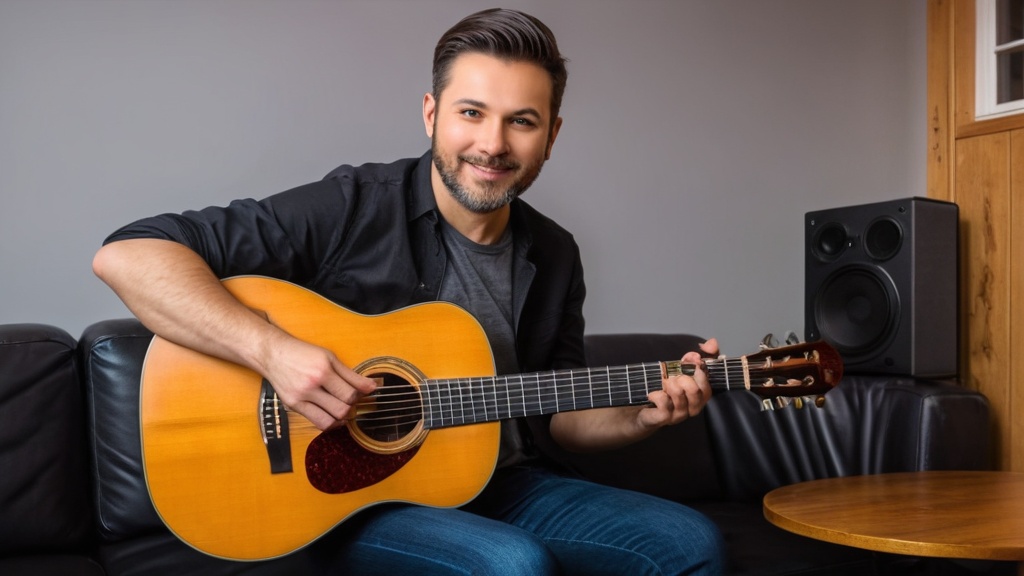
In private lessons you get one-on-one teaching: at the teacher’s place, at your home or over a video call. The lesson revolves around your level, your music style and your goals. That makes private lessons efficient if you want something specific, like learning a song of your own, preparing for a performance or learning a style such as blues or fingerstyle.
What to look for when choosing a teacher is covered in private guitar lessons from a professional. Starting as an adult? See guitar lessons for adults.
Music school
One-on-one or group lessons over a fixed school year. You play with others, there are student recitals and you can move on to an ensemble or exams.
Group lessons
Less personal attention than private lessons, but you learn to play together, stay in time and listen to each other. A fine start if you want to try it out calmly first.
A teacher nearby
Looking for a teacher or music school in your area? Ask about the lesson format and whether you can take a trial lesson.
Decision guide
How to choose the guitar lessons that suit you
The best guitar lessons are the kind you stick with and that fit what you want to be able to do. Go through these five questions, and the choice usually becomes clear.
1
What is your goal?
Playing along with songs and singing along is easy to learn online. Classical guitar, jazz or exams usually call for a teacher.
2
How independent are you?
If you practice without an appointment, online works well. If you need someone to keep you accountable, choose regular lessons.
3
How much time do you have?
With a changing schedule, online is more flexible. If you have a fixed evening free, lessons with a teacher or at a music school fit well.
4
Do you want to play with others?
Then a music school or group lessons are worth a look.
5
What fits your budget?
Ask teachers and music schools about the cost and a trial lesson. With free material, you can first find out whether guitar is for you.
Combining often works best
You don’t have to pick just one type. Take a few lessons with a teacher to get your posture and basics right, then carry on yourself with videos or an app. Not sure you can manage without guidance? Read learning guitar without a teacher and learning guitar without expensive lessons.
Your first lesson
What happens in your first guitar lesson?
In a first guitar lesson you usually learn tuning, the right posture, strumming with a pick or your fingers and your first chord. A teacher also asks about your goal and the music you like, so the next lessons build on that.
Tuning
You tune the strings E-A-D-G-B-E with a tuner or an app. See tuning a guitar with a tuner.
Posture
How you sit, where the guitar rests and how your hand wraps around the neck. Read how to hold a guitar properly.
First chord
Often E minor or E major, because you play them with two or three fingers.
Strumming
A simple rhythm, for example four downstrokes per bar.
Homework
A short exercise for the coming week, so you can keep going at home.
For E minor you use two fingers; for E major you add your index finger on the G string. A detailed explanation is in your first chord: E major. Bring your own guitar if your lesson is in person, and write down beforehand which songs you would like to play.
Tender fingertips are normal
In the first weeks your fingertips often hurt. That eases as calluses form. Tips to keep it down are in preventing sore fingers. If the pain persists or is sharp, talk to your doctor.
Kids and adults
At what age can you start guitar lessons?
Most children can start guitar lessons from about age 6 or 7, and for adults there is no upper limit. Around that age, children usually have enough fine motor skills and concentration to press down strings and follow a lesson.
Guitar lessons for kids
An interest in music counts at least as much as age.
A guitar in the right size
A full-size guitar is too big for small hands. Young children often play a 1/2 or 3/4 size guitar.
Guitar lessons for adults
You understand explanations faster, but you have less time. Set realistic goals, like one new song a month.
Starting later
You can learn guitar later in life too. Choose a lesson type that fits your week.
Financial help for guitar or music lessons
That depends on where you live. In some places, the local council or a charity has a scheme that helps children take part in sports and culture, including music lessons. Ask your local council what is available, and ask the music school or teacher whether they have experience with such schemes.
How to tell whether your child is ready is covered in at what age to start learning guitar.
Type of guitar
Acoustic, electric or classical guitar lessons?
The type of guitar helps decide which lessons suit you. Each guitar has its own music styles and points to watch.
| Guitar | Strings | Lessons often focus on | Keep in mind |
|---|---|---|---|
| Acoustic | Steel | Chords, strumming patterns and fingerpicking for pop, folk and singer-songwriter | Steel strings take a bit more strength from your fingertips at first |
| Electric | Thinner strings | Rock, blues and solos | Chord shapes take less effort thanks to the usually lower string action, but you need an amp |
| Classical | Nylon | More often working with sheet music | Soft strings and a wider neck; many children start on one |
Still undecided? Read which is easier: electric or acoustic guitar. You can easily take acoustic guitar lessons online too: many courses and videos focus on exactly that. Want to start without spending money? You’ll find tips in learning acoustic guitar for beginners.
Between lessons
How to get more out of every guitar lesson
You get the most out of guitar lessons if you practice briefly and regularly between them: 15 minutes every day is better than two hours once a week.
A fixed time and place
Practice at a set moment, with your guitar within reach instead of in its case.
Work with a schedule
A ready-made plan gets you started without having to think about what to practice today.
Use a metronome
Keep your rhythm tight and practice chord changes separately, apart from the song they appear in.
Choose songs you love
Then you’ll stick with it longer, even in weeks when progress is slower.
Stuck?
If you get stuck after a few weeks, don’t quit. It often helps to switch lesson types or add something: a few lessons with a teacher if you learn online, or an app if you only have a weekly lesson.
Go deeper
Further reading
Starting as an absolute beginner →
Your very first steps with guitar.
The gear for online lessons at home.
Learn to play guitar step by step →
A step-by-step plan alongside any lesson type.
What’s tricky at first and how to get through it.
What to expect at each stage.
How long should you practice each day? →
How to divide your practice time, with lessons or on your own.
Mistakes a teacher often corrects first.
Method books to go with your lessons.
Online communities for guitarists →
Forums and groups for your questions when you learn on your own.
How you can help as a parent between lessons.
Read more
New in Guitar lessons and learning online
-
Best Apps for Learning Guitar Chords
The best apps for learning guitar chords are Yousician, Ultimate Guitar and GuitarTuna. Yousician listens in through the…
-

Best Online Courses for Acoustic Guitar
The best online courses for acoustic guitar are well-known platforms like Guitar Tricks, JamPlay, Yousician and Fender Play.…
-
Best Apps to Learn Guitar
Short answer: The best app for learning guitar depends on your level. As a beginner, choose Yousician, Fender…
-

Digital Tab Apps for Beginners
Digital tab apps show you on your phone or tablet which string and fret you are playing, often…
-
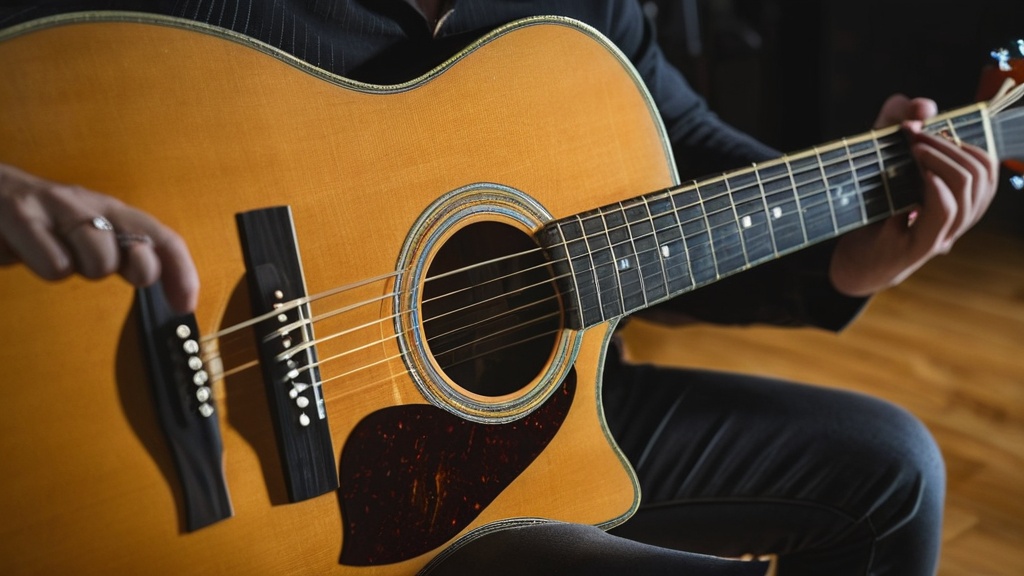
Benefits of Learning Guitar Online
What are the benefits of learning guitar online? You practice when and where it suits you, at your…
-
Online Communities for Guitarists
Online communities for guitarists are forums, Facebook groups, subreddits and Discord servers where guitarists ask questions, share recordings…
FAQ
Frequently asked questions about guitar lessons
Is your question not listed? Browse all articles or pick a topic in the menu.
Which guitar lessons are best for beginners?
No single lesson type is best for everyone. If you mainly want to play along with songs and can motivate yourself, online guitar lessons are a good start. If you want direct feedback or regular appointments, choose private lessons or a music school.
What do you learn in a first guitar lesson?
Usually you learn to tune your guitar, the right posture and how to strum the strings. Often you also play your first chord, such as E minor or E major. With a teacher, you also discuss your goals and the music you want to play.
Can you take free guitar lessons online?
Yes, YouTube and other video platforms have lots of free guitar lessons for beginners. There’s no fixed order and nobody sees your mistakes, so make your own practice plan.
Are online guitar lessons as good as lessons with a teacher?
Online guitar lessons are more flexible and you work at your own pace. A teacher, however, sees right away what goes wrong in your posture, strumming or fingering. Many guitarists combine both.
At what age can you start guitar lessons?
Most children can start from about age 6 or 7, on a smaller-size guitar. By then they usually have enough motor skills and concentration. For adults there is no age limit.
Can you get financial help for guitar or music lessons?
That depends on where you live. In some places, the local council or a charity has a scheme for sports and culture that helps children take music lessons. Ask your local council what is available to you.
Can you take acoustic guitar lessons online?
Yes, many online courses and videos focus specifically on acoustic guitar, with chords, strumming patterns and fingerpicking. Pay attention to the level and the music style of the course.
Ready to choose?
Decide on your goal, pick the lesson type that fits it and start small. With a regular practice schedule, you get more out of every lesson, online or with a teacher.