
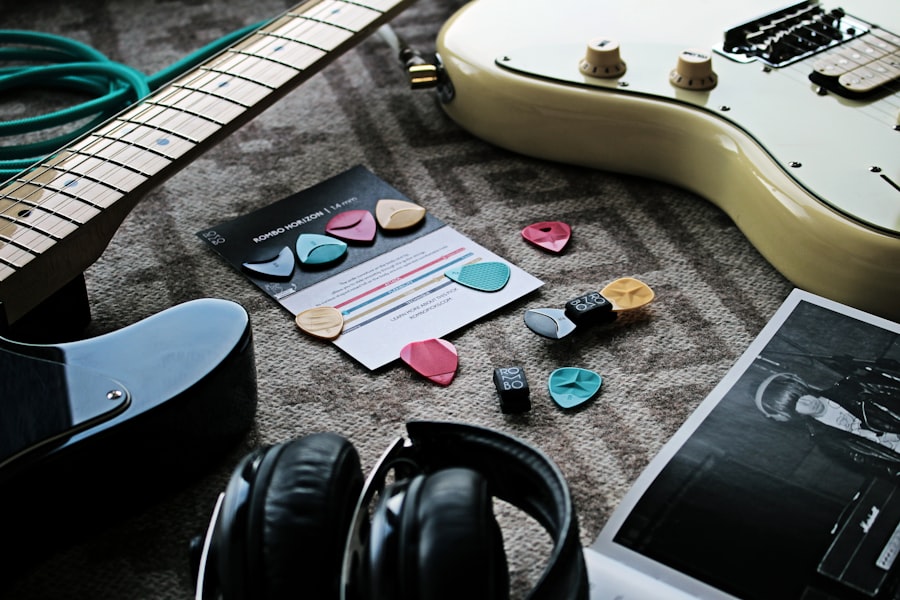

How do you practice guitar quietly without disturbing your neighbors? Play an electric guitar through headphones, mute an acoustic guitar with a string dampener or a cloth under the strings, and play with your fingers or a thin pick. Combine that with silent exercises and fixed practice times that you agree on with your neighbors. That way you can practice guitar quietly, without bothering the people next door, and still make progress every day.
Summary
- An electric guitar through headphones, a practice amp or an audio interface is the quietest way to play.
- On an acoustic guitar, mutes, a light touch and techniques such as fingerpicking and palm muting help.
- Dampening materials and acoustic insulation keep the sound inside your practice space.
- Practicing without sound, without a guitar and with visualization trains technique, focus and musical memory.
- Practice at fixed times, talk to your neighbors and alternate quiet practice with regular playing.
The quietest option: playing electric through headphones
An electric guitar without an amp sounds a lot quieter than an acoustic guitar, because it has no sound box. Plug it into headphones and you hear the full sound while the rest of the house stays quiet.
There are a few ways to do that. Many amps for home use have a headphone jack and sound great that way. Take a look at the best practice amps for electric guitar if you are looking for one. There are also small headphone amps that plug straight into the guitar. If you prefer working on a computer, you can play through an audio interface and software with virtual amps and effects. That way you can try all kinds of sounds without turning the volume up. Such a program does not have to cost anything: see the free guitar recording software.
Playing more softly on an acoustic guitar
Your playing technique makes a big difference too. Play with a light touch and keep a slow tempo: that lowers the volume and gives you more control over your fingers. Fingerpicking on an acoustic guitar sounds softer by nature than strumming with a pick. If you do use a pick, choose a thin one; you can read which type suits you in the best pick for beginners.
With palm muting you lightly rest the side of your hand on the strings near the bridge. That dampens the sound and is a useful technique to practice at the same time. A guitar with nylon strings also sounds softer and rounder than a steel-string acoustic; you can read about the difference between nylon and steel strings in a separate article. If you want it even quieter, there are silent guitars: guitars without a sound box that you hear through headphones.
Mutes and dampening materials
There are string mutes made especially for guitarists, often of rubber or foam. You place them on the strings to reduce resonance and volume, and take them off again when you want to play normally. That is especially handy for chords or riffs that would otherwise be too loud. A folded cloth or a piece of foam under the strings near the bridge works as a simple alternative.
Everyday materials help too. Pillows, blankets and a rug in your practice space absorb sound and improve the acoustics. That makes practicing more pleasant for you and for the people around you.
Soundproofing your practice space
If you really want less noise, you can invest in acoustic insulation. Think of soundproofing panels on the walls or special floor mats that absorb sound. Double glazing or soundproof windows limit how much sound leaks out, and with special seals for the door you reduce sound transfer to the rest of the house.
If that is not possible at home, check whether your apartment complex has a practice room for musicians, or rent a soundproof practice room elsewhere.
Practicing without sound: how it works
You can also practice without any real sound coming from your guitar. Then you focus fully on the movements of your fingers, the position of your hands and the coordination between your left and right hand. By imagining at the same time how the music sounds, you train your ear and your musical memory. That also helps you remember tricky passages.
A few tips to get the most out of it:
- Play slowly and in a controlled way, so you can analyze and improve every movement.
- Pay conscious attention to your fingering and hand position.
- Practice in front of a mirror, so you can see and correct mistakes in your technique.
- Take notes on what goes well and what could be better. That gives you structure and keeps you focused on your goals.
Chord changes are well suited to this: form the chord shapes without strumming and switch between them calmly. You will find more exercises like this in the finger exercises for smooth chord changes.
Practicing without a guitar
If you cannot play at all for a while, you can still work on your musical skills. Study music theory for guitarists or analyze songs you like, so you understand structures and chords better.
Read sheet music or tabs without touching the instrument and play the piece along in your head. That improves your knowledge of notes and your understanding of musical patterns; you learn to read tabs step by step. Imitating the playing movements without a guitar, a kind of air guitar, also helps with muscle memory and coordination. There are also apps for learning to play guitar with interactive exercises for rhythm and timing.
Visualization when practicing silently
By imagining how you play a piece, you strengthen the connection between head and hands. That helps you remember pieces and with your interpretation: you get a better feel for the emotion and dynamics in a piece.
Visualization can also help against nerves at performances. Imagine that you are playing for an audience or performing a difficult piece. That prepares you for the real situation and makes you stronger when unexpected moments come up.
Practical applications
You can practice quietly almost anywhere: on a long trip or in a busy public space you imitate the movements without making a sound. It is also useful when preparing for auditions or performances. By running through specific passages silently, you prepare mentally and build confidence before you play for an audience.
Because you focus on your technique without the distraction of sound, you become more precise and gain more control over your playing. The concentration and discipline you build this way also come in handy during performances and recordings.
Practice at fixed times and talk to your neighbors
Watch the times you play, especially in an apartment or a densely built neighborhood. Preferably practice during the day or early in the evening and avoid late evenings and early mornings, when people are sleeping. With a guitar practice schedule that takes your surroundings into account, you avoid tension over noise.
Talk to your neighbors too. Tell them when and how often you plan to practice, and ask whether there are times they would rather not be disturbed. Put yourself in their shoes: maybe you can adjust your practice times or use a silent technique at those moments. That way you find a compromise together that everyone can live with, and a good relationship often gives you more freedom to play when you want.
Find a balance between quiet and loud playing
Quiet practice helps with technique and concentration, but for expression, dynamics and tone you also need to really hear yourself. So combine silent sessions with moments when you simply play, for example during the day or in a practice room. That way you develop both your technical skills and your musical interpretation, and playing guitar stays fun.
Frequently asked questions about practicing guitar quietly
How do you practice guitar quietly without disturbing your neighbors?
Play an electric guitar through headphones or a practice amp with a headphone jack, or mute an acoustic guitar with a string dampener. Also play with a light touch and choose practice times when your neighbors will not be bothered.
What are the benefits of practicing without sound?
You can practice at any time and anywhere without disturbing others. You also improve your technique and timing without being distracted by the sound of the guitar.
Which accessories help with quiet practice?
Think of string mutes, practice amps with a headphone jack, small headphone amps and an audio interface with software. An electric guitar through headphones is the quietest combination.
Can I practice an acoustic guitar quietly?
Yes, with a rubber or foam mute on the strings it sounds much softer, and you can easily take the mute off again. If your guitar has a pickup, you can also listen to it through an amp or interface with a headphone output, although you will still hear the strings softly.
Are there special practice amps with a headphone jack?
Yes, many practice amps have a headphone jack, so the sound does not travel outside. They often have built-in effects. Most are meant for electric guitar, but there are also amps for acoustic guitars with a pickup.
Are there apps or software that help with quiet practice?
Yes, some apps and programs offer virtual amps and effects that you hear through headphones. Others offer exercises and lessons, for example for rhythm and timing.
Are there special practice rooms for musicians in apartments?
Some apartment complexes have a practice room for musicians, where you can play without worry. If yours does not, you can rent a soundproof practice room elsewhere.
How quiet is an electric guitar without an amp?
An electric guitar without an amp has no sound box and therefore sounds much softer than an acoustic guitar. You can still hear the strings, so it is not completely silent, but in the next room it usually fades away.
Does a guitar with nylon strings sound softer?
Yes, a classical guitar with nylon strings sounds softer and rounder than an acoustic guitar with steel strings. It is still clearly audible, so combine it with a light touch if you really want to practice quietly.
How do you practice music without bothering your neighbors?
Play through headphones where you can, mute your instrument and practice at times when your neighbors are least bothered. Discuss those times with them beforehand. With dampening materials in your practice space you also keep more sound inside.






Leave a Reply