
All about the acoustic guitar
Acoustic Guitar: Types, Buying Tips and How to Play
The types and body shapes, what to look for when you buy one, how to start playing, fingerpicking and care.
Short answer: An acoustic guitar is a guitar with a hollow body that makes the vibration of the strings audible without an amp. The two main types are the steel-string acoustic and the classical guitar with nylon strings. Choose the acoustic guitar that fits the music you want to play and your build, and that feels good to play.

At a glance
What you should know about the acoustic guitar
Plays without an amp
Thanks to its hollow body, an acoustic guitar makes its own sound, with no power or amplifier needed.
Steel or nylon
A steel-string acoustic sounds bright and loud, a classical guitar with nylon strings sounds warm and soft.
Acoustic-electric or semi
An acoustic-electric has a built-in pickup. A semi-acoustic is really an electric guitar with a (partly) hollow body.
Playability first
The body shape sets the size, volume and tone. When you buy, playability matters more than brand or looks.
The basics
What is an acoustic guitar?
An acoustic guitar makes its own sound: the strings make the top vibrate, and the hollow body amplifies that vibration. So you play without power or an amp, at home, on vacation or around a campfire.
The parts
- Body: the hollow body, with a top, sides and a back.
- Top and sound hole: the top vibrates with the strings, and the sound hole lets the sound out.
- Bridge: this is where the strings are anchored to the body. The saddle on the bridge supports the strings.
- Neck and fretboard: on the fretboard you press the strings down against the frets.
- Headstock with tuning machines: you use these to tune each string.
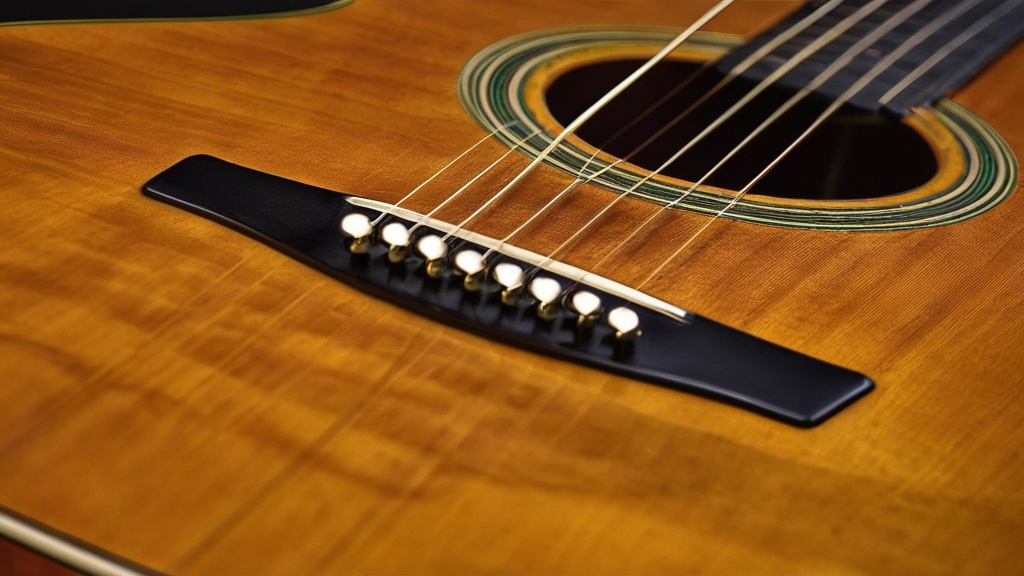
An acoustic guitar plays differently from an electric. The strings are heavier and usually sit a little higher, so you need more strength at first. On the other hand, you need nothing but the guitar itself. Which of the two is easier for you, you can read in which is easier: electric or acoustic guitar? For more on history, tonewoods and tone, see the beauty of acoustic guitars.
Types
What types of acoustic guitars are there?
Four types of guitars often fall under “acoustic”: the steel-string acoustic, the classical guitar, the acoustic-electric guitar and the semi-acoustic guitar. They differ in strings, tone and the way you amplify them.
| Type | Strings | Tone | Amplification | Often suits |
|---|---|---|---|---|
| Steel-string acoustic (western guitar) | Steel | Bright, loud, rich in overtones | Not needed | Pop, folk, country, singer-songwriter, campfire |
| Classical guitar | Nylon | Warm, soft and round | Not needed | Classical, flamenco, bossa nova, kids and beginners |
| Acoustic-electric guitar | Steel or nylon | Like a regular acoustic guitar | Built-in pickup and preamp, plugs into an amp | Performing, recording, playing with others |
| Semi-acoustic guitar | Steel (electric strings) | Warm and airy, but through the amp | Magnetic pickups, amp needed | Jazz, blues, rock |
Steel-string or classical guitar?
The biggest difference is the strings. Steel strings sound louder and brighter and suit strumming chords in pop and folk. Nylon strings are gentler on your fingertips and sound warmer. A classical guitar also has a wider, flatter neck: great for fingerpicking, but sometimes large for small hands. All the differences side by side are in the difference between nylon and steel strings.
No steel strings on a classical guitar
A classical guitar is not built for the higher tension of steel strings. Always put nylon strings on it.

What is a semi-acoustic guitar?
A semi-acoustic guitar is an electric guitar with a hollow or partly hollow body and magnetic pickups. Unplugged, it sounds a little louder than a solid-body electric guitar, but much quieter than a true acoustic. Read more in semi-acoustic guitar: the perfect mix.
And an acoustic-electric guitar?
That is a regular steel-string or classical guitar with a built-in pickup. You plug it into an amp or mixer, which is handy if you want to perform or record. Would you rather use a microphone? Read which microphone to use for an acoustic guitar.
Body shapes
Body shapes: dreadnought, parlor, jumbo and more
The body shape of an acoustic guitar determines how big the body is, how loud it sounds and which frequencies come through most strongly.
| Body shape | Size | Tone | Good for |
|---|---|---|---|
| Dreadnought | Large, with a wide waist | Loud, with lots of bass | Strumming chords, bluegrass, playing with others |
| Jumbo | Very large, with a round lower bout | Full and powerful, lots of bass and volume | Hard strumming, accompanying vocals |
| Concert and auditorium | Medium, with a narrower waist | Balanced between bass, mids and highs | Fingerpicking and strumming, all-round |
| Parlor | Small and compact | Focused, with emphasis on the midrange | Blues, fingerpicking, smaller players, travel |
| Travel guitar or 3/4 model | Smaller size and shorter neck | Quieter and less bass | Kids, on the road |
Big or small?
A large body gives more volume and bass. A small body is more comfortable to play and sounds more focused in the midrange.
Cutaway
A scoop in the body next to the neck, so you can reach the high frets more easily. Many body shapes also come with a cutaway.
Classical guitar sizes
Classical guitars come in 4/4, 3/4, 1/2 and 1/4. The 4/4 size is the full adult size.
Buying advice
Buying an acoustic guitar: tips to choose well
When you buy an acoustic guitar, playability matters most: a guitar that plays easily and sounds in tune keeps you motivated. Use this step-by-step plan.
1
Decide on your style of music
Accompanying pop or folk songs? Choose a steel-string acoustic. Classical, flamenco or bossa nova? Choose a classical guitar.
2
Pick a size that fits
If you can’t comfortably reach over the body, try a smaller body shape, such as a concert or parlor model.
3
Test the playability
Play a few chords, including on the first frets. The strings shouldn’t sit too high or buzz.
4
Check tuning and intonation
The guitar should stay in tune, and a chord higher up the neck shouldn’t sound out of tune.
5
Look at the top
A solid top often sounds fuller and more open. A laminate top is less sensitive to changes in temperature and humidity.
6
Get the basic accessories
A tuner, a few picks, a gig bag and spare strings. If you want to perform or record, consider a pickup.
The best guitar to learn on
What to look for per type when you are just starting.
What does a good first guitar cost?
Roughly how much you spend on a good beginner guitar.
Learn to play
How to play acoustic guitar
You start learning acoustic guitar with good posture, accurate tuning and a few open chords. Then you learn to switch between them over a simple strumming pattern, and with that you can already play along with lots of songs.
The complete step-by-step plan for beginners
The full learning process, with free practice resources, is laid out step by step in our guide learning acoustic guitar for beginners. Below you’ll find the essentials.
Read the shapes from the low E string (left) to the high e string (right): an x means you don’t play that string, a circle is an open string. Em is the easiest chord, with two fingers. E is Em plus your index finger on the G string, and Am has the same shape as E, moved over one string. With D you only play the four thinnest strings. Build from there with learning guitar with chords.
Posture and fingertips
Sit up straight, rest the guitar against your body and keep your shoulders relaxed. See how do you hold a guitar? On steel strings, your fingertips will hurt a bit for the first few weeks. That’s normal and eases as calluses form. So practice often and briefly. How long it takes, you can read in how long does it take to learn guitar? Prefer a structured program? Check out the best online courses for acoustic guitar.
Classical
How to play classical guitar
Learning classical guitar is about a set sitting position, plucking with your fingers instead of a pick, and usually playing from sheet music or tabs. It’s a path of its own, with its own repertoire.
Posture
A right-handed player usually rests the guitar on the left thigh, with the left foot on a footstool. A guitar support is an alternative.
Stroke
You play with your thumb and fingers. With tirando (free stroke) your finger moves past the next string, with apoyando (rest stroke) it comes to rest on it for a fuller tone.
Nails
Many classical guitarists keep the nails of their plucking hand a little longer and filed for a clear tone.
Repertoire
Start with short études and simple pieces and build up from there.
Looking for inspiration?
Listen to famous classical guitar music. Want to go the Spanish route? Read about learning flamenco guitar.
Technique
Fingerpicking and fingerstyle
With fingerpicking, you pluck the strings individually with your thumb and fingers instead of a pick. That way you play bass and melody, or a chord pattern, at the same time, on a steel-string acoustic and on a classical guitar.
The fingers of your picking hand have set letters: p for the thumb, i for the index finger, m for the middle finger and a for the ring finger. A basic pattern to start with:
1
Play a C chord
Fret the shape x32010.
2
Thumb on the root
Use your thumb (p) to play the root note on the A string.
3
Play i, m and a
Play the G string with i, the B string with m and the high e string with a.
4
Back and again
Play back with m and i, then start again with the thumb.
5
Switch to G
Repeat the pattern on a G chord. Your thumb then plays the low E string.
Learn fingerpicking
A detailed explanation with patterns for the acoustic guitar.
Care
How do you take care of an acoustic guitar?
An acoustic guitar stays in good shape longest if you change the strings on time, keep it clean and protect it from big swings in humidity and temperature.
Changing strings
If your strings sound dull, won’t stay in tune or feel rough, it’s time for a new set.
Humidity
Air that is too dry can cause cracks in the wood or sharp fret ends. Don’t keep your guitar near a heater or in direct sun.
Cleaning
After playing, wipe the strings and neck with a dry cloth. That makes your strings last longer.
Setup
If the string height changes noticeably, have the guitar checked by a guitar tech.
Wood moves
Wood swells when it’s humid and shrinks when it’s dry. So also read the tips for guitar care in winter and the tips for changing guitar strings.
Go deeper
More reading about the acoustic guitar
Fingerstyle like Tommy Emmanuel →
Bass, chords and melody at the same time.
Percussive playing and looping.
Singing and fingerpicking at the same time →
Combining vocals with a finger pattern.
Playing and singing campfire songs →
Where the acoustic guitar is at its best.
Move a song higher with the same shapes.
Learning Spanish guitar music →
Styles and rhythms for the classical guitar.
Cleaning your guitar without damage →
Which products to use and which to avoid.
Cleaning the fretboard and frets →
Keeping the neck in good condition.
Less string noise when you shift.
Case, stand or wall hanger.
Performing with an acoustic guitar →
Preparation, sound and stage presence.
Playing guitar in an acoustic duo →
Playing with another guitarist or a singer.
Read more
New in Guitars, Gear and Care
-

Why Choose a Hollow Body Guitar
You choose a hollow body guitar when you want a warm, open and slightly acoustic tone, especially for…
-
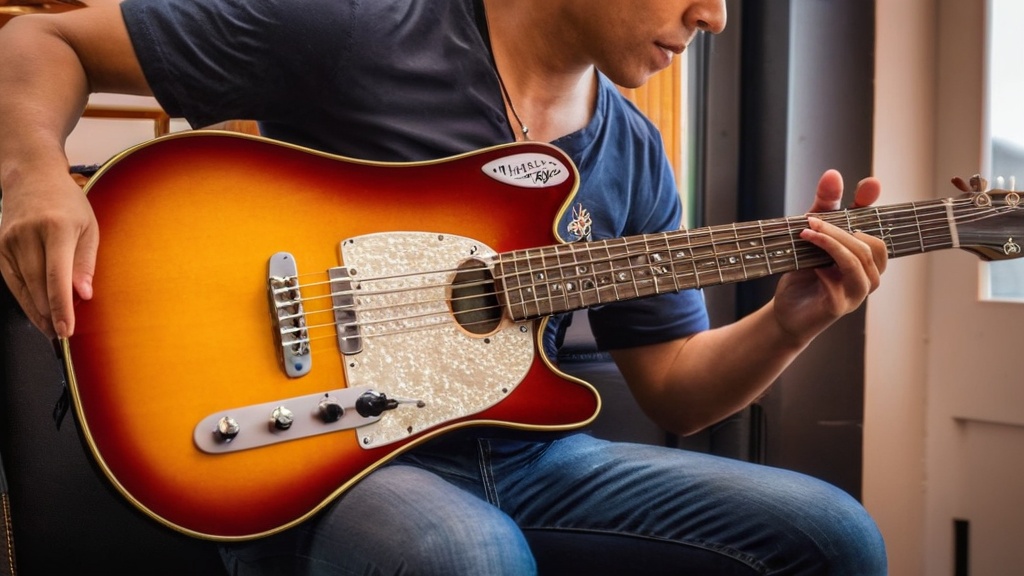
How Much Does a Good Beginner Guitar Cost?
How much does a good beginner guitar cost? As a rough guide, expect to pay about 100 to…
-

Playing Guitar With Sound Effects
Playing guitar with sound effects starts with three basic effects: overdrive or distortion for more power, delay for…
-
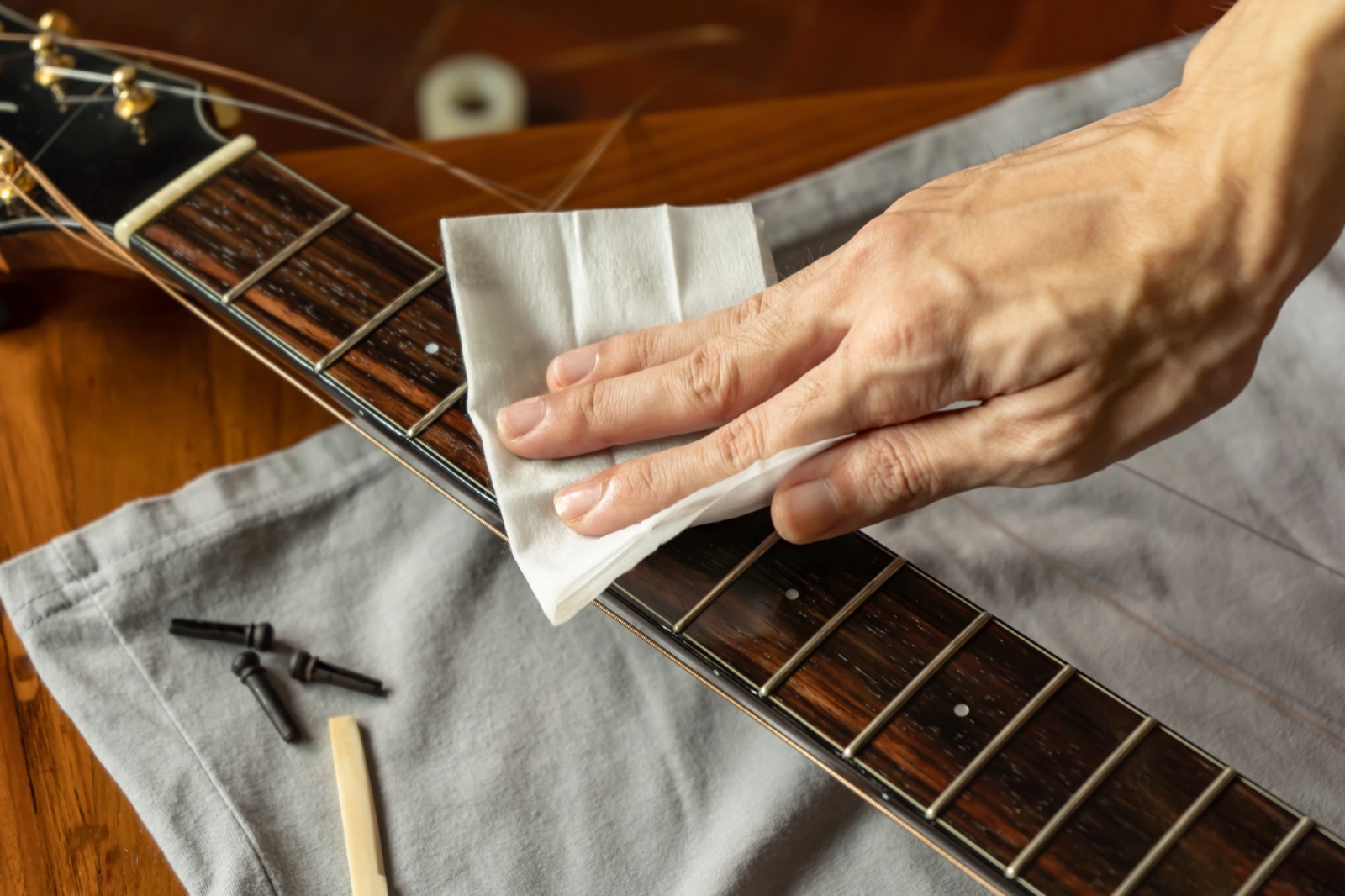
How to Clean Your Guitar Fretboard and Frets
The best way to clean your guitar’s fretboard and frets is with the strings off. Wipe away loose…
-

What to Do About Squeaky Guitar Strings
What should you do about squeaky guitar strings? Most of the time, what you hear is your fingers…
-
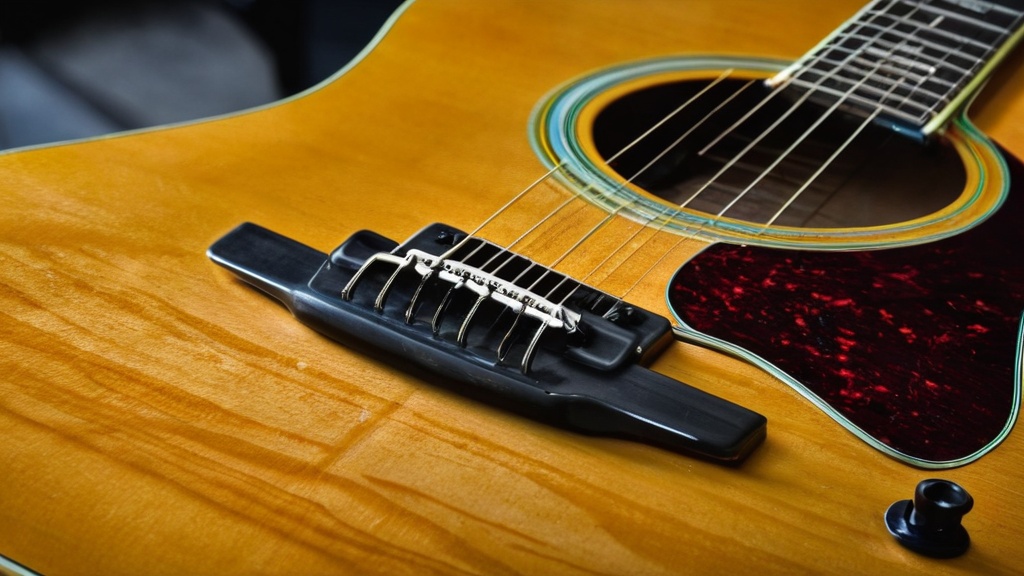
How to Repair Small Scratches on Your Guitar
How do you repair small scratches on your guitar? Superficial scratches in a gloss finish can be buffed…
FAQ
Frequently asked questions about the acoustic guitar
Is your question not listed? Browse all articles or pick a topic in the menu.
What is an acoustic guitar?
A guitar with a hollow body that amplifies the sound of the strings by itself, without an amp or power. The best-known types are the steel-string acoustic and the classical guitar with nylon strings.
What types of acoustic guitars are there?
The main types are the steel-string acoustic, the classical guitar (nylon) and the acoustic-electric guitar with a built-in pickup. They also differ in body shape, such as dreadnought, jumbo, concert, auditorium and parlor.
What is a semi-acoustic guitar?
An electric guitar with a hollow or partly hollow body and magnetic pickups. You play it through an amp, but it sounds warmer and airier than a solid-body electric guitar. An acoustic guitar with a built-in pickup is called an acoustic-electric.
How do you learn to play acoustic guitar?
Start with the right posture and accurate tuning, then learn open chords such as Em, Am, C, G and D and practice switching between them over a simple strumming pattern. Practicing a little every day works best. The full step-by-step plan is in our guide learning acoustic guitar.
What are good tips for buying an acoustic guitar?
First choose between steel and nylon based on your music. Then pick a comfortable size and test whether the strings are easy to press down and the guitar stays in tune.
Is a classical guitar a good guitar to start on?
Yes, nylon strings are gentler on your fingertips. The neck is wider, though, which can be harder for small hands. If you mainly want to play pop or singer-songwriter music, a steel-string acoustic is usually a better fit.
Is acoustic guitar hard to learn for beginners?
The first few weeks are the hardest: your fingertips need to get used to it and changing chords takes time. With short daily practice, it usually gets better quickly.
Ready to start playing?
Have you chosen your acoustic guitar? Then follow the step-by-step plan for beginners, with free tips and practice resources.