


Acoustic guitars are loved for their warm, natural sound: the strings vibrate, the wooden soundbox amplifies that sound, and you need no amplifier or power. How an acoustic guitar sounds depends on its construction, the woods and the shape of the body. Below you read where the instrument comes from, which woods and models exist, how to choose one and how to take good care of it.
The history of the acoustic guitar
The acoustic guitar has a rich and varied history that goes back to the Middle Ages. The guitar originally developed from several stringed instruments, such as the lute and the vihuela. These instruments became popular in Europe and formed the basis for what we now know as the acoustic guitar.
In the 19th century the guitar largely took on its current form. The Spanish guitar maker Antonio de Torres enlarged the soundbox and refined the bracing under the top. This led to a fuller sound and made the instrument more accessible to amateur and professional musicians alike. Over the years the acoustic guitar has taken on different styles and shapes, depending on cultural influences and musical traditions.
From the Spanish flamenco guitar to the American folk guitar, every variant has its own unique characteristics and playing techniques. The acoustic guitar grew in popularity with the rise of genres such as blues, country and rock, which earned the instrument an unmistakable place in music history.
The different types of wood used for acoustic guitars
When building acoustic guitars, the type of wood used plays a crucial role in the sound and resonance of the instrument. Many guitars are made of several kinds of wood, each with its own unique properties. Spruce is one of the most popular choices for the top of the guitar because of its excellent sound projection and clarity.
It offers a powerful tone that responds well to dynamic playing styles. Mahogany, on the other hand, is often used for the back and sides of guitars. This wood is known for its warm, full tone and excellent sustain.
Combining different woods can lead to a balanced sound that is both clear and rich. There are also exotic woods such as koa and rosewood, which offer unique tonal qualities and are often chosen for premium models.
The influence of acoustic guitars on different music genres

The acoustic guitar has had a deep influence on a wide range of music genres. In folk and blues music the instrument is often the central element, forming the basis for vocals and other instruments. The simple but powerful chords you can play on an acoustic guitar make it ideal for telling stories through music.
The acoustic guitar has found its place in rock music too, especially in ballads and acoustic versions of popular songs. Think of acoustic songs by The Beatles, such as “Blackbird,” or Nirvana’s MTV Unplugged concert from 1993. The versatility of the acoustic guitar lets you explore different styles, from fingerpicking to strumming, which adds to its lasting popularity. How to play their songs yourself, from “Love Me Do” to “Blackbird,” you can read in playing Beatles songs on guitar.
How to choose the right acoustic guitar for your playing style
| Feature | Description |
|---|---|
| Type of guitar | Steel-string or nylon-string guitar |
| Body shape | Dreadnought, Auditorium, Concert, etc. |
| Neck width | Narrow or wide neck for comfortable playing |
| Top wood | Spruce, cedar, mahogany, etc. |
| Tone quality | Balance between bass, mids and highs |
When choosing the right acoustic guitar, you start with your own playing style. First think about the music you want to play. Fingerstyle guitarists often choose a smaller body, such as an auditorium or concert model, with a direct and clear response. Strummers often prefer a dreadnought with a large soundbox for a fuller sound.
It is also essential to look at the build quality and the wood used. A well-built guitar with high-quality materials will not only sound better, but also last longer. It is also a good idea to try several models in a music store to feel which guitar suits you best.
Comfort and playability are crucial for an enjoyable musical experience.
The role of acoustic guitars in the modern music scene
In the modern music scene, acoustic guitars continue to play an important role, despite the rise of electronic instruments and digital technologies.
Many contemporary artists use acoustic guitars in their music to convey authenticity and emotion.
The use of acoustic elements in pop and hip-hop tracks has led to an interesting fusion of styles, in which traditional sounds are combined with modern production techniques.
We also see many singer-songwriters returning to the acoustic guitar as their main instrument. It lets them convey their lyrics and melodies in an intimate way. Festivals and open mic nights are often filled with musicians sharing their stories with just a guitar and their voice, which shows how powerful this instrument can be in creating a connection with the audience. Want to get on stage yourself? Then read our tips for performing with an acoustic guitar.
The technique behind producing the perfect acoustic sound

Producing the perfect acoustic sound takes a combination of craftsmanship, choice of materials and technique. When building an acoustic guitar, it is essential to pay attention to the shape and dimensions of the soundbox, since these factors directly affect the resonance and projection of the sound. The thickness of the wood plays a crucial role too: wood that is too thick can dampen the sound, while wood that is too thin can lead to unwanted resonances.
The tuning of the strings and the use of high-quality hardware are also important for achieving an optimal sound. Adjusting the action, the distance between the strings and the fingerboard, can also affect playability and tone quality. By carefully considering these technical aspects, we can aim for an acoustic sound that is both full and clear.
The rise of acoustic guitar brands and their influence on the market
In recent decades we have seen a significant increase in the number of brands focused on producing acoustic guitars. Brands such as Martin, Taylor and Gibson have established themselves as leading manufacturers known for their craftsmanship and quality. These brands have influenced the market not only by introducing innovative designs and technologies, but also by collaborating with well-known artists.
Competition between brands has led to a wide range of options for musicians, from entry-level models to luxury versions. This has given more people access to high-quality instruments, regardless of their budget or playing level. New brands have also positioned themselves as alternatives to established names, which contributes to a dynamic market where creativity and innovation take center stage. What you can expect to spend as a beginner is covered in our article on the price of a good beginner guitar.
The popularity of acoustic guitars in contemporary music
The popularity of acoustic guitars in contemporary music keeps growing, especially among younger generations. Platforms such as YouTube and social media have contributed to this trend by letting musicians share their skills and explore new styles. Acoustic covers of popular songs have often gone viral, which gets more people interested in learning to play this instrument.
We also see many artists choosing to release acoustic versions of their songs as part of their album promotion or during live performances. This highlights not only the versatility of the acoustic guitar, but also its ability to add emotional depth to music. The combination of simplicity and expressiveness makes the instrument appealing to musicians and listeners alike.
The impact of acoustic guitars on the musical experience
Acoustic guitars have a unique impact on the musical experience, for performers and listeners alike. The intimate character of playing an acoustic guitar creates a direct connection between the musician and the audience. When we watch a live performance with only a guitarist and his or her voice, we often feel a deeper emotional resonance than with larger bands or electronic acts.
The acoustic guitar also leaves room for improvisation and personal interpretation. This lets musicians develop their own style and express their creativity in ways that aren’t always possible with other instruments. The freedom this instrument offers contributes to a rich musical experience that continues to inspire us.
The art of maintaining and caring for acoustic guitars
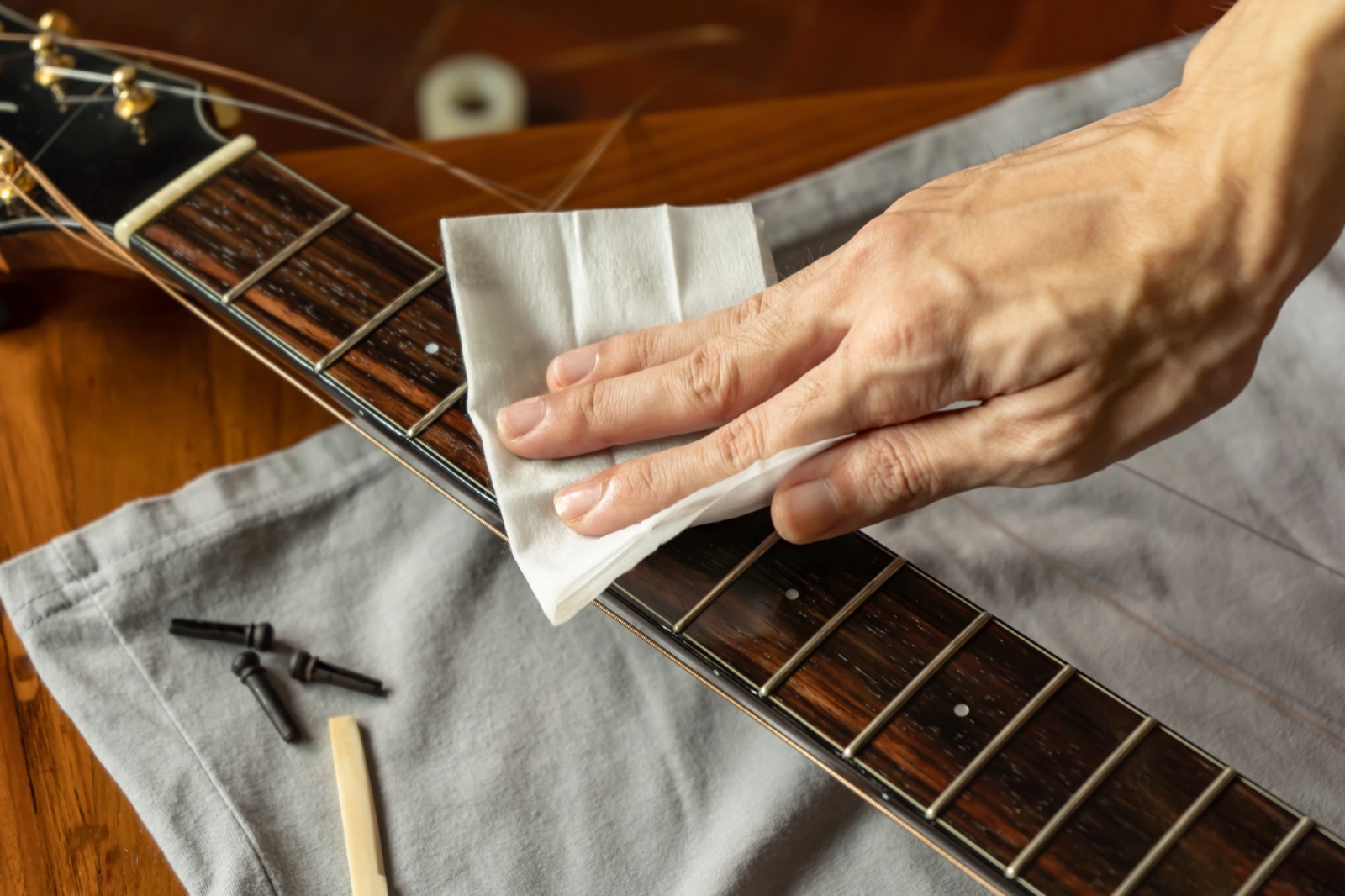
Good maintenance keeps your acoustic guitar in top condition. Regular cleaning is important; dust and dirt can build up on both the body and the strings, which affects the tone quality. Special wood cleaning products can help protect the surface without causing damage. Which products are safe for the finish, and how to clean the body, strings and bridge, you can read in cleaning your guitar without damage.
Also pay attention to temperature and humidity, because extreme conditions can make the wood shrink, swell or crack. Many guitar makers recommend a relative humidity of about 45 to 55 percent. You can read more about this in guitar maintenance in winter.
A good case or gig bag protects your guitar from shocks and rapid temperature changes.
Replace your strings regularly too. How often that is necessary, you can read in how often to replace guitar strings. That way your acoustic guitar will last for years.
The future of acoustic guitars: innovations and developments
The future of acoustic guitars looks promising, with ongoing innovations and developments within the industry. Manufacturers are experimenting with new materials and technologies to improve both sound quality and playability. Some brands, for example, are exploring sustainable woods or alternative materials such as composites to reduce ecological impact without compromising on quality.
We also see technological progress in built-in electronics for amplification or recording. This makes it easier for musicians to capture their sound or perform live without depending on external equipment. These innovations can contribute to a new generation of musicians who are drawn to the acoustic guitar as their instrument of choice in an ever-changing musical environment.
Want to start on an acoustic guitar yourself? In learning to play acoustic guitar for beginners you will find the first steps, and in from what age you can learn to play guitar you can read when children can start.
Frequently asked questions about acoustic guitars
What is an acoustic guitar?
An acoustic guitar is a stringed instrument that produces sound through the vibrations of the strings, which are amplified by the soundbox of the guitar.
What is the difference between an acoustic and an electric guitar?
An acoustic guitar makes enough sound on its own through the soundbox. An electric guitar converts the vibrations of the strings into a signal with pickups and needs an amplifier to be clearly audible. A hybrid is the semi-acoustic guitar.
What types of acoustic guitars are there?
There are several types of acoustic guitars, including the classical guitar, the western (steel-string) guitar, the 12-string guitar and the resonator guitar. The latter is especially loved by players of slide guitar, because it sounds loud and bright.
How do I choose the right acoustic guitar?
When choosing an acoustic guitar, you look at the sound, the size and shape of the guitar, the type of strings and the build quality. Preferably try a few models before you buy.
How do I maintain an acoustic guitar?
Replace the strings regularly, clean the guitar after playing, check the neck and frets now and then, and store the guitar in a place without big swings in temperature and humidity.
Which strings belong on an acoustic guitar?
A western guitar has steel strings and a classical guitar has nylon strings. Don’t put steel strings on a classical guitar, because it isn’t built for the higher tension. You can read more about the difference in nylon or steel strings.
Is an acoustic guitar suitable for beginners?
Yes. You don’t need an amplifier, so you can start playing right away. Steel strings do feel a bit heavier at first than on an electric guitar. If you’re unsure, read which is easier: an electric or an acoustic guitar.



Leave a Reply