


If you are going to buy an acoustic guitar, pay attention to five things above all: the size and shape, a solid or laminated top, the action (string height), the finish and your budget. Always try out several guitars and think about whether you need electronics for performing. Below you can read what to look for on each point, plus tips for buying secondhand, negotiating and maintenance.
An acoustic guitar is a versatile instrument. You can play folk, pop, rock, country and blues on it, and you do not need an amplifier. You can make music anywhere and anytime, alone or with friends, or even perform in a small café. Still unsure whether to start on acoustic or electric? Then first read which is easier: electric or acoustic. How to practice your first country chords and the boom-chicka rhythm on such a guitar is covered in learning country guitar as a beginner.

Set Your Budget
The price of an acoustic guitar ranges from a few hundred to thousands of euros, depending on brand, type and materials. For beginners, an entry-level model costing a few hundred euros is often a fine choice. Experienced musicians sometimes spend thousands of euros on a high-quality guitar. What you can realistically expect to pay is covered in how much a good beginner guitar costs.
A higher price does not always mean a better guitar, but it often means better finishing and a longer lifespan. Also count the extra costs: a bag, a tuner, spare strings and an occasional setup.
Choose the Right Size and Shape
The shape of the body largely determines the sound and the playing comfort.
| Shape | Sound | Suited for |
|---|---|---|
| Dreadnought | Powerful, lots of volume and low end | Strumming and accompanying vocals |
| Concert / Auditorium (OM) | Balanced, clear | All-round, fingerpicking and strumming |
| Parlor | Compact, midrange, less volume | Smaller players, playing on the couch, traveling |
| Jumbo | Big and full | Players who want lots of volume and bass |
A smaller guitar is easier to hold for children or people with smaller hands. Larger models give more volume and resonance. For children there are also 1/2 and 3/4 sizes; how to choose the right one is covered in tips for buying a guitar for kids. What else to look for with small hands, such as neck width and string action, is covered in tips for playing guitar with small hands. The size chart by age and height is in the explanation of which guitar size fits your child.
Also pay attention to the type of strings. A classical guitar has nylon strings and a wider neck, while a steel-string acoustic has steel strings and a brighter sound. You can read about the difference in nylon or steel strings.
Look at the Wood and the Top

The wood has a big influence on the sound and resonance of an acoustic guitar. The most common combinations:
- Spruce (top): bright and powerful, with good projection. The most widely used wood for the top.
- Cedar (top): warmer and softer, responds well to a light touch and fingerpicking.
- Mahogany (back and sides): warm and full, with an emphasis on the midrange.
- Rosewood (back and sides): rich, with deep bass and clear high notes.
More important than the type of wood is whether the top is solid or laminated. A solid top vibrates more freely and sounds fuller, and the tone often gets even better over the years. A laminated top consists of several thin layers of wood. It is cheaper and less sensitive to temperature and humidity, but sounds less open. A guitar with a solid top and laminated back and sides is often a good middle ground.
Test Different Brands and Models
Every brand has its own building techniques that affect sound and playability. Martin, Taylor and Gibson are known for their high quality and craftsmanship. Yamaha, Fender and similar brands offer excellent guitars for beginners. Do not look only at the brand name: also read reviews and experiences from other guitarists.
While testing, pay attention to how the guitar feels in your hands and how it sounds in the low and high registers. Play chords you know, but also single notes. If you can, bring an experienced guitarist along: they will hear and feel things that you, as a beginner, may still miss. If you play a lot of fingerpicking, also look at the width of the neck at the nut: a slightly wider neck gives your fingers more room.
By trying out different models, you discover which sound and feel suit you best.
Check the Action of the Guitar
The action is the distance between the strings and the fretboard. If the strings are too high, you have to press hard and your fingers tire quickly. That is especially frustrating for beginners. If they are too low, you get fret buzz: the strings vibrate against the frets and make a buzzing sound.
A guideline for a steel-string acoustic: at the twelfth fret about 2 to 2.5 mm at the low E string and 1.5 to 2 mm at the high E string. Measure it with a ruler or have the seller do it. Also ask whether the store will set up the guitar for free when you buy it. A good setup through the bridge, the nut and the truss rod often turns an average guitar into a pleasant instrument to play.
Check the Finish and Quality
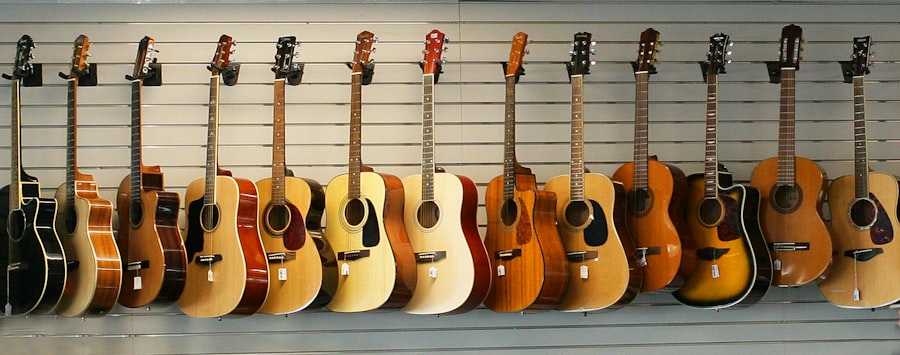
A well-finished guitar lasts longer and is less sensitive to wear and to changes in temperature and humidity. Pay attention to these points:
- no cracks in the wood or flaws in the finish;
- frets that are neatly finished and do not stick out at the side of the neck;
- a bridge that is attached along its entire width;
- tuning machines that turn smoothly and hold the tuning well;
- a straight neck: look along the fretboard from the headstock.
A high-gloss, satin or matte finish is mostly a matter of taste. A thin finish lets the wood vibrate a little more freely, but offers less protection. Small scratches in the finish can often be fixed easily; how that works is covered in repairing small scratches on a guitar.
Buying a Secondhand Acoustic Guitar
Secondhand, you can get a lot of guitar for your money, but check extra carefully. Look for cracks in the top, a bridge that is coming loose at the front, a top that bulges behind the bridge and deeply worn frets. Ask whether you can tune and try out the guitar, and play all the frets to hear whether anything buzzes. If that is not possible on the spot, bring a tuner with you.
Consider Electronics

An acoustic-electric guitar has a built-in pickup (usually a piezo under the saddle) and a preamp. That way you can connect the guitar to an amplifier or a mixing desk. That is handy if you want to perform or record. Many systems have a built-in tuner and an equalizer to adjust the sound.
If you only play at home, you do not need electronics. Guitars with electronics are often more expensive, so for the same money you can sometimes get a better-sounding guitar without electronics. If you are looking for something between acoustic and electric, also take a look at a semi-acoustic guitar. If you do choose a fully electric guitar, it is mostly about the pickups: single-coils sound bright and sparkling, humbuckers warmer and fuller.
Think About Accessories
Sometimes accessories are included with the guitar, sometimes you buy them separately. Find out what comes with it, so you are not in for any surprises. Useful accessories are:
- Guitar bag or case: a padded gig bag for everyday use, a hard case for extra protection during transport.
- Tuner: a clip-on tuner is cheap and handy.
- Capo: it lets you easily play in other keys without learning new chords. Read more about using a capo.
- Spare strings and picks.
- Guitar stand and cleaner for the woodwork.
Research the Seller and the Warranty
A reliable seller offers not only good instruments, but also service if something goes wrong after the purchase. Read online reviews or ask other musicians for advice. Find out how long the warranty is: that differs per brand and can range from a few years to a lifetime. Also look at the return policy, especially if you buy online. Some stores offer extra service, such as a free setup after a few months.
Negotiate the Price
In many music stores there is room to negotiate, especially if you also buy accessories or if the instrument has small imperfections. Stay friendly but clear. For example, ask whether a bag, strings or a setup can be included. Also look out for offers around holidays or during special promotions.
Maintenance and Care for Your New Guitar
Wipe the strings clean after playing, check the guitar regularly for cracks and store it in a place with a stable temperature and humidity (about 45 to 55 percent). An acoustic guitar is sensitive to dry air; how to deal with that during the heating season is covered in maintaining your guitar in winter.
Have your guitar set up by a guitar technician every now and then to keep the action and intonation in good shape. That way your guitar stays playable for years. If you are also looking for a good method to learn to play, read which book is best for learning guitar.
Frequently asked questions about buying an acoustic guitar
What are acoustic guitars?
Acoustic guitars are string instruments that produce sound through the vibration of the strings, amplified by the hollow body. So you do not need an amplifier. They are used in folk, country, pop and rock, among other styles.
What are the different types of acoustic guitars?
The best-known types are the classical guitar with nylon strings, the steel-string acoustic, the 12-string guitar and the resonator guitar. Each type has its own characteristics and its own sound.
What should I look for when buying an acoustic guitar?
Look at the size and shape, a solid or laminated top, the action, the finish and the playing comfort. Also think about what music you want to play and whether you need electronics. Always try out several guitars before you choose.
How much does an acoustic guitar cost?
The price depends on the brand, the wood, the finish and any electronics. Acoustic guitars cost from a few hundred to thousands of euros. For a beginner, a guitar costing a few hundred euros with a solid top is a good choice.
Where can I buy an acoustic guitar?
At music stores, online retailers, specialized guitar shops and secondhand through classified ad sites. In a store you can try out several guitars and often have them set up for free. Online the selection is bigger, but pay attention to the return policy.
Is a solid top really better?
Usually a solid top sounds fuller and more open, and the tone develops over the years. A laminated top is stronger and less sensitive to dry or humid air, though. For a first guitar that gets carried around a lot, laminated is therefore also fine.
Can I buy an acoustic guitar online and send it back?
Yes. If you buy from an online store in the EU, you have a 14-day cooling-off period to return the guitar without giving a reason. Use that time to try the guitar out thoroughly, and check for shipping damage as soon as it arrives. This right does not apply when buying from a private seller.





Leave a Reply