
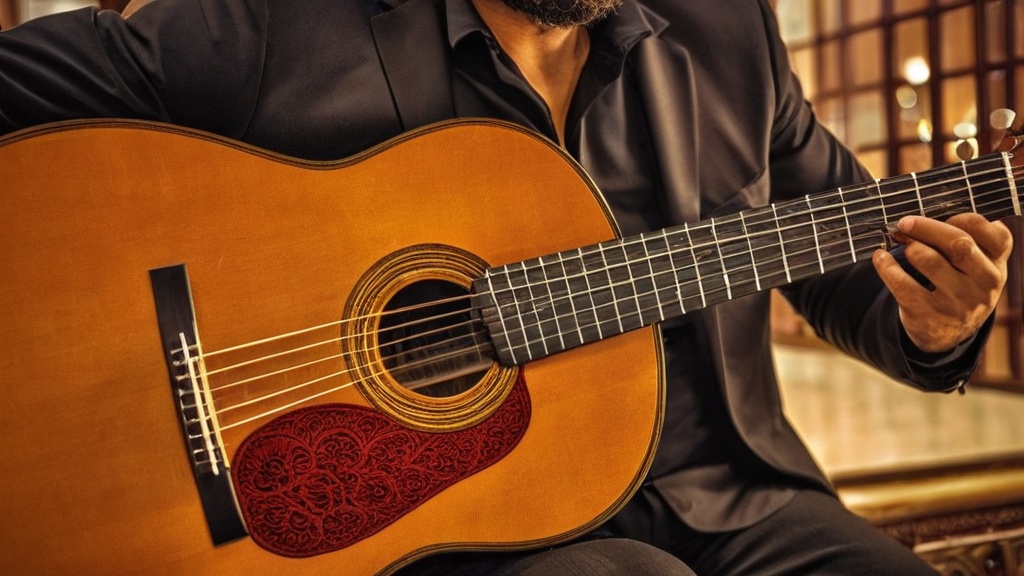

Learning to play Spanish flamenco guitar starts with three things: good posture, the typical right-hand techniques such as rasgueado and picado, and a steady sense of rhythm for the compás. You play flamenco on a nylon-string guitar, usually a flamenco guitar with low action and a bright, fiery sound. Below you can read which guitars, techniques and rhythms go with it and how to practice with focus.
The history of the flamenco guitar
The Spanish flamenco guitar has a rich and complex history that goes back to the 18th century. Flamenco originally emerged in the region of Andalusia, where it was a fusion of different musical influences, including the music of the Roma, Moorish and native Spanish cultures. These diverse influences led to a unique musical style that includes not only the guitar, but also singing and dance. You can read about the harmonic basis of that Andalusian sound, with the progression Am-G-F-E, in the article on Spanish chord progressions for guitar.
The flamenco guitar itself evolved from the traditional Spanish guitar, but underwent specific adaptations to produce the powerful and expressive sounds so characteristic of flamenco. Over the years the flamenco guitar developed various styles and techniques, all of which contribute to the rich tradition of this music. Well-known guitarists such as Paco de Lucía and Vicente Amigo further popularized and refined the flamenco guitar, which won the instrument recognition worldwide.
The history of the flamenco guitar is therefore not only a story of musical development, but also of cultural exchange and social change, in which the instrument plays an important role in conveying emotions and stories.
Summary
- Flamenco originated in Andalusia and goes back to the 18th century; in the 19th century the role of the guitar grew. Influences come from, among others, the music of the Roma and Moorish and Jewish culture.
- Basic skills for learning to play Spanish flamenco guitar include learning the right posture, using your nails and developing a good right-hand technique.
- There are different kinds of flamenco guitars, including the “blanca” and “negra”, which differ in sound and construction.
- Important techniques for playing Spanish flamenco guitar include rasgueado, tremolo and alzapúa, which produce the characteristic flamenco sound.
- The importance of rhythm and timing in flamenco music cannot be overstated, as it forms the basis of the entire style and is essential for conveying emotion.
The basic skills for learning to play Spanish flamenco guitar
When you start learning to play Spanish flamenco guitar, there are some basic skills you need to master. First, it is important to get familiar with the right posture and technique. This covers how you hold the guitar, place your fingers and coordinate your hand movements.
Good posture is crucial for developing strength and precision in your playing. It can be useful to take lessons from an experienced flamenco guitarist or watch online tutorials to get these basic skills under your belt. It is also essential to learn the different chords and fingerings specific to flamenco music.
Flamenco uses unique chords and progressions that you do not often come across in other styles of music. Practicing these chords will help you lay a solid foundation for your further development as a flamenco guitarist. Do not forget that consistency and patience are key words in this learning process; it can take a while before you feel comfortable with the techniques and styles.
The different kinds of flamenco guitar
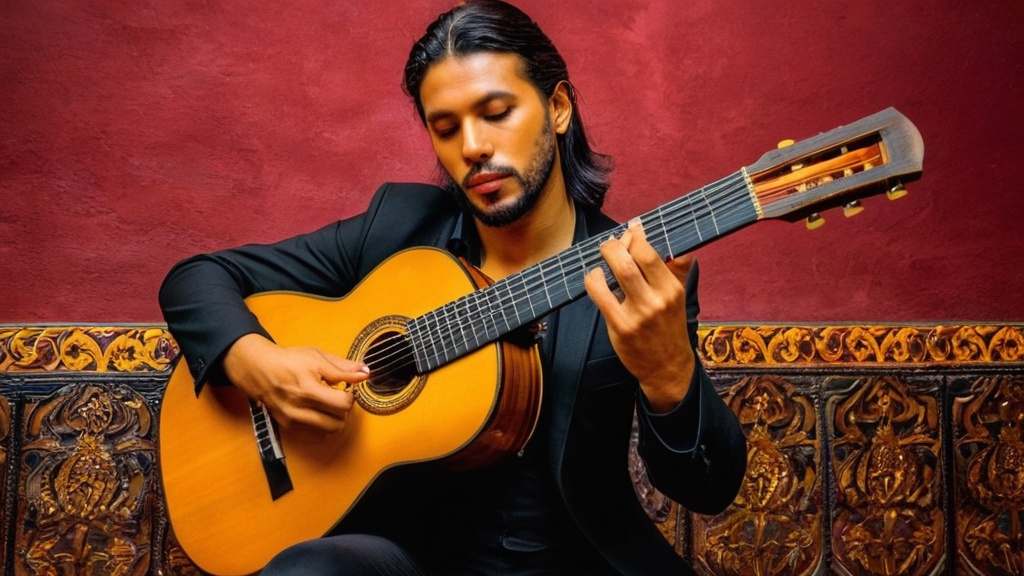
There are different kinds of flamenco guitars, each with their own characteristics and sound. The most common types are the “flamenco blanca” and the “flamenco negra”. The flamenco blanca is usually lighter in weight and has a brighter sound, which is ideal for the fast, rhythmic passages typical of flamenco music.
These guitars usually have a spruce top (sometimes cedar) and a back and sides of cypress, which contributes to their sharp and penetrating sound. The flamenco negra, on the other hand, is usually heavier and has a richer, warmer sound. These guitars usually have a back and sides of rosewood, which gives a fuller sound.
The choice between these two types depends on your personal preference and playing style. It is advisable to try out different guitars to find out which suits you best.
Important techniques for playing Spanish flamenco guitar
When playing Spanish flamenco guitar, there are several techniques that are essential for creating the authentic sound. One of the most important techniques is “rasgueado”, a powerful strumming technique in which you move your fingers across the strings in a fast, rhythmic motion. This gives an energetic and lively sound that is characteristic of flamenco music.
It takes a lot of practice to master this technique, but once you have it, it will take your playing to a higher level. Another important technique is “alzapúa”, in which you use your thumb to make a combination of up and down movements to create melodies and rhythms. This technique adds a dynamic element to your playing and lets you combine melodic and rhythmic passages.
It is crucial to practice these techniques regularly, so that they become a natural part of your playing. By integrating these techniques into your daily practice sessions, you will notice that your playing becomes more and more refined and expressive.
Picado, tremolo and golpe
Besides rasgueado and alzapúa, flamenco uses three more techniques. With picado you play fast single notes by alternating your index and middle fingers, usually with a rest stroke: after the stroke your finger rests on the next string. You play the flamenco tremolo with the pattern p-i-a-m-i: first a bass note with your thumb and then four rapidly repeated notes on a higher string. With the golpe you tap the golpeador (tap plate) with your ring finger for a percussive accent.
The importance of rhythm and timing in flamenco music
Rhythm and timing are fundamental elements in flamenco music. Flamenco is not only a musical style; it is also a dance form that depends heavily on rhythmic patterns. The different “palos” or styles within flamenco have their own specific rhythms, which range from fast and energetic to slow and melancholic. If you are still unsure about counting bars, first read how counting rhythm on guitar works.
Understanding these rhythms is crucial for every flamenco guitarist, because they form the basis for both playing and accompanying dancers. To improve your sense of rhythm, you can practice with a metronome or play together with other musicians. This helps you not only refine your timing, but also gain a better understanding of how rhythm works in the context of flamenco music.
Developing a strong sense of rhythm will not only improve your playing, but also your ability to work with other musicians and dancers.
Basic exercise: the twelve-beat compás
Many palos, such as soleá, alegrías and bulerías, use a cycle of twelve beats with accents on 3, 6, 8, 10 and 12. Count out loud from 1 to 12 and clap on the accented beats. Once that goes smoothly, play a short rasgueado on an E chord (022100) on each accented beat and count the other beats softly. Start slowly with a metronome and only increase the tempo when the accents fall into place on their own. You can read how to place E major neatly in a separate explanation.
Learning traditional flamenco compositions and styles
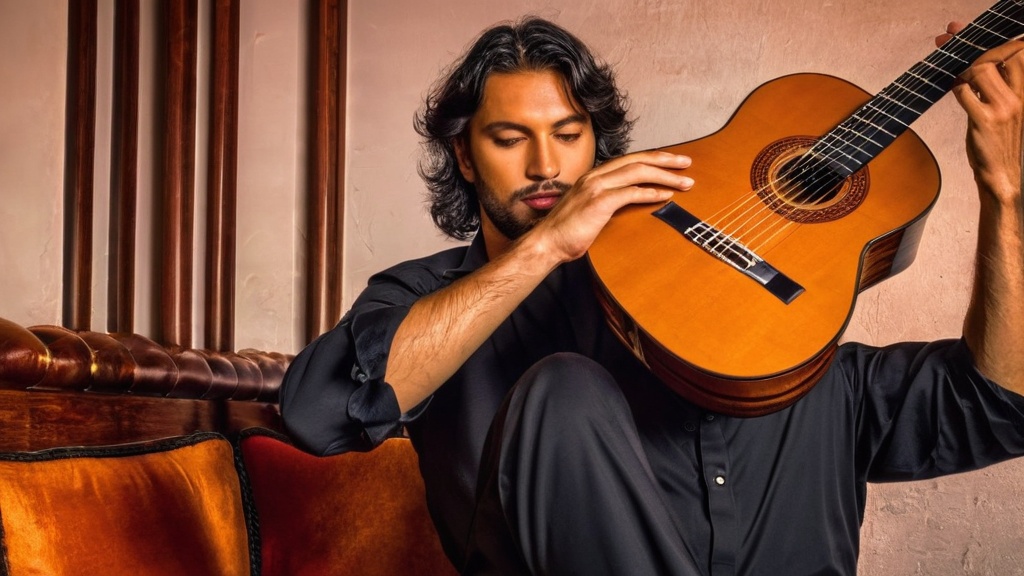
An important aspect of learning to play Spanish flamenco guitar is studying traditional compositions and styles. Flamenco has a wide range of palos, each with its own unique characteristics and emotional expression. By learning these traditional pieces, you gain insight not only into the technical aspects of playing, but also into the cultural context in which this music arose.
Learning classic flamenco compositions can also be inspiring for your own creativity. By understanding how great guitarists built their music, you can integrate elements of their style into your own playing. This can range from applying specific techniques to experimenting with rhythms and melodies that appeal to you.
It is a valuable way to develop further as a musician.
Tips for improving your Spanish flamenco guitar playing
There are several tips you can follow to improve your Spanish flamenco guitar playing. First, regular practice is essential. Try to make time to practice every day, even if it is only a short session.
Consistency helps build muscle memory and improves your overall technique. It can also be useful to set specific goals for each practice session, such as improving a particular technique or learning a new piece. Another valuable tip is to record yourself while you play.
This lets you listen to yourself and identify any weak points in your playing. You can also ask experienced musicians or teachers for feedback, who can help you refine your technique and style. Do not forget that every musician follows their own unique path; be patient with yourself as you grow as a flamenco guitarist.
The importance of passion and emotion in playing flamenco guitar
Flamenco is more than just technique; it is an expression of passion and emotion. When you play, it is important to bring these elements into your music. The power of flamenco lies in its ability to convey feelings, whether that is joy, sadness or longing.
Developing an emotional connection with the music will not only improve your playing, but also touch the audience. To bring this emotion into your playing, you can immerse yourself in the culture and history of flamenco. Listen to different artists, watch dance performances and read about the stories behind the music.
This will help you make a deeper connection with the music and will translate into a more authentic performance on your guitar. Remember that every note you play is a chance to express something personal; let that passion flow through your fingers as you play.
If you are interested in flamenco, it is also worth exploring other guitar styles. For example, see how to learn to play Spanish guitar music, or look at neighboring Portugal with the step-by-step guide to the Portuguese guitar and the article on practicing fado on guitar. By exploring different styles, you develop a broader musical perspective and refine your technique. In South America, too, you will find a guitar tradition with Spanish roots: read how the Argentine tango guitar style works.
Frequently asked questions about learning flamenco guitar
What is Spanish flamenco guitar?
Spanish flamenco guitar is a style of guitar playing that originates in the Andalusian region of Spain. It is characterized by its rhythmic and percussive playing style and is often accompanied by singing and dance.
What are the characteristics of Spanish flamenco guitar?
Spanish flamenco guitar is characterized by the use of specific chords, rhythms and techniques, such as rasgueado (rapidly and rhythmically striking the strings with the fingers) and golpe (tapping on the guitar body for a percussive effect).
How can I learn to play Spanish flamenco guitar?
To learn to play Spanish flamenco guitar, your best bet is to look for an experienced guitar teacher who specializes in flamenco. Online courses and tutorials are also available to learn the basics of flamenco guitar. You can read what to look for when choosing a teacher in the guide to guitar lessons. If you would rather have one-on-one attention, read our article on personal guitar lessons.
Which kinds of guitars are used for Spanish flamenco music?
The guitar most used for Spanish flamenco music is the flamenco guitar, which stands out for its light construction, low action and bright sound. Classical guitars are also used for flamenco, but these often have a slightly different sound and playing style.
Can you learn flamenco on a classical guitar?
Yes, to start with a classical guitar is fine, because it also has nylon strings. A flamenco guitar does have a lower action, a fierier sound and a golpeador that protects the top. A guitar with steel strings sounds very different and is less suitable; read more about the difference between nylon and steel strings.
What are palos in flamenco?
Palos are the different styles within flamenco, such as soleá, bulerías, alegrías and tangos. Each palo has its own rhythm (compás), key and mood. Many beginners start with a palo in four beats, such as tangos, before they move on to the twelve-beat compás of soleá or bulerías.



Leave a Reply