


How long does it take to learn to play guitar? That differs from person to person, but with regular practice you will usually play your first simple songs with basic chords within a few weeks to a few months. To really master the basics, you are looking at months to years. Your pace depends mostly on how often and how purposefully you practice and on what you want to be able to play.
Summary
- There is no fixed learning time: how often you practice, the quality of your exercises and lessons, motivation, natural aptitude and your goals determine the pace.
- The basics consist of the parts of the guitar, good posture, tuning, chords, scales and picking technique.
- Practicing a little every day with a clear goal works better than an occasional long session.
- A good balance between practice and rest prevents fatigue and injuries.
- Online tutorials, private lessons, books and playing with others are all useful ways to learn; a good teacher speeds up the learning process.
- Motivation, perseverance and achievable goals help you get through difficult phases.
- Enjoying your playing and celebrating small steps forward keeps you motivated in the long run.
A rough indication per phase
Everyone learns at their own pace, so see the phases below as a rough route and not a fixed schedule. How long each phase lasts depends on how much and how purposefully you practice.
| Phase | What you learn |
|---|---|
| The first weeks | Holding and tuning the guitar, strumming the strings, your first chords such as Em and E. Your fingertips still have to get used to the strings. |
| The first months | Open chords such as C, G, D, A, Em and Am, changing smoothly between chords, simple strumming rhythms and your first complete songs. |
| Advanced beginner | Barre chords, scales, reading tabs and sheet music, techniques such as hammer-ons, pull-offs, slides and bends. |
| After that | Your own style, improvising, playing by ear and more complex chords such as seventh chords. |
If you want to tackle the first phase in a structured way, a practice schedule for the first 30 days helps. Sore fingertips at the start are normal; in preventing finger pain you can read how to deal with them.
How long does it take per goal?
How long it takes to learn to play guitar depends heavily on what you want to be able to play. Accompanying a few songs comes much sooner than soloing or developing your own style. The table below gives rough indications for someone who practices briefly and purposefully most days of the week, for example fifteen to thirty minutes. They are not promises: for some people it goes faster, for others slower.
| Goal | What you need for it | Rough indication |
|---|---|---|
| Your first simple song | Two or three open chords and a relaxed strumming pattern | A few weeks to a couple of months |
| Accompanying singalongs and campfire songs | The open basic chords, changing quickly and a few strumming patterns | Often a few months to half a year |
| Playing most pop songs from a songbook | Barre chords, using a capo and reading tabs | Often half a year to a year or longer |
| Playing solos and improvising | Scales, techniques such as bends and hammer-ons, ear training | Usually several years, and you keep learning |
If you practice less often, these periods shift. Want to know how quickly that first song is within reach and which songs are suitable? Then read how quickly you can play your first song.
What determines how quickly you learn to play guitar?
- Frequency and length of your practice sessions: practicing regularly gets you further than occasionally practicing a lot.
- Quality of your exercises and lessons: purposeful practice and good instruction make the difference.
- Motivation and perseverance: if you keep going when it gets tough, you get further.
- Natural aptitude and learning ability: some people pick up rhythm or chords faster than others.
- Your goals: accompanying a few campfire songs takes less time than playing fast solos or classical pieces.
If you wonder whether guitar is hard at all, also read is learning guitar hard?
The basics of playing guitar
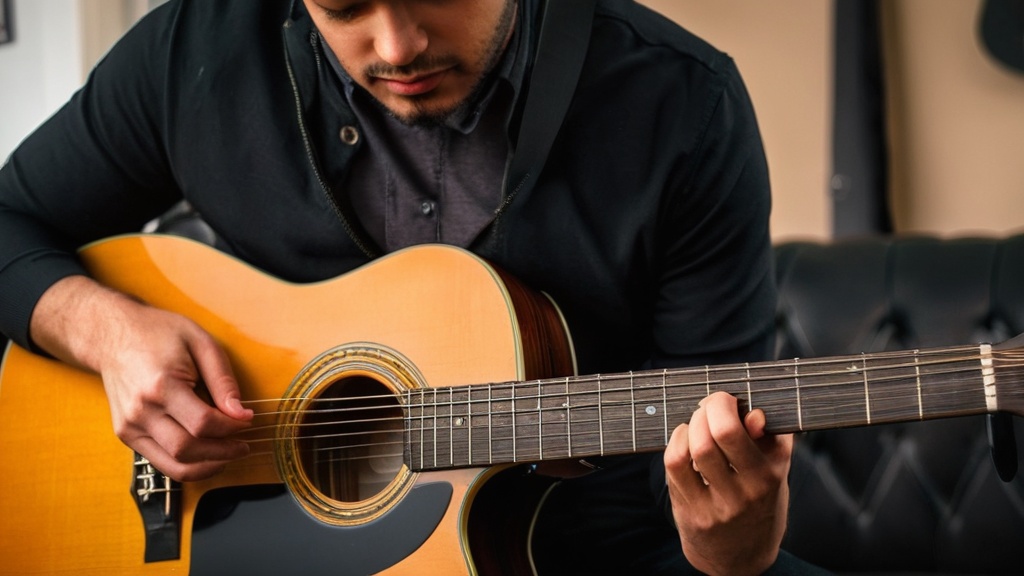
Start with the parts of the guitar: the neck, the strings, the frets, the tuning pegs and the body. Every string has its own pitch, and good finger placement is needed to play chords and melodies. Also learn how to hold the guitar and strum the strings. A good playing posture is important for your comfort and your technique.
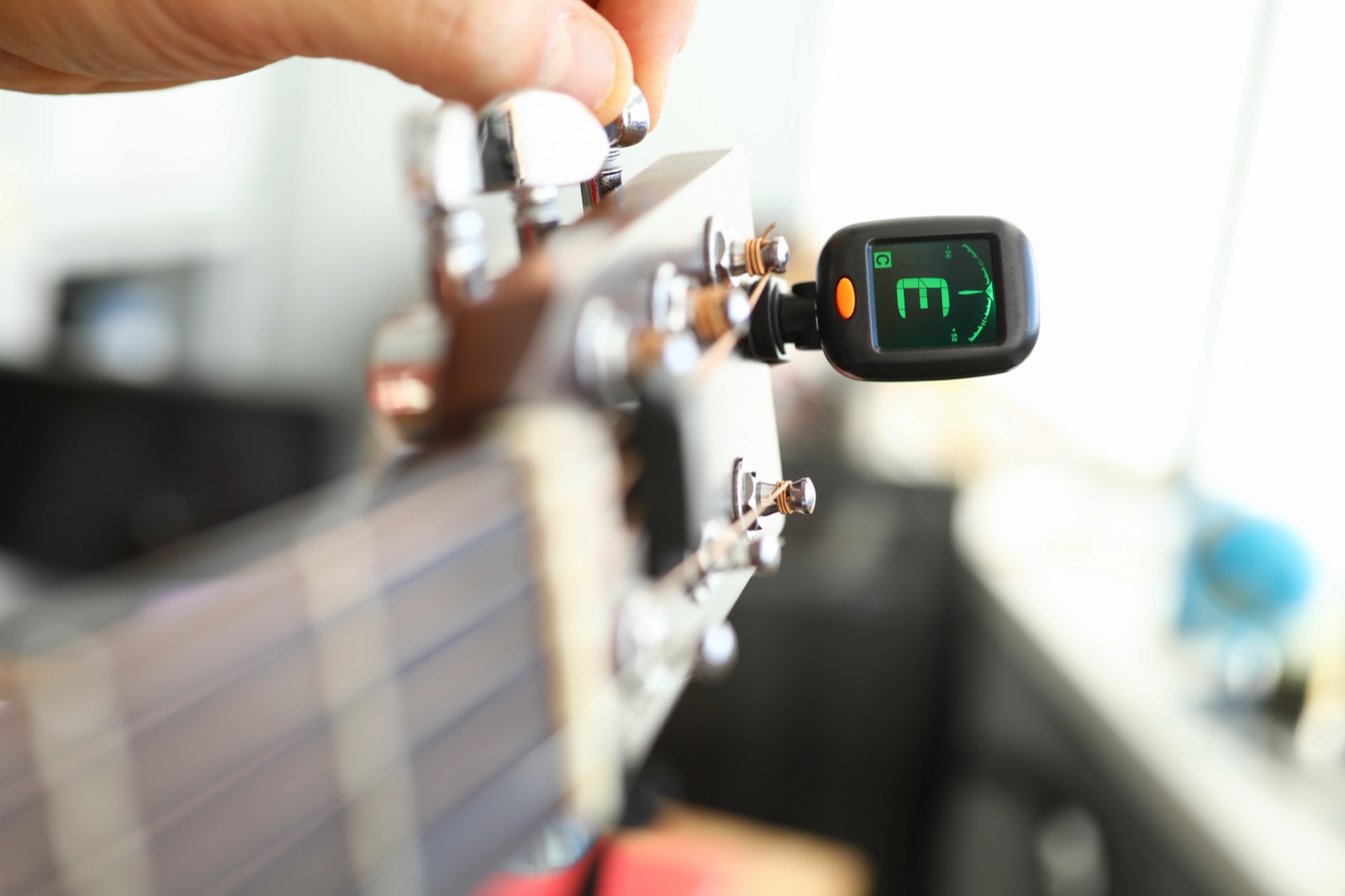
Chords and scales form the core of your technique. A chord is created by playing several strings at once; a scale is a series of consecutive notes within a key. Together they build your harmonic and melodic understanding. Also learn to tune your guitar, by ear or with an electronic tuner.
There are different types of guitars, such as acoustic and electric guitars, each with its own sound and playing style. A guitar that suits your taste in music makes learning more fun. Learning guitar is also not only about technique, but about a feel for music. You develop that by playing simple songs and experimenting with styles.
Time, dedication and consistent practice
Consistency is the most important factor. Practicing briefly every day is better than an occasional long session. That way you develop not only your skills, but also your musical ear and sense of rhythm. Set aside a fixed moment of the day so that practicing becomes a habit. You can read how much time makes sense in how long to practice per day to learn guitar.
Also practice with a purpose. Set a concrete goal for each session, such as a new chord, a faster chord change or a certain technique. Repeat difficult passages until they work and build up step by step. Through regular repetition you build muscle memory, so chords and melodies become smoother and more accurate.
Be patient. It can be frustrating when you do not see results right away, but progress takes time. See mistakes as a normal part of the learning process and as a chance to grow.
The balance between practice and rest
Practicing too much can lead to fatigue and even injuries to your hands and wrists. So take enough rest between practice sessions, so your muscles can recover. You can read how to prevent overuse in avoiding wrist injuries when practicing guitar.
Rest also helps you process what you have learned. A break gives your mind room to let new techniques sink in and to get new ideas. It also keeps practicing from becoming an obligation, so you stay fresh and motivated.
Different ways to learn

There are many ways to learn guitar, and the best method is the one that suits you. Lessons with an experienced guitar teacher give personal guidance and direct feedback. Online courses, video tutorials and YouTube videos let you work at your own pace and discover different styles and techniques. Guitar books and teaching materials offer a structured build-up with exercises. You can find tips for making good use of such a lesson in guitar lessons via YouTube.
Playing with other musicians helps develop your ear and your ability to improvise. A combination often works best, for example taking lessons and also using online resources. That gives you a broader picture of guitar playing.
Finding a good guitar teacher
A good guitar teacher can speed up your learning considerably. An experienced teacher teaches you technique, music theory and creativity, corrects bad habits before they stick and helps you get past obstacles. Look for someone who can explain their knowledge clearly and adapts to your learning style, so the lessons stay challenging and fun.
A teacher also helps you set realistic goals and makes a structured learning plan that fits what you want, from specific songs to certain techniques or styles. You can read more about the benefits in guitar lessons with personal guidance.
Learning sheet music, tabs and chords

Many guitarists learn songs from memory or from tabs. Being able to read sheet music offers extra possibilities: it tells you not only which notes to play, but also how long to hold them and with what dynamics. That gives a deeper understanding of music.
Chords are the basis of many popular songs and music styles, from simple major and minor chords to seventh chords and diminished chords. With a few chords you can quickly play songs you like, and that motivates you to go on. Practice chord changes regularly for smoothness and speed. An important next step is barre chords.
Developing playing skill and technique
As you progress, technique becomes more important. Besides basic skills such as finger placement and picking technique, you learn techniques such as bends, slides and hammer-ons and pull-offs. They let you play more expressively and bring more variety to your music.
Work on your technique with focused exercises, from simple scale exercises to arpeggios and rhythmic patterns. Include them in your daily routine. Even the most experienced guitarists have practiced for years to refine their technique.
Overcoming challenges

Difficult chords and techniques
A common challenge for beginners is complex chords and playing techniques. That takes patience and perseverance, but with consistent practice you keep getting better.
Developing a good ear
Recognizing melodies, chords and pitches is necessary for playing by ear and improvising. You develop that by listening to many different kinds of music and actively training your ear with exercises.
Asking for help and setting achievable goals
If you get stuck, ask a teacher or an experienced guitarist for help. A mentor can give valuable feedback. Set achievable goals and overcome challenges step by step; that is how you grow as a musician and discover new possibilities in your playing.
Motivation and perseverance
Staying motivated can be hard, especially when your progress is slower than you hoped. Remind yourself why you started: maybe you want to play a certain song or simply enjoy making music. There will be moments when you get frustrated or doubt yourself. That is exactly when it matters to keep going. Every guitarist has stood at that point at some time.
Reward yourself for goals you reach, however small. Every step forward counts. You can find more tips in staying motivated while learning guitar.
Enjoying the process and continuing to learn

The most important thing is that you enjoy playing. Making music is a way to express yourself and connect with others. Play songs you like, experiment with styles and allow yourself to make mistakes without judging yourself too harshly.
Set goals that make your progress visible, from a new chord to a complete song without mistakes, and celebrate those milestones. Look for fellow musicians to play with, jam with and share experiences. And stay curious, even once you have mastered the basics: there is always something new to discover, whether it is techniques, styles or even another instrument. That is how you learn to improvise during a jam session.
Frequently asked questions about how long it takes to learn guitar
How long does it take to learn to play guitar?
That cannot be said exactly, because it depends on how much time you put in, your learning ability and your goals. In general it takes several months to years to get the basics of guitar playing under your belt.
Which factors determine how long it takes before you can play guitar?
The most important factors are the frequency and length of your practice sessions, the quality of your exercises and lessons, your motivation and perseverance, and your natural aptitude for music.
Is it possible to learn to play guitar quickly?
You can learn the basics relatively quickly if you practice regularly, are motivated and use an effective learning method. Some people learn the basic chords and rhythms within a few months, others take longer. Tips for using your practice time efficiently are in learning guitar fast with short practice sessions.
Do I need musical experience to learn to play guitar?
No, you do not need any musical experience. Many people start without any knowledge of music theory or instruments. Also read can anyone learn to play guitar?
What are good ways to learn to play guitar?
You can take lessons at a music school or with a private teacher, use online teaching materials and tutorials, or learn on your own with method books, exercises and instructional videos. Choose a method that suits your learning style.
How often should you practice to progress faster?
Preferably practice every day, even if it is only briefly. A short daily session with a clear goal gets you further than one long session per week, because your muscle memory builds through repetition.
Can you still learn to play guitar later in life?
Yes, there is no age limit. Adults often have more patience and discipline and know better what they want to play. You can read more about this in from what age you can learn to play guitar. With the right lesson format you get more out of your limited time; see choosing guitar lessons as an adult. You can read how that works out in practice in success stories of adults learning guitar.
How long does it take to learn to play guitar as an adult?
Adults go through roughly the same phases as children. The difference lies mostly in the time available: if you practice little, it takes longer. So plan fixed, short practice moments in your week and choose songs you really want to play.
How long before your fingers stop hurting?
Sore fingertips are normal at the start. With regular practice they usually get tougher within a few weeks, so pressing down hurts less. Keep sessions short during that period. If you have persistent pain, or pain in your hand or wrist, take a rest and consult a doctor or physiotherapist.




Leave a Reply