
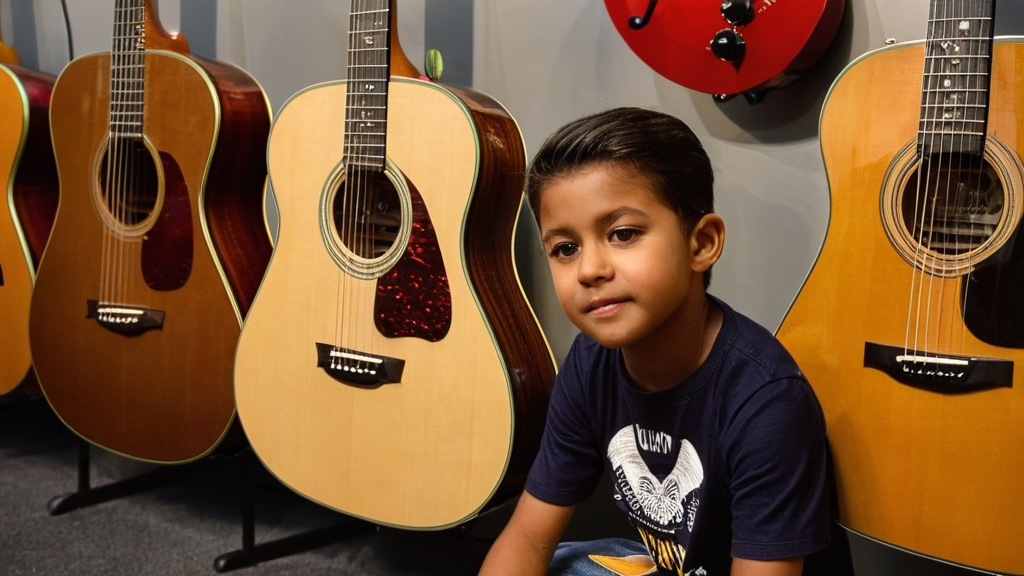

Short answer: For a child up to about 12 years old, buy a classical kids’ guitar with nylon strings, in the size that matches your child’s height. Also look for low string height, tuning machines that hold their tuning and a neat finish. An expensive guitar isn’t necessary, but one that is easy to play is.
This buying guide goes with the guide learning guitar for kids, where you can also read how to approach the first lessons. This one is only about the purchase: which type of guitar, which size, what to look for in the store and which mistakes are best avoided.
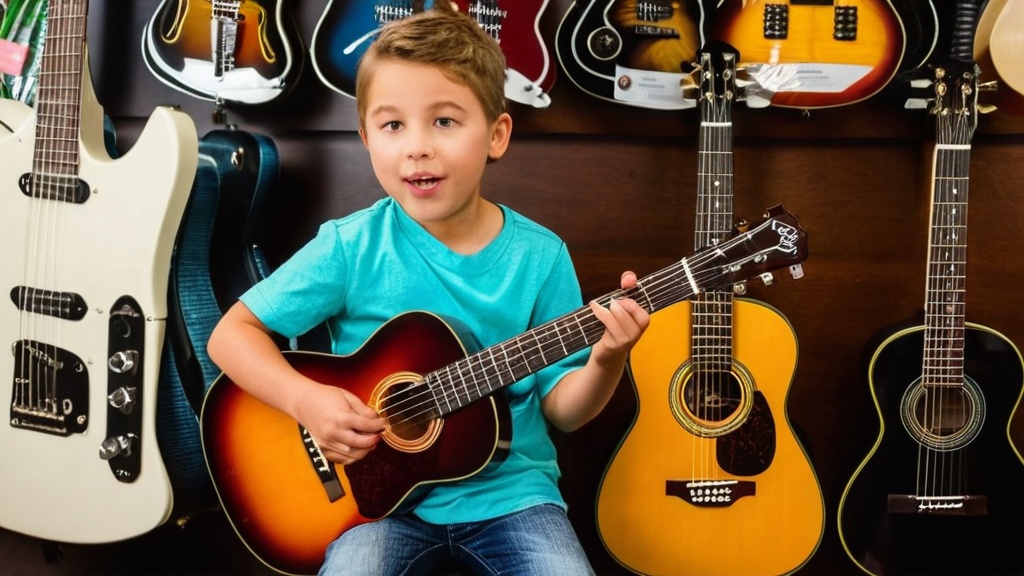
Which Guitar for a Child? A Quick Guide
For most kids, a classical guitar with nylon strings is the best first guitar. A steel-string acoustic or an electric guitar suits bigger kids with stronger fingers or a clear preference for a music style.
| Type | Who it’s for | Advantages | Watch out for |
|---|---|---|---|
| Classical kids’ guitar (nylon) | Most kids from about age 5, especially as a first guitar | Soft strings, available in 1/4, 1/2, 3/4 and 7/8, no extra gear needed | Wider neck; sounds softer and rounder than steel |
| Steel-string acoustic in a small size | Older kids who want to play pop songs or singer-songwriter music | Bright, loud sound, works well for chord accompaniment | Strings need more strength and hurt sooner at first; less choice in small sizes |
| Electric guitar, small or short-scale model | Kids who want to play rock, usually from about age 9 | Thin strings, narrow neck, often a low string height | Needs an amp and cable; the body can be heavy for a small child |
| Ukulele | Young kids for whom even a 1/4 guitar is still big | Small, light, four soft strings | Different tuning and chord shapes, so when your child switches to guitar they learn the chords again |
If you’re torn between classical and electric, ask which music your child wants to play: enjoyment keeps them practicing. What you need besides the guitar if your child wants to play electric is covered in the explanation of an electric guitar for beginners. For preschoolers, playing ukulele with your child is sometimes a good stepping stone.
Nylon or Steel: Which Strings for a Child?
For young kids, nylon strings are usually the best choice, because they are under less tension and feel softer than steel strings. Your child can press them down more easily and their fingertips hurt less quickly. That is why the smallest sizes (1/4 and 1/2) are almost always classical guitars.
Steel strings sound brighter and suit pop and folk, but they take more strength in the fingers. For a child of about 10 who has been playing for a while, a small steel-string acoustic can work well. You can read about the difference between nylon and steel strings in a separate article. In the overview of types of guitar strings you can see which gauges exist.
Never put steel strings on a classical guitar. A classical guitar is built for the lower tension of nylon: steel can warp the neck and bridge or make them come loose.
Which Size Kids’ Guitar Fits?
The right size depends mostly on your child’s height and arm length, and less on their age. As a rough guideline, a 1/4 guitar fits preschoolers, a 1/2 fits about ages 6 to 9, a 3/4 fits about ages 9 to 12, and after that a 7/8 or a full size (4/4). Brands and stores use slightly different limits.
The full table with age and body height, plus how to measure at home, is in the size guide for a kids’ guitar. Two rules of thumb:
- If you’re torn between two sizes, choose the smaller one. A guitar that’s too big makes chord shapes harder and leads to a crooked posture.
- Always let your child hold the guitar for a moment. In playing position, the left hand reaches the first fret with a slightly bent arm, without leaning forward.
If your child has small hands for their age, the tips on playing guitar with small hands will help.
String Height and Playability
A good kids’ guitar is light to play: the strings sit low above the fretboard, so your child presses them against the frets without much force. That distance is called the string height or action. If the strings sit too high, your child has to squeeze hard, their fingers get sore sooner and chords sound out of tune more often.
Cheap guitars in particular often have a poorly adjusted string height. That can usually be fixed: a music store or guitar builder can lower the saddle (the strip on the bridge that the strings run over) and adjust the neck if needed. How often such a setup makes sense is covered in how often to have a guitar set up.
Also pay attention to these points:
- Tuning machines: they turn smoothly and the guitar stays in tune after tuning.
- Fret ends: no sharp edges stick out at the side of the neck.
- Intonation: a fretted note at the 12th fret sounds exactly an octave higher than the open string.
Sore fingertips in the first weeks are normal. The article on finger pain when learning guitar explains how to limit it.
Buying on a Budget
An entry-level kids’ guitar is a perfectly good start, as long as it is the right size and easy to play. You don’t know yet whether your child will stay interested in playing guitar, and a child grows out of a small size within a few years. So an expensive 1/4 or 1/2 guitar is rarely needed.
What you should be strict about with a cheap kids’ guitar:
- Playability comes before looks. A low string height and tuning machines that hold their tuning matter more than a cheerful color.
- Buy from a music store, not the toy aisle. A toy guitar often won’t stay in tune, and a child doesn’t learn guitar on one.
- Read other parents’ experiences and ask a music teacher or someone who plays guitar to look along.
- Factor in a setup. A well-adjusted entry-level guitar often plays better than a more expensive guitar that hasn’t been set up.
In the mid-range you usually get a better finish, more stable tuning and a fuller sound. That pays off especially with a 3/4 or 7/8, which your child will use for longer, or when your child has been playing happily for a while. Well-known brands like Yamaha, Fender and Squier have entry-level models in smaller sizes. You can read more about price ranges in what a good beginner guitar costs.
A cheap guitar stays good for longer if you take care of it. Wipe the strings after playing, store the guitar in a case and don’t put it next to the radiator or in a cold car. You can find more tips in the best ways to store your guitar at home.
New or Secondhand?
Secondhand is often a smart choice for a kids’ guitar, because kids grow into a bigger size within a few years. That means small guitars get resold a lot, through secondhand marketplaces, music stores with used instruments or other parents. Also ask at the music school or music store whether renting or trading in is possible.
Buying new has the advantage that you get a warranty and the store often sets the guitar up. If you go secondhand, check:
- whether the neck is straight: look along the neck from the headstock toward the body;
- whether there are no cracks in the top or around the bridge, and whether the bridge isn’t coming loose;
- whether the frets aren’t deeply worn;
- whether the string height isn’t too high and the tuning machines turn smoothly.
A few scratches in the finish are no problem and can often be dealt with yourself, as you can read in repairing small scratches on a guitar. If in doubt, take someone along who plays guitar.
Checklist for the Store
When buying a guitar for kids, trying it out is the most important thing, so take your child to the store. Go through these steps together:
- Have your child sit upright, with both feet on the floor and the guitar on the thigh.
- Check whether the size fits: the left hand reaches the first fret with a slightly bent arm and the right arm rests relaxed over the body.
- Have the guitar tuned and play each open string: you hear no buzzing or rattling.
- Have your child press a string down at the first fret. If that works without much force, the string height is fine.
- Run your hand along the side of the neck: no sharp fret ends stick out.
- Turn the tuning machines: they turn smoothly and have no play.
- Compare the open string with the same string fretted at the 12th fret: it sounds a clean octave higher.
- Ask whether the guitar has been set up and what comes with it, such as a case or spare strings.
What Else Do You Need?
Handy for the start: a case to protect the guitar, a tuner or tuner app and, for a classical guitar, possibly a footstool. A pick is mainly useful with steel strings or electric; on nylon, kids usually play with their fingers. You can read how tuning works in learning to tune a guitar with a tuner.
Common Mistakes When Buying a Kids’ Guitar
Most buying mistakes come from choosing based on age, price or looks instead of playability:
- A guitar that’s too big to grow into. Your child then can’t reach the chord shapes properly and gets frustrated sooner.
- A toy guitar. It won’t stay in tune, which makes practicing no fun.
- Steel strings for a young child. Their fingers hurt sooner and the barrier to practicing gets higher.
- Buying without trying. Buying online is fine, but only if you’re sure about the size and can exchange the guitar.
- Forgetting what your child wants. A child who wants to play rock sometimes gets less motivated on a classical guitar.
A Guitar for a Left-Handed Child
A left-handed child doesn’t always need a left-handed guitar. On a regular guitar, the left hand fretting the chords works fine, and many left-handed people learn to play well this way. Have your child try both ways in the store: if they keep picking up the guitar the other way around on their own, a left-handed model is worth considering. The pros and cons of a left-handed guitar, a converted guitar and playing right-handed are set side by side in a separate comparison.
Left-handed kids’ guitars are less often in stock, especially in the smallest sizes, and there is less choice secondhand. So before buying, read the tips on learning guitar for left-handed kids.
Further Reading
- What age to start learning guitar: when a child is ready.
- Guitar lessons for kids: what to look for in a teacher or course.
- Motivating kids to practice guitar: ideas for when the first weeks are over.
- Children’s songs with 2 chords: the first songs on the new guitar.
Frequently asked questions about buying a kids’ guitar
Which guitar is best for a child?
For most kids, that is a classical guitar with nylon strings in the right size: soft on the fingers and playable without an amp. If an older child mainly wants to play rock, a small electric guitar works too.
What is the difference between a 1/2 and a 3/4 kids’ guitar?
A 3/4 guitar is bigger than a 1/2: the body is larger and the neck longer, so the frets are farther apart. As a guideline, a 1/2 fits kids of about 6 to 9 years and a 3/4 fits about 9 to 12 years. Height and arm length say more than age.
Is an electric guitar suitable for a child?
Yes, especially for somewhat older kids who want to play rock or pop. The thin strings and narrow neck are comfortable to play, but you do need an amp and cable.
Is it better to buy a secondhand kids’ guitar?
Often it is, because kids quickly grow into a bigger size. Check whether the neck is straight, whether there are no cracks in the wood and whether the strings aren’t too high above the fretboard.
When is a child ready for a bigger guitar?
A child is ready for a bigger size when the guitar clearly looks small on their lap and the left hand reaches along the whole neck with ease. Have your child compare two sizes in the store. Only choose the bigger one if your child can still reach the first fret on it with a slightly bent arm.
Where do you buy a kids’ guitar?
At a music store, an online music retailer or secondhand. In a physical store your child can try the guitar and it is often set up right away. If you buy online, choose a store where you can exchange it.





Leave a Reply