
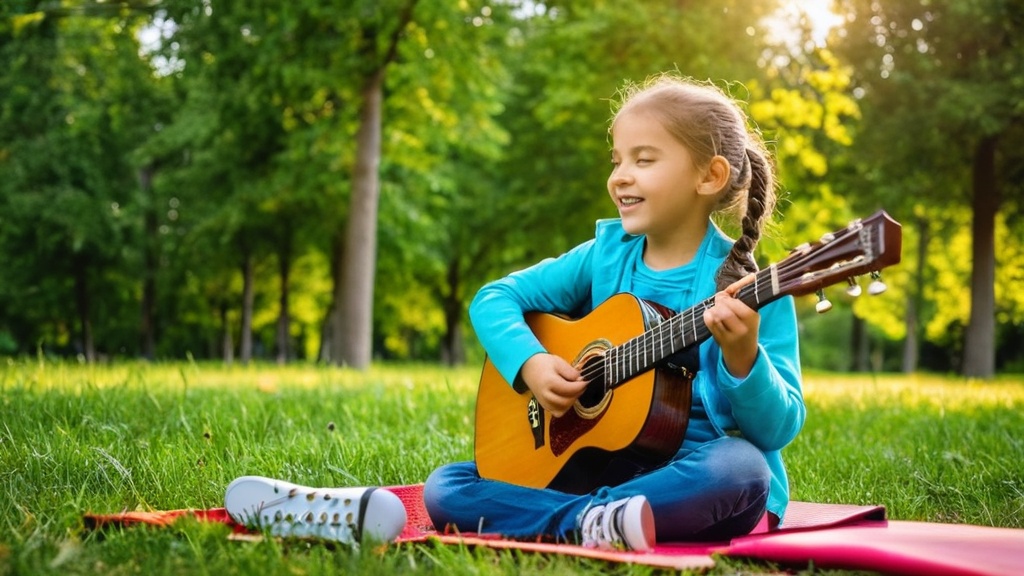

How do you motivate kids to practice guitar? Keep practice short, regular and fun: a set time of a few minutes, songs your child picks, and a visible reward for every step forward. Play together as much as you can, set small goals like one new chord per week, and give your child an audience now and then. Below you’ll find how to do each of these at home.
Why making music is good for kids
Music plays a major role in children’s development. It’s not just entertainment, but also a powerful tool for emotional and social growth. When kids make music, they develop not only their creativity but also their confidence. If you’re considering lessons, start with everything about guitar lessons for kids. Games like chord bingo work well here; you’ll find more in these playful guitar exercises for kids. Which guitar size, practice length and songs suit this age is covered in our tips for teaching guitar to elementary school kids.
Learning an instrument like the guitar can help kids build perseverance and discipline. These skills are valuable not only in the world of music, but also in other parts of their lives, such as school and social situations. Music also has a positive effect on children’s cognitive development.
Making music also calls for memory, concentration and problem-solving, and so it trains those skills too. By exposing kids to music, you give them the chance to grow their intellectual abilities and develop creative thinking.
Summary
- Music plays an important role in children’s development and encourages creativity and emotional expression
- Creating a positive practice environment is essential for keeping motivation and enjoyment in learning music
- Setting realistic goals helps kids stay motivated and experience success on their musical journey
- Rewarding progress, however small, encourages kids to keep going and keep growing
- Involving kids in choosing the songs they practice boosts their engagement and enthusiasm for learning music
Practical tips for short, fun practice sessions
- Short and often: for young kids, ten minutes a few times a week usually works better than one long session.
- Set time: tie practice to something that already happens, such as right after school or before dinner.
- Guitar in sight: put the guitar on a stand in the room instead of in its case. A guitar that’s ready to go gets picked up more often.
- Play together: sing along while your child plays the chords. That way even kids’ songs with just two chords sound like real music.
- Visible progress: keep a practice chart with a sticker for each practice day or each new chord.
- End on a win: finish with a song your child already knows, so practice ends on a good note.
Want more structure? Make a simple weekly plan together. You can read how to build one in the article on making an effective guitar practice schedule.
Creating a positive practice environment
A positive practice environment is essential for children’s musical development. When they feel at ease, they’re more willing to experiment and make mistakes without fear of criticism. This not only helps their learning, but also their love of music.
Make sure the practice space is free of distractions and is a place where they can concentrate. A calm, inspiring environment can do wonders for their motivation and enthusiasm. It’s also important to build a routine that helps them practice consistently.
You can do this by planning set practice times and encouraging them to take those times seriously. By combining a structured approach with a positive atmosphere, you give kids room to grow and improve their skills. It’s essential that they feel supported on their musical journey, so they stay motivated to keep going.
Setting realistic goals

Setting realistic goals is an important step in the learning process for kids who want to learn guitar. When you help them define achievable goals, you give them a clear path to follow. This can range from learning a simple chord progression to playing their favorite song.
It’s crucial that these goals are specific, measurable and time-bound, so they know what’s expected of them and when they should reach it. Small, achievable goals make it easier for kids to track their progress. This gives them a sense of accomplishment and also motivates them to keep going.
When they notice they’re getting better and better, they’ll gain more confidence in their abilities and enjoy playing the guitar more. It’s important to encourage and support them in reaching these goals, so they feel appreciated and motivated.
Rewarding progress
Rewarding progress is an effective way to keep kids motivated on their musical journey. When they reach a goal or master a new skill, it’s important to acknowledge and celebrate it. This can range from a simple compliment to a small reward, such as a sticker or some extra playtime.
By appreciating their efforts, you show that you notice and value their hard work. Rewards don’t always have to be material; sometimes positive feedback or encouragement is enough to keep them going. Creating a culture in which progress is celebrated helps kids feel proud of what they’ve achieved.
This not only strengthens their confidence, but also fuels their desire to keep practicing and learning. It’s important to encourage them to be proud of their accomplishments, however small they may seem.
Letting kids choose the songs they practice
An effective way to keep kids’ motivation high is to involve them actively in choosing the songs they want to practice. When they’re free to pick songs that appeal to them, they feel more connected to the learning process. This can range from popular songs to classical pieces; what matters most is that they’re excited about what they play. If your child doesn’t read music yet, no problem: you can learn kids’ songs without reading music.
By listening to different styles of music and songs together, you can discover their musical taste and help them make choices. This not only builds engagement, but also helps them develop their own musical preferences and taste. They can also learn more about different genres and styles, which broadens their musical horizons.
Choosing songs that appeal to them makes practice more fun and gets them started with enjoyment. You’ll find inspiration in this list of easy kids’ songs on guitar with chords.
Organizing regular performances or showcases
Regular performances or showcases can be a great way to encourage kids and give them the chance to show off their skills. This can range from informal performances for friends and family to more structured events such as school concerts or local talent shows. The idea is to give them a platform where they can show what they’ve learned and feel proud of it.
Performances not only help build confidence, but also give valuable experience in dealing with nerves and stage fright. By regularly giving them the chance to perform, they learn how to prepare and how to handle the pressure that comes with live performances. These skills are useful not only in the world of music, but also in other parts of life, such as presentations at school or future work situations.
Finding a good guitar teacher
A good guitar teacher can make a world of difference in a child’s musical development. It’s important to find someone who is not only skilled at playing guitar, but also able to teach in a positive and inspiring way. A good teacher understands each child’s needs and wishes and adapts their teaching methods accordingly. If your child is left-handed, ask whether the teacher has experience with guitar lessons for left-handed kids.
When looking for a guitar teacher, it helps to ask for references or recommendations. Also try to book trial lessons to see whether the teacher and the child click. A positive relationship between student and teacher can significantly improve motivation and learning.
A good teacher will not only teach technical skills, but also pass on a passion for music, which is essential for the development of young musicians.
Showing patience and understanding
Patience and understanding are crucial qualities for parents and teachers involved in children’s musical development. Learning to play music can sometimes be frustrating, especially when kids struggle with certain techniques or songs. It’s important to encourage them and give them room to make mistakes without feeling pressured.
By being patient and showing understanding for their challenges, you help kids stay resilient during the learning process. This creates a safe environment in which they feel free to ask questions and seek help when needed. Remember that every musician has their own pace; what’s easy for one can be hard for another.
By respecting these differences, you give kids the chance to make progress in their own way and in their own time. In short, music is an indispensable part of children’s development. By creating a positive practice environment, setting realistic goals, rewarding progress and involving them in the process, you can nurture their love of music.
Regular performances offer valuable experience, while a good guitar teacher can guide them on their musical journey. Patience and understanding are essential to make sure kids feel supported as they grow as musicians.
If you’re looking for ways to motivate kids to practice guitar, it can help to introduce them to different guitar techniques that might spark their interest. A related resource is the article Learn guitar techniques with these handy tips. This article offers valuable insights and techniques that can inspire kids and boost their enthusiasm for playing guitar. By letting them discover new and exciting techniques, they can stay motivated to practice regularly and keep developing their skills.
Frequently asked questions about motivating kids to practice guitar
What are some ways to motivate kids to practice guitar?
There are several ways to motivate kids to practice guitar, such as creating a positive practice environment, setting realistic goals, rewarding effort and encouraging creativity.
How can I create a positive practice environment for my child?
You can create a positive practice environment by providing a comfortable, well-lit practice space, using motivating and inspiring music, and showing interest in and involvement with your child’s progress.
What are realistic goals for kids to set when practicing guitar?
Realistic goals for kids can include learning a new chord, playing a simple song, or improving technique and timing. It’s important to set goals that are achievable and to acknowledge your child’s progress.
How can I reward my child for practicing guitar?
Rewards can range from praise and encouragement to small gifts or privileges. It’s important to acknowledge your child’s effort and offer positive reinforcement to keep motivation high.
How can I encourage my child to be creative while practicing guitar?
Encouraging creativity can include inviting your child to write their own songs, add variations to existing songs and develop their own playing style. It’s important to leave room for expression and originality.
How long should a child practice guitar each day?
For young kids, ten to fifteen minutes a few times a week is a good start. Short and focused is better than long and reluctant; practice time can grow as your child gets better. You’ll find more guidelines in the article on how long to practice guitar each day.
What do you do if your child wants to quit guitar?
First ask what’s behind it: songs that are too hard, sore fingertips, or simply no time. It often helps to go back for a while to songs your child already knows, or to pick songs they love to hear. If the interest stays away, a break is better than pressure.




Leave a Reply