
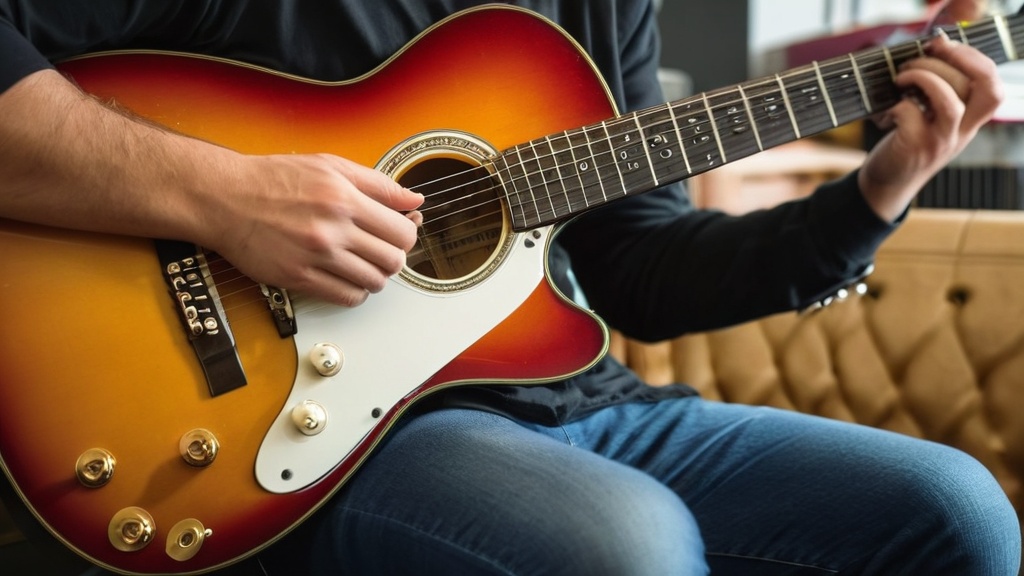

You can learn to play guitar just fine with small hands or short fingers. The biggest difference comes from a guitar that fits your hands: a shorter scale, a slim neck and low string action. A good thumb position, simplified chord shapes and a capo also help you reach chords without cramping your hand. Below you can read what you can adjust in each area and which exercises increase your finger stretch.
Summary
- Choose a guitar with a shorter scale, a slim neck and a low action
- Keep your thumb behind the neck so your fingers can reach farther
- Simplify difficult chords, for example with a small F instead of the full barre
- Use a capo or an open tuning to make shapes smaller
- Build finger strength and stretch gradually with short, daily exercises
What Small Hands and Short Fingers Mean for Your Guitar Playing
You notice small hands or short fingers mostly with chords where your fingers have to be far apart, and with shapes low on the neck, where the frets are farthest apart. The distance between the frets can then seem large, your fingers tangle up more easily and your hand tires sooner. That can be frustrating, especially with complex chords or fast runs.
Still, many guitarists with small hands play well, because they have adapted their technique and found creative solutions. What matters is developing a playing style that suits your hands. Good news: anyone can learn to play guitar, even with smaller hands. If you have wide or thick fingers instead, you run into different things; you can read more about that in playing guitar with thick fingers.
Choosing the Right Guitar for Small Hands
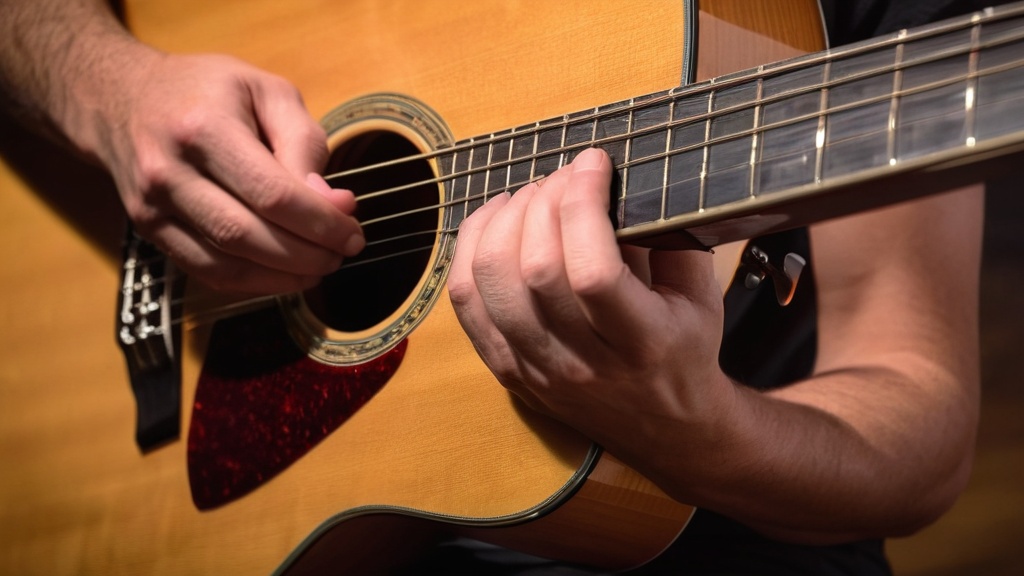
When choosing a guitar, pay attention to the size and shape of the instrument. A smaller guitar, such as a parlor or ¾ guitar, is often easier to play with short fingers. Such a guitar has a shorter scale, so the frets are closer together and you reach the notes more easily. For comparison: many Fender electric guitars have a scale length of 25.5 inches (about 65 cm), while short-scale models are around 24 inches (about 61 cm). For children, the right size depends mostly on age and height; read how to choose the right guitar size for children for that. If you are about to buy an instrument, also go through these tips for buying a guitar for kids. If your child is left-handed, learning guitar for left-handed kids shows you how to choose a suitable guitar and playing method.
Look at the neck width as well. A wide neck needs more room to form chords properly. A guitar with a slim neck (often called a slim neck) gives you more control over your finger placement. A classical guitar has nylon strings that are soft on your fingertips, but usually also a wider neck than a steel-string acoustic or an electric guitar.
Also look at the action of the strings. A lower action means the strings sit closer to the frets, which makes pressing them down easier. A guitar shop can lower the action for you during a setup of your guitar. Thinner strings also take less force; you can read more about that in the article on the best guitar strings for beginners.
Take the time to try different models and brands in a music store. Ask the salespeople for advice and do not get discouraged if you do not find the perfect guitar right away. It can take a while to find the right combination of size, neck width and strings for your hands. What works for one person does not always work for another.
Posture and Hand Position
Good posture helps everyone, but with short fingers it makes an extra big difference. Sit or stand upright with relaxed shoulders, and make sure the guitar hangs at a height where your hands can move freely without straining your neck or shoulders. You can read exactly how to do that in how to hold a guitar for good posture.
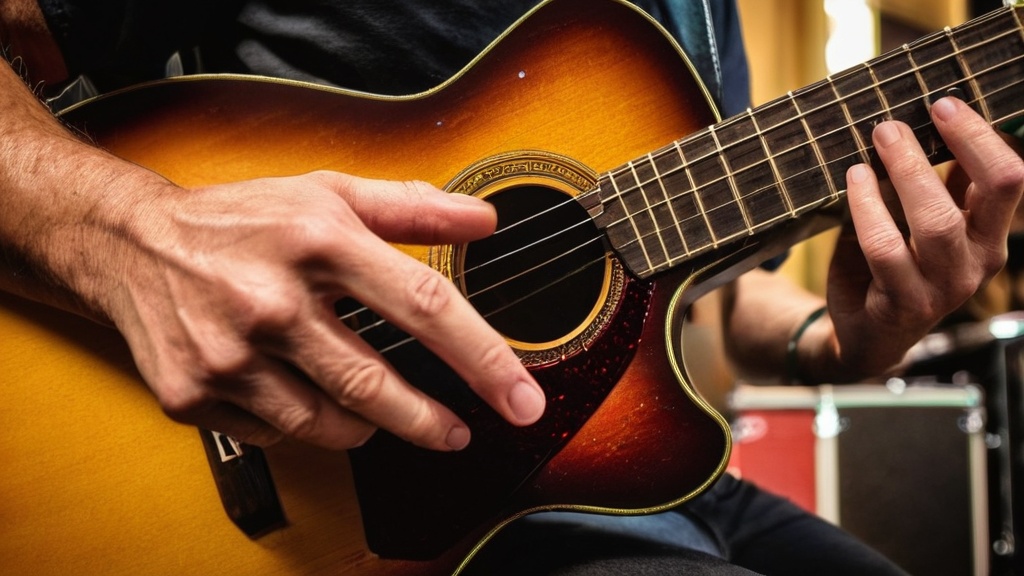
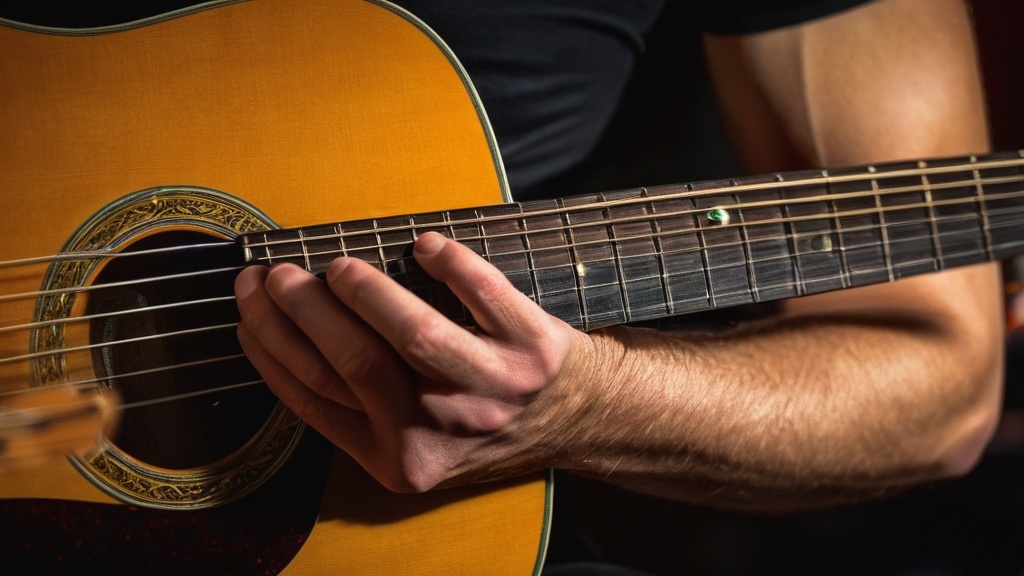
For your fretting hand, keep your thumb behind the neck, roughly level with your middle finger, instead of over the top of the neck. This lets your fingers spread farther. Keep your wrist as straight and neutral as possible; a sharply bent wrist causes tension and costs you reach. Place your fingertips just behind the fret and as straight above the strings as possible. That way you need little pressure for a clear tone and your hand tires less quickly.
Keep your hand relaxed and take regular breaks, so you do not build up tension in your hands or wrists.
Adapting Chords and Shapes
With a few adjustments to chords and shapes, you can already play a lot more as a guitarist with small hands. Start with compact open chords such as Em (022000), Am (x02210), D (xx0232) and the E major chord (022100). Open chords usually need less stretch than barre chords. You can see how to place your fingers for that chord in the fingering of the E chord.
You can simplify difficult chords by playing only some of the strings. Instead of the full F barre (133211), you can play the small F (xx3211) or Fmaj7 (xx3210), for example. Also try alternative fingerings for common chords. By being creative with your fingering, you often find a comfortable way to make the same sound, without your hand having to take an impossible position.
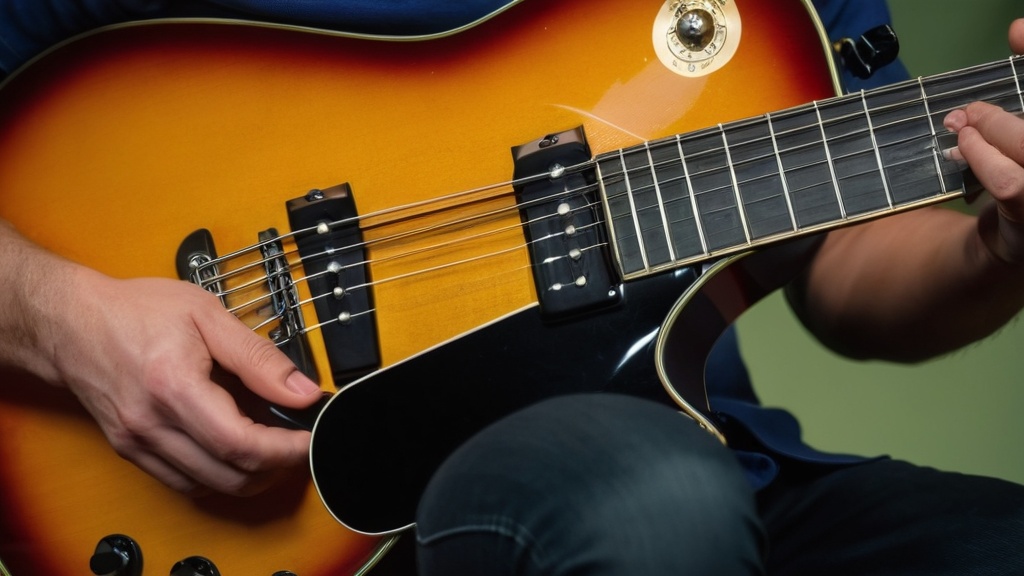
If you do want to learn barre chords, start higher up the neck, for example around the fifth fret, where the frets are closer together. A partial barre across two or three strings is a good intermediate step. You can find it explained step by step in learning to play barre chords.
Fingerpicking can help too: you do not always play all the strings of a chord, so you need fewer fingers at once. Do not compare yourself to guitarists with long fingers, but see what works for you. That can mean choosing a different fingering or a playing style that relies less on big stretches.
Exercises for Finger Strength and Stretch
Strong, flexible fingers give you more grip and control. Start simple: press down each string separately and make sure every note rings out clearly. That trains your muscles and your finger coordination at the same time.
A well-known exercise is the 1-2-3-4 exercise, also called the spider exercise. You put each finger on its own fret and play them in order, up and down across all the strings. For stretch, this variation works well: put your index finger on the fifth fret of the low E string and play frets 5, 6, 7 and 8 with fingers 1, 2, 3 and 4. When that goes smoothly, move down one fret. That way you gradually increase your reach. You can find more exercises like this in finger exercises for smooth chord changes.
Away from the guitar, you can practice with a rubber ball, a hand gripper or resistance bands. These can increase your strength and endurance. Also read how to build finger strength without pain.
It is better to practice briefly every day than for a long time now and then, and to listen to your body: overuse can lead to injuries. If your fingers or wrist hurt, take a rest. Tips for that are in preventing finger pain when learning guitar.
Capo and Alternate Tunings
A capo makes playing with small hands a lot easier. A capo raises the pitch of all the strings, without you having to make complicated shapes. If you put it on the second or third fret, you play the same chord shapes you already know, but in a higher key. Because the frets higher up the neck are closer together, your shapes also become slightly smaller. You can read how to use a capo in using a capo on the guitar.
Alternate tunings can help too. In open D (D-A-D-F♯-A-D) or open G (D-G-D-G-B-D), the guitar already sounds like a major chord without any strings pressed down. If you press all the strings down on the same fret with one finger, you play a different major chord. That takes much less stretch. Experiment with different tunings to find out which one suits your playing style. An open tuning is also the basis of slide playing; you can read more about that in the beginner’s guide to slide guitar.
Tools and Accessories
A guitar strap or guitar support keeps the guitar at a comfortable height. That reduces tension in your hands and shoulders, so you play more relaxed. If you play sitting down, a footstool can raise the neck a little, which makes the low frets easier to reach.
Fingertip protectors can spare sore fingertips at the start. They do not make your fingers any longer, though, and you feel the strings less well through them. So see them at most as a temporary aid.
Learning Materials and Advice from Other Guitarists
Finding suitable learning material can be hard if you have small hands. There are many online platforms and YouTube channels for beginners. Look for tutorials that cover adaptations for small hands or that explain simple chords and techniques. There are also books and e-books with tips and exercises for strength and flexibility. Try different sources and see what suits you best.
Advice from experienced guitarists with small hands can be worth a lot. Many guitarists have developed their own techniques to adapt their playing style to the size of their hands. Look for interviews or podcasts where they share their experiences. A frequently heard piece of advice: be patient with yourself. It takes time and practice to feel comfortable on the guitar, and everyone goes at their own pace.
If you are looking for learning material for a child, look at guitar lessons for kids. Many of those tips, such as the right posture and choosing a suitable guitar, also work for adults with small hands.
Adapting Works: An Example
A well-known example of a guitarist who adapted his technique is Django Reinhardt. After a fire in 1928, he could barely use the ring finger and pinky of his left hand. He then played his solos largely with two fingers and became one of the most influential jazz guitarists. His story shows that creativity and perseverance matter more than the shape of your hand.
Apply the tips from this article step by step. That way you improve your guitar playing and enjoy every note you play, regardless of the size of your hands.
Frequently asked questions about playing guitar with small hands
What are the best tips for playing guitar with small hands or short fingers?
Choose a guitar with a narrower neck and a shorter scale, and have the action set low. Keep your thumb behind the neck, use simplified chord shapes and practice finger strength and flexibility briefly every day.
Which guitars are best suited to small hands?
Guitars with a narrower neck (slim neck) and a shorter scale length (short scale), such as a parlor or ¾ guitar. They need less reach and make playing easier for people with small hands or short fingers.
Which chords are easier with short fingers?
Compact open chords such as E minor, A minor and D major are well within reach. You can simplify difficult chords, such as the small F (xx3211) instead of the full barre. A capo higher up the neck makes the distance between the frets smaller.
Which exercises increase the reach and flexibility of your fingers?
Stretching exercises for the hand and fingers, the 1-2-3-4 exercise and playing chords at different positions on the neck. Start higher up the neck and gradually move toward the low frets. Include these exercises in your daily practice routine.
Is a classical guitar suitable for small hands?
The nylon strings are soft on your fingertips, but the neck is usually wider than on a steel-string acoustic or an electric guitar. So also try a ¾ model or a classical guitar with a narrower neck before you choose.
Should you avoid barre chords if you have small hands?
No, you can learn them just fine, but you do not have to start with them. Use simplified shapes first and practice barre chords higher up the neck, where the frets are closer together. A partial barre across two or three strings is a good intermediate step.




Leave a Reply