
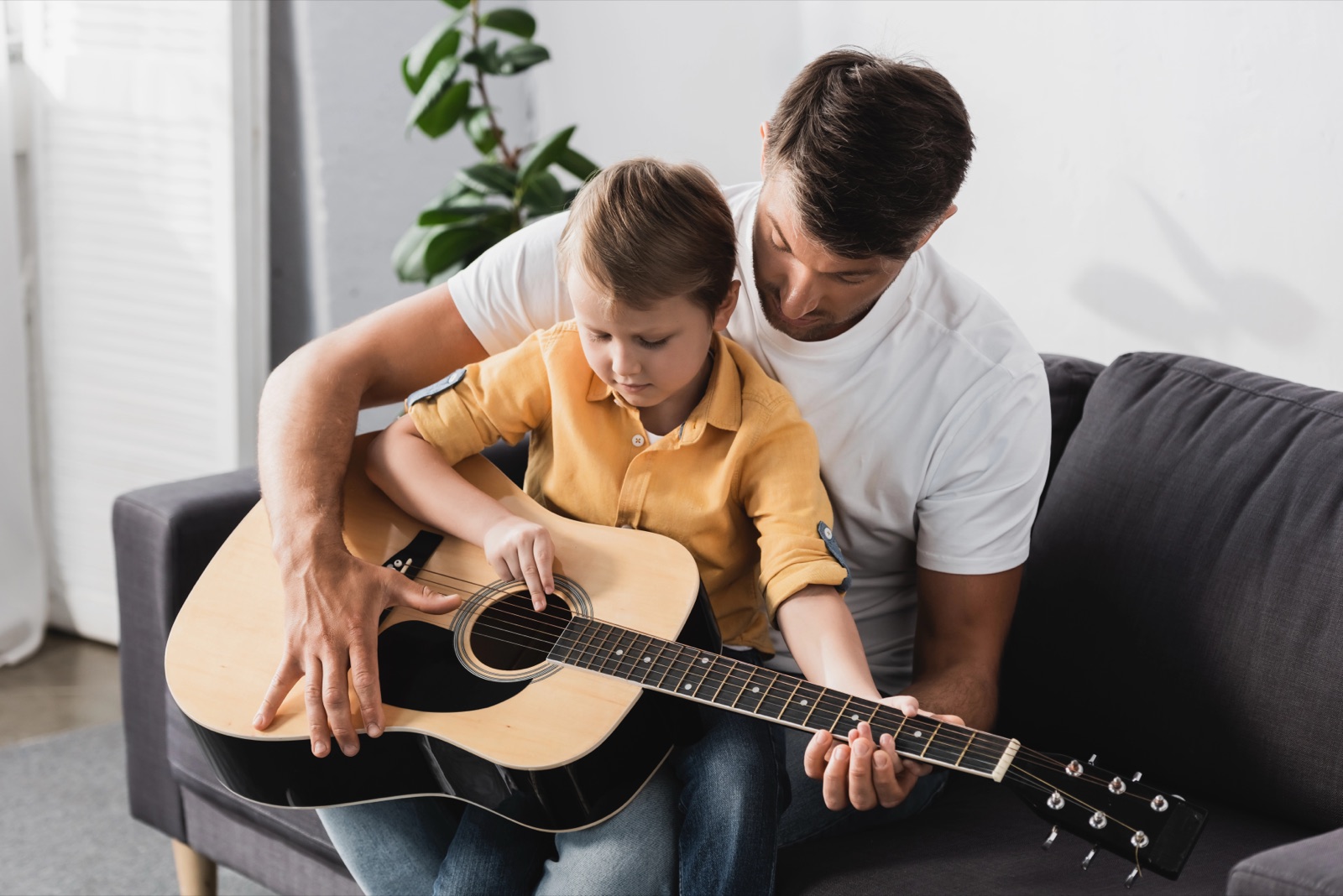

Guitar lessons for kids can usually start around age six: by then their hands are strong enough and your child can concentrate long enough for a short lesson. Choose a guitar that fits your child’s height, often a 1/2- or 3/4-size guitar with nylon strings, and keep lessons and practice sessions short and playful. Below you will read what guitar lessons do for your child, how to find a good teacher and how to help with practice at home. What the first lessons usually look like is covered in guitar lessons for beginners.
Guitar lessons for kids are a valuable investment in their development, both musically and personally. Learning an instrument like the guitar gives kids the chance to express their creativity and develop their musical skills. Music is a universal language that helps kids connect with others, and guitar lessons can teach them the basics of that language.
By playing the guitar, kids learn not only notes and chords, but also rhythm and timing, which are essential for every musician. Guitar lessons can also contribute to the development of important life skills. Learning a new instrument takes discipline, perseverance and patience.
Kids learn that reaching a goal takes time and effort, which can help them in other areas of life, such as schoolwork and sports. Playing music can also be a great way for kids to relieve stress and express their emotions, which is especially important in the often hectic world they grow up in.
Summary
- Guitar lessons can help kids develop discipline, concentration and creativity.
- Kids can benefit from guitar lessons by improving their motor skills and building their self-confidence.
- There is no fixed age limit for starting guitar lessons, but it is important to take the child’s physical and mental development into account.
- When choosing a guitar for kids, it is important to look at the size, weight and quality of the instrument.
- Finding the right guitar teacher for your child requires attention to their experience, teaching method and personality to ensure a good match.
The benefits of guitar lessons for kids
Cognitive development
Learning an instrument supports cognitive development. There are indications that music lessons can contribute to skills like concentration, memory and language, although studies differ on how large that effect is.
Personal skills
Kids who learn to play guitar often develop better concentration and memory skills, which can help them in their school performance. Kids who take guitar lessons can also take part in performances, which builds their self-confidence and teaches them to deal with stage fright.
Social benefits
Guitar lessons offer social benefits. When kids make music together with others, they learn to cooperate and communicate. This can improve their social skills and help them build friendships. Music is often a group activity, and playing in a band or with friends can create a sense of togetherness.
How young is too young for guitar lessons?

The question of how young is too young for guitar lessons is a much-discussed topic among parents and music teachers. In general, it is recommended to let kids start guitar lessons from about six years old. At this age most kids have developed enough motor skills to hold a guitar and play simple chords.
They are also often able to follow instructions and concentrate during the lesson. However, every child is unique and the right age to start can vary. Some kids may be ready earlier, while others need more time.
It is important to look at the child’s interest and motivation. If a child is enthusiastic about music and really wants to learn guitar, that can be a good sign that they are ready to start. It is also useful to consider a trial lesson to see how the child responds to the lesson and whether they enjoy learning the guitar. You can read more about the best starting age in what age you can start learning guitar.
The right guitar and accessories for kids
The size of the guitar depends mainly on your child’s height. As a rough guideline:
- about 5 to 8 years old: a 1/2-size guitar
- about 8 to 11 years old: a 3/4-size guitar
- from about 11 or 12 years old: a full-size 4/4 guitar
Choosing the right guitar for kids is crucial for their learning experience. There are different types of guitars available, including acoustic, electric and classical guitars. For beginners it is often recommended to start with a classical or acoustic guitar, because you don’t need an amp and the nylon strings of a classical guitar feel softer on small fingertips. If a guitar is still too big, a ukulele is a good alternative; read how to teach your child to play ukulele. If your child is already twelve or older, also read which choices fit learning guitar as a teenager.
A 1/2 or 3/4 size guitar can also be a good option for younger kids, because it fits their body size better. Besides the guitar itself, there are also several accessories that can be useful for young guitarists. A good gig bag protects the guitar during transport, while a tuner makes sure the guitar is always in tune. You can read more in how to choose the right guitar size for kids.
Picks and a capo can also be handy for beginners. It is important to make sure the accessories are suitable for the child’s age and level, so they don’t get overwhelmed by too many options.
Finding the right guitar teacher for your child
Finding the right guitar teacher is an important step in your child’s learning process. A good teacher can teach not only technical skills, but also spark a passion for music. It is essential to find someone who has experience teaching kids and who can adapt to their learning style and pace.
A patient and supportive teacher can make a big difference in how motivated your child stays. When looking for a guitar teacher, you can consider asking for recommendations at local music schools or online platforms where music teachers are listed. It is also useful to ask for trial lessons before you commit to a teacher. A music school often offers ensemble playing and recitals, while private guitar lessons give more room for your child’s own pace.
This gives your child the chance to get to know the teacher and see whether there is a good click. A positive relationship between student and teacher can contribute to a successful learning experience. You can read which kinds of lessons exist and what to expect from a trial lesson in the guide to guitar lessons.
Tips for motivating kids during guitar lessons

Set achievable goals
An effective way to keep motivation high is to set goals that are achievable. These can be small goals, such as learning a new chord or playing a simple song. Celebrating these small wins can encourage kids to keep going. You can find more ideas in how to motivate kids to practice guitar.
Work in music kids like
Working music your child likes into the lessons can also help keep their interest. If they can play songs they know and enjoy, they will be more motivated to practice and make progress. A good first step is children’s songs with just two chords.
Involve parents in the learning process
Involving parents in the learning process can help too; making music together or going to concerts can spark a love of music even further.
How parents can help with practice at home

Parents play a crucial role in their kids’ learning process, especially when it comes to practicing at home. Creating a structured routine can help bring consistency to practice. This means not only making time for practice sessions regularly, but also making sure those sessions are fun and stimulating.
It is important that parents are involved in these sessions, so they can encourage and support where needed. Parents can also help by making music together with their child or by encouraging them to record their playing. This can help not only with improving their technique, but also with building self-confidence.
Giving positive feedback on their progress can be motivating too; even small compliments can make a big difference in how motivated a child feels. For short practice moments you can use playful guitar exercises for kids.
The importance of fun and patience in the learning process
Fun and patience are two essential elements in the learning process of kids who are learning to play guitar. Making music should above all be enjoyable; if kids have fun during their lessons and practice sessions, they will be more likely to stay motivated to keep learning. It is important that both parents and teachers emphasize this, so kids feel free to make mistakes and try new things without fear of criticism.
Patience is crucial too; learning to play an instrument takes time and practice. Kids need to understand that progress is not always visible right away and that every musician has their own pace. By being patient and encouraging them to persevere, parents and teachers can contribute to a positive learning experience that helps them not only with learning the guitar, but also with other challenges in their lives.
If you are looking for guitar lessons for kids, it is also interesting to consider how to learn to play specific songs. A good example is learning to play Metallica songs on guitar, which can be an exciting challenge for both young and older students. In the article Learn to Play Metallica on Guitar you will find specific lessons focused on playing Metallica’s music, which can be a fun and motivating way to practice and improve your guitar playing.
Frequently asked questions about guitar lessons for kids
What are guitar lessons for kids?
Guitar lessons for kids are a form of music education in which kids learn the basic principles of playing the guitar. This can take place individually or in a group.
At what age can kids start guitar lessons?
Kids can usually start guitar lessons around the age of 6 or 7. It is important that they have the physical strength and coordination to hold the guitar and press down the strings.
What do kids learn in guitar lessons?
In guitar lessons, kids learn things like the basics of guitar playing, such as tuning the guitar, playing chords, playing melodies and simple songs.
Do kids need musical experience before they start guitar lessons?
No, kids do not need any musical experience before they start guitar lessons. A good teacher can guide kids regardless of their musical background.
What are the benefits of guitar lessons for kids?
Guitar lessons can help kids develop their motor skills, musical ear, discipline, concentration and self-confidence. They can also be a fun and creative outlet for kids.
Which guitar size suits my child?
That depends mainly on your child’s height. As a rough guideline, a 1/2-size guitar suits about 5 to 8 years old, a 3/4-size guitar about 8 to 11 years old and a full-size guitar from about 11 or 12 years old. If in doubt, always let your child try it out in the store.
How long should a child practice each day?
Short and often works best. For young kids, 10 to 15 minutes a day is often enough, as long as it happens regularly. Fifteen minutes five times a week is better than one hour once a week.





Leave a Reply