
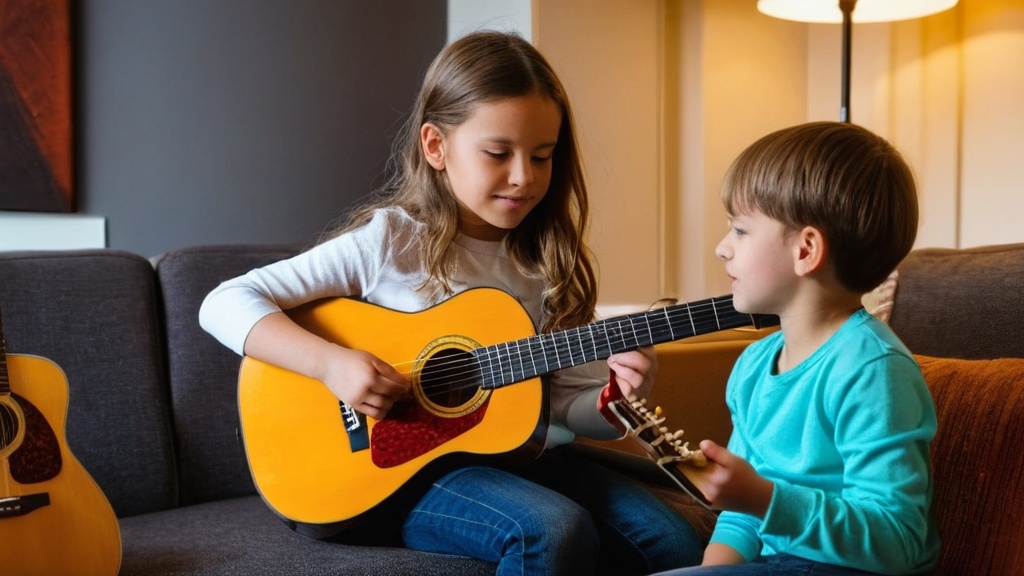

If you want to teach a left-handed child to play guitar, first decide together which side feels best: left-handed on a mirrored guitar, or simply right-handed. Let your child pick up the guitar on their own and see which hand they naturally strum with. After that, the same basic rules apply as for any child: a guitar in the right size, short practice sessions, simple chords and a teacher who takes left-handedness into account.
Summary
- Playing guitar left-handed can be challenging because of the limited selection of left-handed guitars and the need to reverse the technique.
- Learning to play right-handed is also a perfectly good option for many left-handed children; let your child try what feels natural.
- If your child plays left-handed, use a true left-handed guitar: a right-handed guitar turned around can lead to discomfort and limits in playing style.
- When choosing a left-handed guitar, look at the size, the weight and the sound, and at what your child finds comfortable.
- Good posture and technique help left-handed guitarists avoid aches and pains and play comfortably.
- Learning chords and notes takes patience and perseverance; left-handed children sometimes need a little extra guidance and encouragement.
What Do Left-Handed Guitarists Run Into?
As a left-handed guitarist you often face unique challenges. Most guitars are designed for right-handed players, which means that as a left-handed player you often have to improvise or adapt to an instrument that is not ideal for you. This can be frustrating, especially when you are just starting to play guitar.
You will notice that the strings are in the wrong order and that most teaching methods and books are aimed at right-handed players. This can make the learning process harder and undermine your motivation. Finding the right left-handed guitar can also be quite a task.
Many music stores have a limited selection of left-handed models, so you may have to look for specialty stores or online options. This can be time-consuming, and you may feel you can’t find the right instruments for your playing style. It is important to acknowledge these challenges and understand that they are part of your journey as a musician.
Playing Left-Handed or Right-Handed: What Are the Options?
A left-handed child doesn’t necessarily have to play guitar left-handed. On guitar both hands do difficult work: one hand presses the strings against the neck, the other strums or picks. That is why many left-handed people simply play right-handed. There are roughly three possibilities:
- A left-handed guitar: a mirror image of a right-handed guitar. Your child strums with the left hand and forms the chords with the right. The thick low E string is at the top while playing, just as usual.
- Learning to play right-handed: your child learns on a regular guitar. Advantage: any guitar in a store, at school or at a friend’s house can be played right away, and all learning material fits without having to think backwards.
- A right-handed guitar turned around: the guitar is held left-handed without reversing the strings. The low E string is then at the bottom, so chord shapes differ from those in regular lesson books. This is less common and makes learning with standard learning material harder.
Not sure? Hand your child a guitar, or let them play air guitar, and see which side they choose on their own and which hand they want to strum with. Don’t force anything: a child who feels at ease keeps practicing longer. If your child is still young, also read what age is a good time to start learning guitar.
Why a Left-Handed Guitar Helps
If you play left-handed, a true left-handed guitar is important for your development as a musician. It lets you play in a natural way, without having to adapt to an instrument that was not designed for you. When you play a guitar made specifically for left-handed players, you will notice that you have more control over the strings and can form chords more easily.
This can lead to faster progress in your playing and more fun while practicing. Playing a left-handed guitar can also boost your confidence. You feel more at ease and can concentrate fully on learning new techniques and songs.
It is important to have an instrument that suits you, so you can express yourself without limitations. A left-handed guitar lets you develop your own unique style and creativity, which is essential for every musician.
Finding the Right Left-Handed Guitar
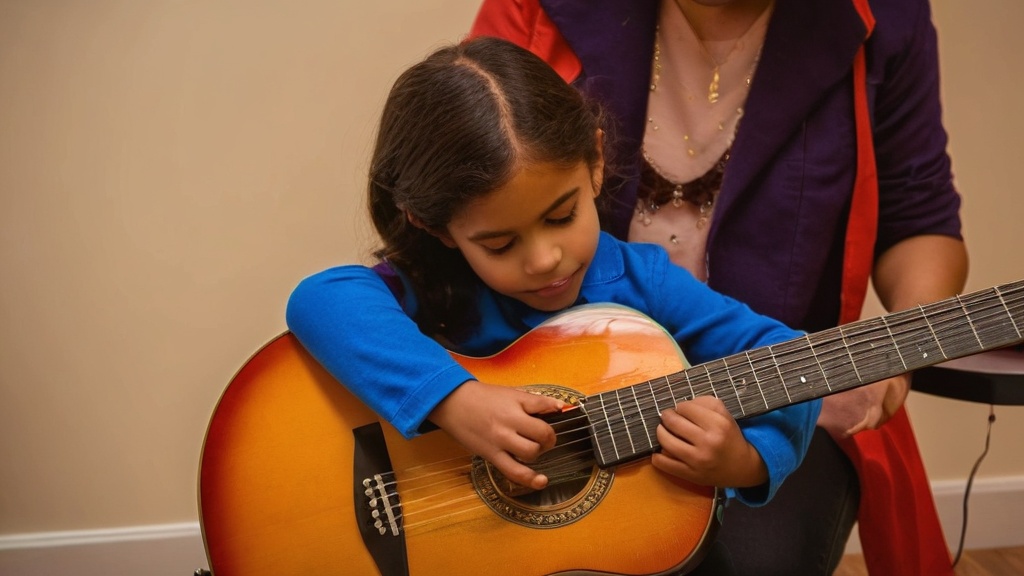
When looking for the right left-handed guitar, there are several factors to consider. First, it is important to determine which type of guitar suits you best: acoustic, electric or classical. Each type has its own characteristics and playing styles, so it is good to experiment with different models before you decide. For children, size matters too: a guitar that is too big makes playing needlessly hard. Read how to choose the right guitar size for kids. Left-handed guitars in smaller sizes do exist, but the selection is smaller, so ask for them specifically in the store.
You can sometimes have a right-handed guitar converted by reversing the strings. Usually the nut at the top of the neck then also has to be replaced or adjusted, because the slots for thick and thin strings differ. On many acoustic and electric guitars the bridge saddle is also angled and the pickguard is on the wrong side. Have this done by a guitar tech or a music store, or choose a left-handed model right away. You will find more points to consider in the tips for buying a guitar for kids.
Try out different guitars in a music store and pay attention to how they feel in your hands. It is also wise to look at the quality of the guitar. A well-made guitar will sound better and be easier to play.
Pay attention to the materials used, such as the wood for the body and the neck, and check that the finish of the guitar is good. It can also be useful to ask experienced musicians or salespeople in the store for advice, so you can make an informed choice.
Posture and Technique for Left-Handed Guitarists
Good posture and technique are essential for every guitarist, but for left-handed players this can be extra important. Make sure you sit or stand comfortably while playing, with the guitar well positioned so you can easily reach the strings. It is a good idea to tilt the guitar slightly forward, so you have a better view of the neck and the frets.
This helps not only with playing, but also prevents injuries in the long run. It is also important to pay attention to your fingering and hand movements. Start with simple chords and make sure your fingers are placed properly on the strings.
Practice regularly to improve your technique and watch out for any tension in your hands or wrists. A relaxed posture will help not only with playing, but also with developing speed and precision in your playing. For how to hold the guitar properly, read the explanation of good guitar posture.
Learning Chords and Notes as a Left-Handed Child
For left-handed children, learning chords and notes can be a challenging but also fun experience. It is important to guide them with materials designed specifically for left-handed players, so they don’t get frustrated by teaching methods that are not tailored to them. Start with simple chords such as E minor (022000) or A major (x02220), so they can quickly experience success.
It can also be useful to use visual aids, such as diagrams or videos aimed specifically at left-handed players. This makes learning more accessible and helps them understand the concepts better. Encourage them to practice regularly and try new songs, so they can develop their skills and grow their love of music.
Note: chord charts in lesson books and apps are usually drawn for right-handed players. If you look at a left-handed guitar from the front with the headstock up, the low E string is on the right, while in a regular chart it is on the left. A left-handed player therefore has to mirror such a chart in their head. Some chord apps have a left-handed view, or you can redraw the charts together. You will find simple first songs in the children’s songs with just 2 chords.
Patience and Perseverance
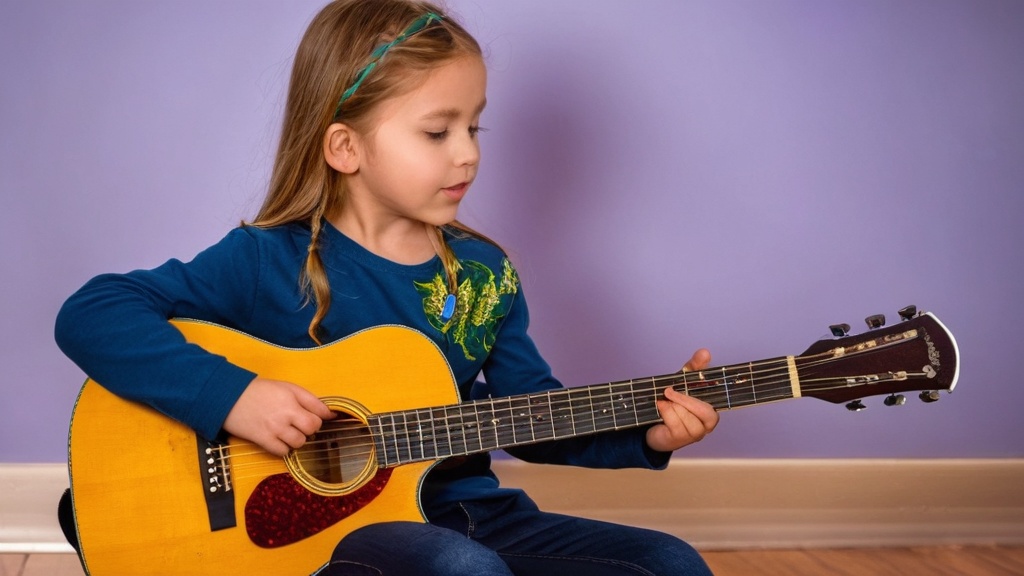
Patience and perseverance are crucial qualities for every musician, especially for left-handed guitarists who may run into extra obstacles. Learning a new instrument takes time and dedication, and there will be moments when you get frustrated or stuck. It is important to embrace these moments as part of the learning process and to remind yourself that every musician faces these challenges.
Try to set realistic goals for yourself and celebrate small victories along the way. Whether it is mastering a new chord or playing a song without mistakes, every step forward is a step in the right direction. By staying patient and persevering, you will notice your skills improve and you get more enjoyment out of playing guitar. You will find practical ideas for keeping your child playing in how to motivate kids to practice guitar.
Practicing Regularly
Practice makes perfect, and that certainly applies to left-handed guitarists. Regular practice is essential for making progress and refining your technique. Try to set up a daily routine in which you spend time on different aspects of playing guitar, such as chords, scales and songs.
Consistency is the key to success; even short practice sessions can be effective if they are repeated regularly. It can also be useful to add variety to your practice routine. Play different styles of music, experiment with improvisation or play with other musicians. For younger children, playful exercises often work better than dry technique exercises.
This not only keeps your interest up, but also helps you develop a broader range of skills. Remember that every minute you spend practicing contributes to your growth as a guitarist.
Finding a Guitar Teacher for Left-Handed Children
Finding a suitable guitar teacher for left-handed children can be an important step in their musical development. A good teacher understands the unique challenges left-handed players face and can guide them with adapted teaching methods. Look for teachers who have experience with left-handed students or who are willing to adapt their approach to your child’s needs. For what else to look for in lessons for young players, read guitar lessons for kids.
It is also important to find a teacher who offers a positive and supportive learning environment. A good teacher will not only teach technical skills, but also foster a love of music and build confidence in their students. Take the time to meet several teachers and see which style and approach best fits your child’s learning needs.
By following these steps, you can make sure your journey as a left-handed guitarist is both challenging and rewarding. With patience, perseverance and the right support, you can make your musical dreams come true!
Inspiration: Famous Left-Handed Guitarists
Famous left-handed guitarists such as Jimi Hendrix, Paul McCartney and Kurt Cobain show that being left-handed doesn’t have to be an obstacle.
If you are looking for ways to teach left-handed children to play guitar, it can also be interesting to look at different styles and techniques that can inspire them. A related resource that can help with this is the article on Nirvana guitar lessons. This article gives insight into how you can play like a pro, with specific attention to Nirvana’s unique style. It can be a great way to motivate left-handed children by showing them how they can follow their own musical path, even if they are left-handed. For older teens and adults, the choices are laid out in learning guitar as a left-handed player. For general tips for this age group, read the article on learning guitar as a teenager.
Frequently asked questions about learning guitar for left-handed children
What are the best guitar models for left-handed children?
There are several guitar models available for left-handed children, including left-handed versions of popular models such as the Fender Stratocaster and the Gibson Les Paul. It is important to choose a guitar that is comfortable for the child to hold and play. For young children, a smaller guitar in the right size is usually handier than a full-size electric guitar.
Do left-handed children need to take special guitar lessons?
Although left-handed children can generally take the same guitar lessons as right-handed children, it can be useful to find a teacher with experience teaching left-handed students. This teacher can teach specific techniques and adjustments that help the child learn to play guitar comfortably.
Are there special techniques for left-handed guitarists?
Left-handed guitarists can choose to play the strings in reverse order, with the lowest string on the right and the highest on the left when you look at the guitar from the front with the headstock up. While playing, the thick low E string is then at the top, just as with right-handed players. Other left-handed players simply learn to play right-handed on a standard guitar. A less common variant is playing a right-handed guitar upside down without reversing the strings; the low E string is then at the bottom.
Do left-handed children need to use special guitar accessories?
Usually not. Picks, guitar straps and clip-on tuners work just as well for left-handed players. More important is that the guitar itself fits well: on a left-handed guitar the pickguard and the strap buttons are already on the right side, so your child plays comfortably and can develop good technique. For how to choose the right thickness and shape, see the article on the best pick for beginning guitarists.
Can a left-handed child also learn to play on a right-handed guitar?
Yes. On guitar both hands do difficult work, and many left-handed people simply play right-handed. Let your child try which side feels natural and don’t force anything; whatever feels comfortable is what a child sticks with longest.
Can you convert a right-handed guitar to left-handed?
Often yes, but just reversing the strings is usually not enough. The nut generally has to be replaced or adjusted, and on many guitars the bridge saddle is angled and the pickguard is on the wrong side. Have a guitar tech do it or choose a left-handed guitar right away.





Leave a Reply