
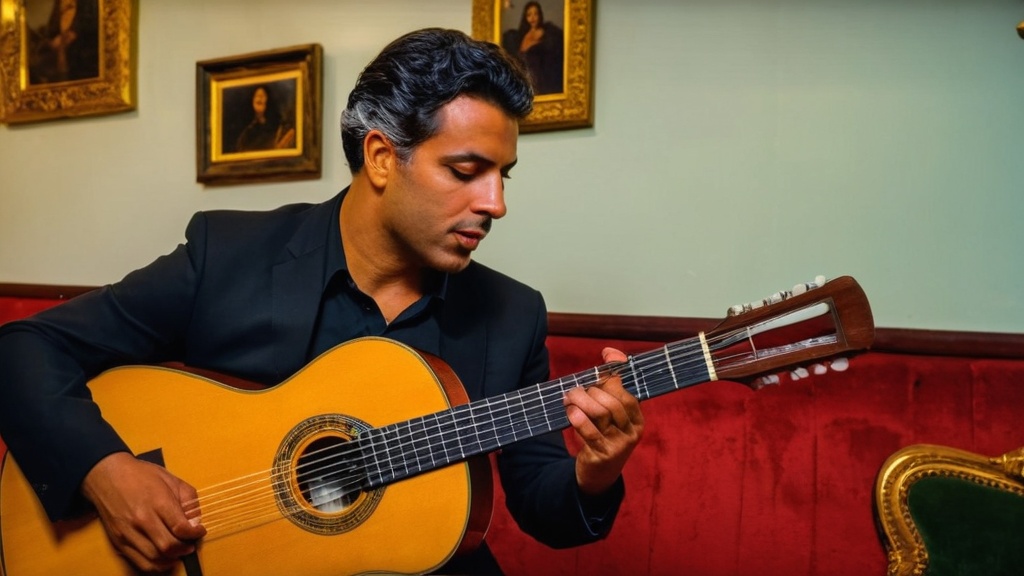

To practice Portuguese fado on guitar, start with the accompaniment: a few minor chords such as Am, Dm and E7, a calm pattern of bass note and chord, and a lot of listening to fadistas. Fado is all about the voice, so the guitar follows the singer and the emotion of the lyrics. In this article you read where fado comes from, what role the guitars play, which chords and techniques you need and how to practice with purpose.
Fado is an emotional style of music that has its roots in the streets of Lisbon. The word “fado” literally means “fate” or “destiny,” which captures the melancholy of this music well. The lyrics are poetic and deal with love, loss and longing for the past. Fado is usually sung by a male or female singer, accompanied by a regular guitar (in Portugal the viola or viola de fado) and the Portuguese guitar.
Fado is not only a musical form but also a way of telling stories and sharing feelings. The singers, called “fadistas,” pass on personal experiences and those of their ancestors in their performances. The genre has bridged generations and is deeply rooted in Portuguese identity and history, with the sea and the lives of ordinary people as recurring themes.
Summary
- Portuguese fado is a traditional style of music from Portugal known for its melancholic and emotional character.
- Fado emerged in the 19th century in the working-class neighborhoods of Lisbon.
- Typical features are themes such as saudade (longing), love, fate and nostalgia, expressive singing and accompaniment by the viola and the Portuguese guitar.
- On guitar, you first learn the typical chords and progressions, such as Am, Dm and E7 in A minor.
- Important techniques are fingerpicking, tremolo, trills, dynamics and the use of chords and scales that fit fado.
The History of Portuguese Fado
The history of fado goes back to the 19th century, although some of its elements may have existed earlier. The genre arose in the poor working-class neighborhoods of Lisbon, where various cultural influences came together. African and Brazilian influences are often mentioned; a Moorish origin is a popular but unproven theory. The first fadistas performed in taverns and on the street, where they shared their sorrow and joy with an audience that recognized itself in their stories of daily struggles.
Over the years, fado developed several styles. The best known is the fado de Lisboa from Lisbon. There is also the fado de Coimbra, which is tied to the university city of Coimbra and has more academic influences. In the 1930s and 1940s, fado became more and more popular, mainly thanks to Amália Rodrigues, who is regarded as the queen of fado. Her powerful voice brought fado to a wide audience, in Portugal and beyond. Since 2011, fado has been on the UNESCO list of intangible cultural heritage.
Characteristics of Fado Music
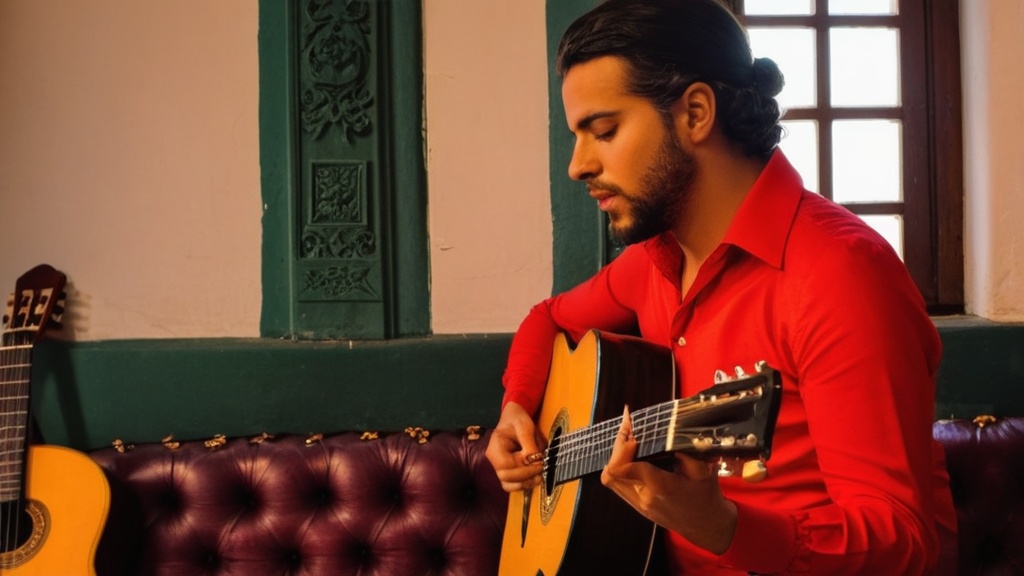
The most distinctive aspect of fado is the singing style: powerful, emotional and with a strong focus on the lyrics. The lyrics are poetic and full of metaphors. The subjects range from love and longing to sorrow and nostalgia, which creates the melancholic mood so typical of fado.
There is also room for improvisation. There are fixed structures, but musicians add their own interpretation, so every performance sounds different. Singer and guitarists respond to each other. Fado is often performed in small, intimate venues such as cafés, theaters and the casas de fado in Lisbon, where you see the musicians play up close.
The Instruments: Portuguese Guitar and Viola
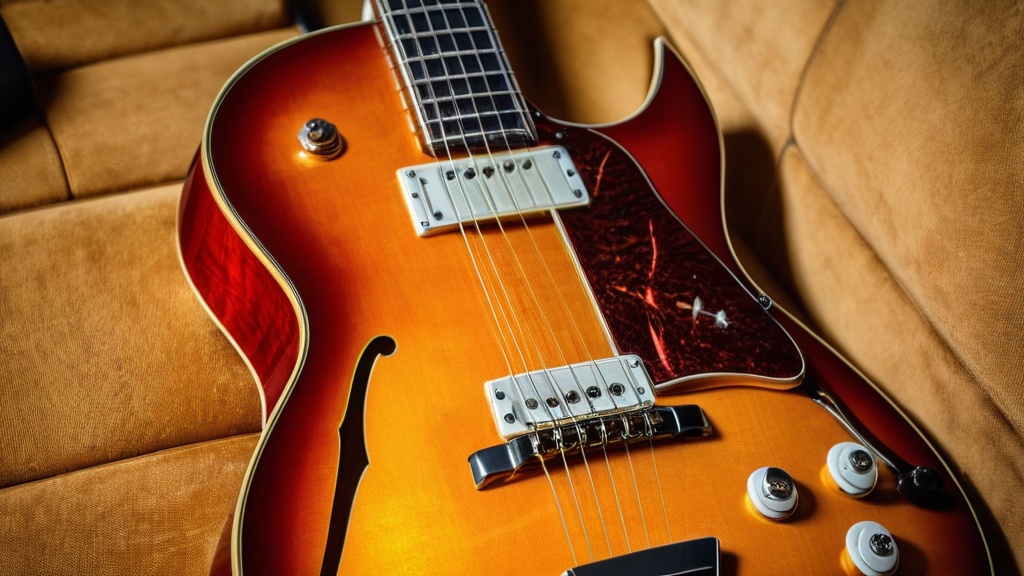
In a classic fado ensemble you hear two kinds of guitar. The Portuguese guitar (guitarra portuguesa) has a pear-shaped body and twelve steel strings in six pairs. With its bright sound, it plays melodies and countermelodies around the vocals. The viola is a regular guitar that provides the chords and the bass line. Sometimes an acoustic bass guitar, the viola baixo, joins in as well.
If you want to learn fado on a regular guitar, you take on the role of the viola: you lay the harmonic foundation under the voice. Wondering which strings suit this? Then read about the difference between nylon and steel strings. In other folk music too, the guitar is mainly an accompanist; compare it with chords for Irish folk on guitar.
Why Regular Practice Pays Off with Fado
Fado requires not only technical skill but also a feel for the emotional weight of the music. By practicing regularly you develop your technique and learn at the same time how to convey the right emotion. You become familiar with the chords and melodies that belong to fado. At first that can be difficult, but with patience you notice that you are making progress. Along the way you also develop your own style.
How Do You Get Started with Fado on Guitar?
Start with the basic structures and chords. Fado uses both major and minor chords. If you already know the simple open chords A minor, E minor, D major and G major, you have a good foundation to build on.
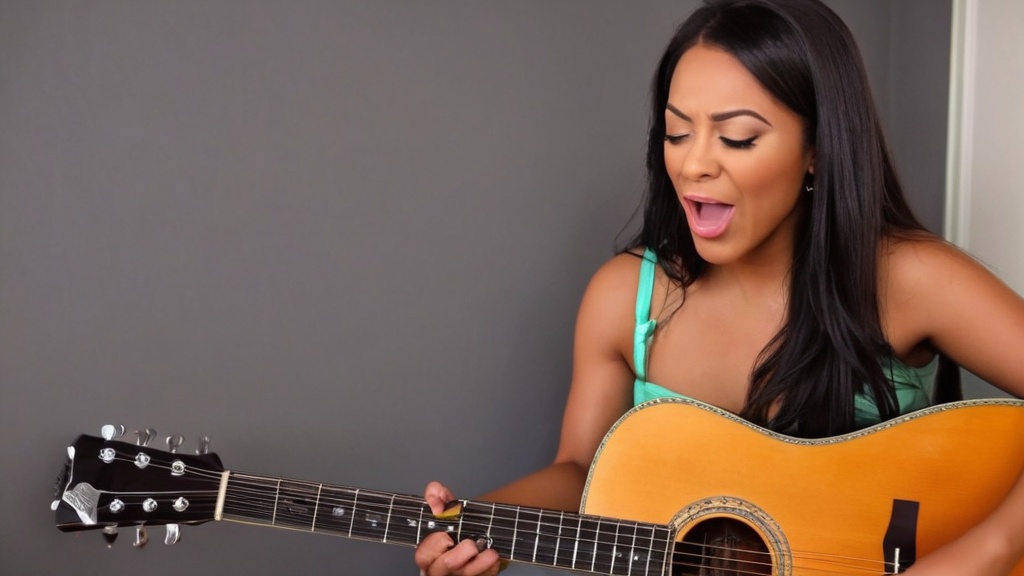
Next, practice the rhythm. It differs per style, but is often calm and gentle. Most fados are in a two-beat or four-beat meter. Try different strumming patterns and look for the sound that fits the emotion of the song. Listen to a lot of recordings so you hear how the guitar works together with the voice. If you sing along yourself, the tips on accompanying yourself on guitar while singing will help.
Important Chords, Progressions and Scales for Fado
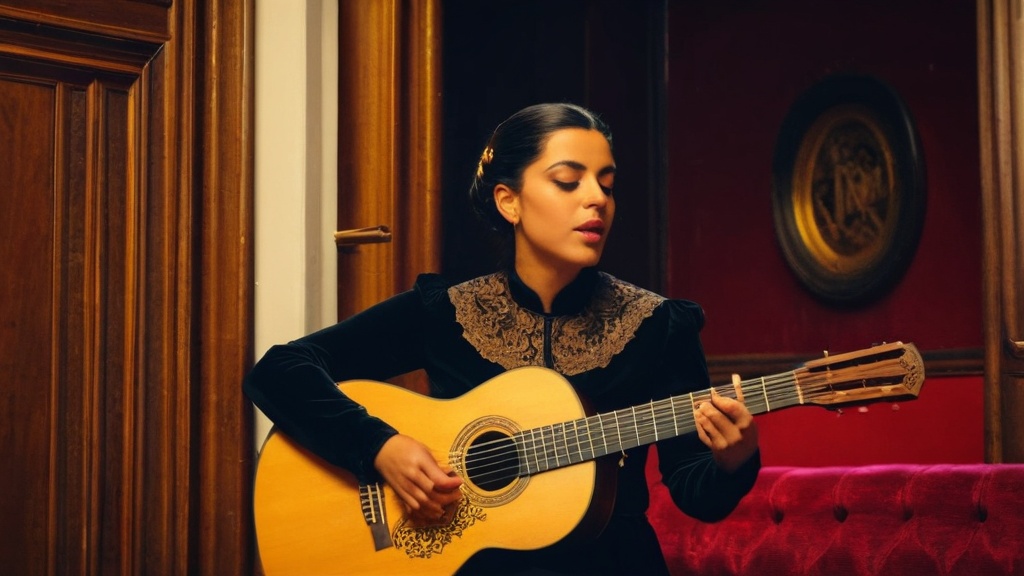
Many fados are in a minor key, which adds to the melancholic mood. In A minor, Am, Dm and E (or E7) are the most important chords: the I, IV and V. C, G and F often come along with them. There are also fados in a major key, such as the traditional Fado Corrido, while the Fado Menor is in a minor key.
- Am: x02210
- Dm: xx0231
- E: 022100
- E7: 020100
A simple progression to start with is Am, Dm, E7, Am. The E chord in a minor key comes from the harmonic minor scale. That scale has a recognizable, somewhat dramatic sound that fits fado well. By getting familiar with these chords and scales, you not only play existing songs better, but can also write your own pieces that fit the style.
Don’t just play the chords as strums, but also broken: learning to play arpeggios gives your accompaniment a more refined sound. Also vary things by combining open chords with barre chords at other places on the neck. That makes your playing more interesting and helps you understand the harmony better.
Basic Exercise: Bass and Chord in A Minor
The viola often alternates between a bass note with the thumb and a chord with the fingers. Set your metronome to a calm tempo, for example 60 bpm, and count in fours:
- Am: on count 1 play the A string (thumb), on count 2 the chord on the G, B and high E strings, on count 3 the low E string (thumb), on count 4 the chord again.
- Dm: alternate between the open D string and the open A string as the bass note.
- E7: alternate between the low E string and the B on the A string (2nd fret).
- Play the sequence Am, Dm, E7, Am, one measure per chord, until the changes come naturally.
Once this goes smoothly, play the bass notes a little fuller and the chords softer. That creates the calm, singing foundation on which a fadista can sing.
Techniques for Playing Fado on Guitar
An important technique is fingerpicking, where you play the strings with your fingers instead of a pick. That gives you more control over the sound and lets you add subtle nuances, which strengthens the emotional depth of fado. On the Portuguese guitar you also hear fast, repeated notes (tremolo) and trills in the melody. Such a tremolo is also characteristic of the Greek bouzouki; how to imitate that sound on guitar, you read in Greek bouzouki style on guitar.
Also pay attention to dynamics and articulation. Fado calls for variation in volume and intensity: sometimes you play softly to express vulnerability, at other moments more strongly for passion or sorrow. Fado is sometimes compared to flamenco, but techniques such as rasgueado belong to Spanish flamenco guitar and are uncommon in fado. In fado, the accompaniment serves the voice.
Tips for Practicing Fado on Guitar
- Be patient. Fado can be technically challenging if the genre is new to you. Learn each song step by step and practice small sections before you play the whole thing.
- Use a metronome or backing track. That improves your timing and rhythm. Start slowly and only raise the tempo when the chords and rhythms are solid. How to go about that, you read in learning guitar with a metronome.
- Start with simple songs. Songs with few chords help you master the basic skills, as a stepping stone to more complex styles such as fado.
- Choose specific fado pieces to play along with. That way you learn the chords and structures, and how to convey emotion. Try different styles within fado to expand your repertoire.
- Record yourself. That way you track your progress and hear where you can improve.
- Practice consistently. Even short daily sessions lead to a lot of progress in the long run.
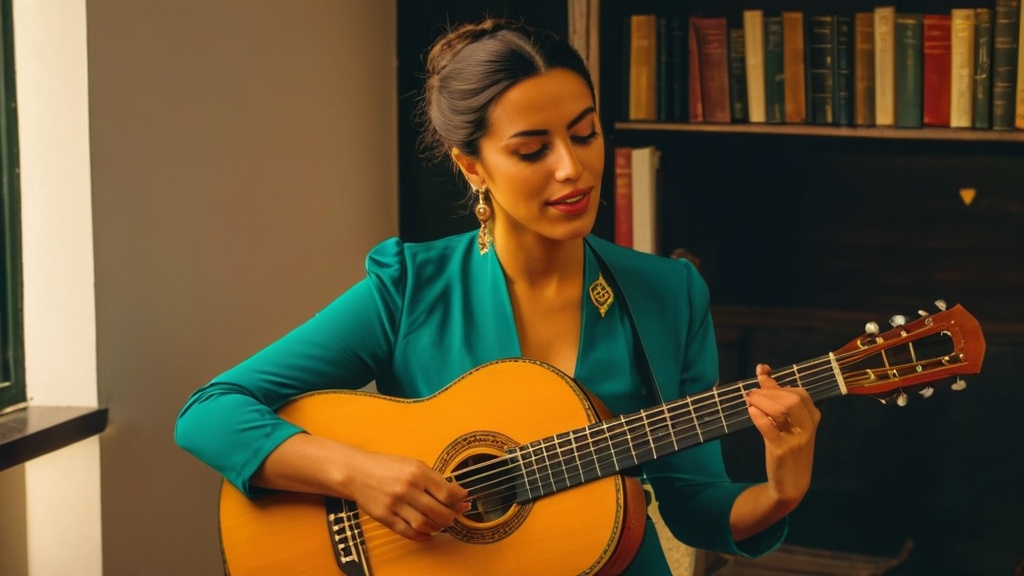
Emotion and Expression in Your Fado Playing
Adding emotion is perhaps the most important aspect of fado. It is not about technical perfection, but about telling a story and conveying feelings. So study the lyrics: what does the text want to say, and what emotions does it evoke in you?
Then experiment with dynamics, phrasing and tempo. A slow passage can have more impact than a fast one, and changes in volume give certain passages extra weight. You can find more ideas in ways to play with more dynamics on guitar. Techniques such as vibrato and slides add expression too; with better vibrato technique you make long notes sing. Allow yourself to be vulnerable and stay authentic: your personal interpretation brings fado to life.
Listening and Playing Together
Listen to different fadistas to get inspiration and learn to recognize styles, such as Amália Rodrigues, Carlos do Carmo and Mariza. For the Portuguese guitar, Carlos Paredes is a well-known name. Try to follow their interpretations while you practice. Also go to a live performance sometime and watch how experienced musicians convey their emotions.
Fado is a genre of collaboration between singer and musician. So play together with other musicians or with a singer. That way you learn to respond to others and adapt your playing to their style, which strengthens your timing and dynamics. You can find handy tips in playing together with other guitarists. If you want to master the techniques and nuances of fado faster, guitar lessons with personal guidance can help.
Frequently asked questions about fado on guitar
What is Portuguese fado music?
Portuguese fado is a traditional style of music from Portugal known for its melancholic and emotional character. It is sung by a fadista and accompanied by guitars, usually the viola and the Portuguese guitar.
How can I practice Portuguese fado music on guitar?
First learn the typical chords and rhythms of fado, such as Am, Dm and E7 with a pattern of bass note and chord. Also listen to traditional fado pieces and try to play the guitar parts along.
Which chords are often used in Portuguese fado music?
In minor you often hear Am, Dm and E or E7, complemented by chords such as C, G and F. This combination contributes to the characteristic melancholic mood of fado.
Are there specific guitar techniques that are important for fado?
Yes. On the accompanying guitar, fingerpicking and a calm pattern of bass note and chord are important. On the Portuguese guitar you hear tremolo, trills and melodies around the vocals. Flamenco techniques such as rasgueado are uncommon in fado.
Where can I find more information or lessons about fado on guitar?
There are online resources, method books and videos, from tutorials on YouTube to online courses on fado. There are also music schools and teachers who have studied this style. What you can expect from lessons, you read in guitar lessons at a music school.
Do you need a Portuguese guitar to play fado?
No. You play the accompaniment for fado on a regular guitar, the viola. The twelve-string Portuguese guitar plays the melodies around the vocals and is a separate instrument that you can learn on its own.
What is the difference between fado and flamenco on guitar?
Fado comes from Portugal and is centered on the voice; the guitars accompany and play countermelodies. Flamenco comes from the south of Spain and has its own guitar technique, including rasgueado, and a strong role for rhythm and dance.




Leave a Reply