
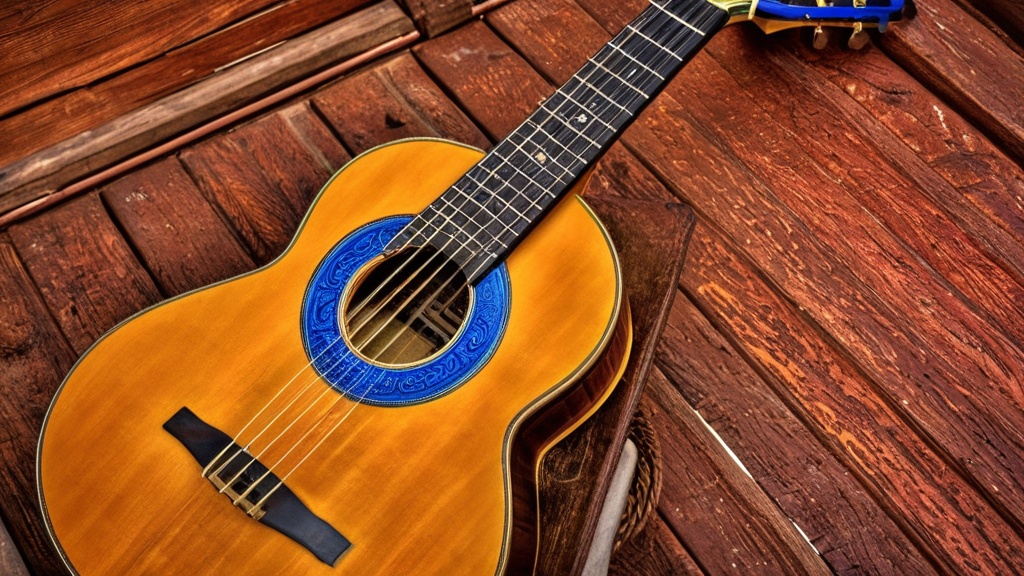

Short answer: The bouzouki is a Greek stringed instrument with a long neck and doubled strings, often called the Greek guitar. You play the bouzouki style on your guitar with a bright pick tremolo, melodies on the four highest strings and Greek modes (dromoi) such as Hijaz. Those four strings have the same intervals as a four-course bouzouki.
You don’t need a special instrument for this: an ordinary acoustic guitar with steel strings and a pick already gets close to the bright bouzouki sound. The bouzouki, a stringed instrument often associated with Greek folk music, has a distinct sound and playing technique that you can imitate on the guitar. That means you learn not only the chords and melodies of traditional Greek music, but also the characteristic rhythms and phrasing that make the bouzouki so recognizable. Portugal has a tradition of its own, too: in the article on practicing fado on guitar you can read which chords and accompaniment patterns go with it.
The goal is to capture the essence of Greek music while using the guitar as your instrument. When you play in this style, it’s important to pay attention to the nuances of the music. The bouzouki has a bright, piercing sound that is often reinforced by tremolo and other ornaments.
When you apply these techniques on the guitar, you can create an authentic Greek atmosphere. It takes practice and patience to master the right techniques, but the result is a richer musical repertoire and a deeper connection with Greek culture.
Summary
- Playing Greek bouzouki style on guitar means imitating the characteristic sounds and rhythms of traditional Greek bouzouki music.
- The history of Greek bouzouki music goes back to the 19th century and has influences from various cultures, including Ottoman and Byzantine music.
- Techniques for playing Greek bouzouki style on guitar include tremolo, fingerpicking and emphasizing specific accents in the music.
- Chords and scales used in Greek bouzouki music often include the Dorian, Phrygian and Mixolydian scales, as well as chords such as the major and minor chords.
- Important players and influences in the Greek bouzouki style include Vasilis Tsitsanis, Manolis Chiotis and Markos Vamvakaris, who contributed to the development of the style.
The History of Greek Bouzouki Music
The history of Greek bouzouki music is deeply rooted in the country’s cultural traditions. The instrument itself originated in the 19th century, but its roots go back to older stringed instruments played in the Middle East. The bouzouki quickly became a symbol of Greek folk music and played a crucial role in the development of genres such as rebetiko, a style of music that arose among the working class in the cities. If you want to explore that Eastern sound further, Arabic scales such as Hijaz and Rast are a logical next step.
This music often reflects themes of sorrow, love and social injustice. Over the years the bouzouki has gone through several changes, both in construction and in musical style. In the 1930s and 1940s the instrument became more popular, especially with the rise of radio and recording technology.
Well-known musicians such as Markos Vamvakaris and Vassilis Tsitsanis contributed to the popularity of the bouzouki and developed the instrument further. Their influence can still be felt in contemporary Greek music, where the bouzouki continues to play a central role.
What Is a Bouzouki? The Greek Guitar Explained
A bouzouki is a Greek stringed instrument from the lute family, with a long neck, a rounded, pear-shaped body and strings in pairs (courses). Most people mean this instrument when they say Greek guitar, even though it isn’t a real guitar. You almost always play the bouzouki with a pick. There are two main types: the trichordo with three courses (six strings) and the tetrachordo with four courses (eight strings).
| Tetrachordo (4 courses) | Trichordo (3 courses) | Guitar | |
|---|---|---|---|
| Strings | 8 strings in 4 courses | 6 strings in 3 courses | 6 single strings |
| Tuning | C-F-A-D | D-A-D | E-A-D-G-B-E |
| Neck | Long and narrow | Long and narrow | Shorter and wider |
| How it’s played | Almost always with a pick | Almost always with a pick | Pick or fingers |
| Body | Rounded, pear-shaped | Rounded, pear-shaped | Flat, with sides |
| Role in the music | Melody and solos | Melody and solos | Mostly chords and accompaniment |
In old rebetiko you hear the trichordo; the tetrachordo became popular in the 1950s, partly thanks to Manolis Chiotis. In the lower courses, one string is often tuned an octave higher, which gives the bouzouki its shimmering sound. In a Greek ensemble, the guitar often plays the chords underneath the bouzouki. If you want to imitate the bouzouki itself, play mostly melodies on the four highest strings.
Techniques for Playing Greek Bouzouki Style on Guitar
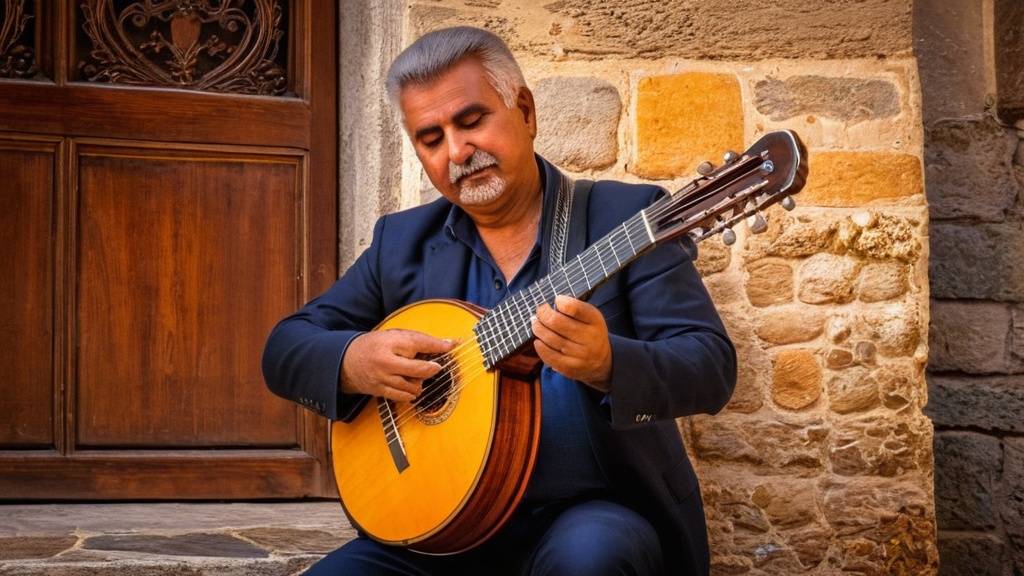
To play Greek bouzouki style on guitar, you need to master several techniques that are specific to this musical tradition. One of the most important techniques is tremolo, where you quickly alternate with your fingers or pick across the strings to create a smooth, continuous sound. This is how you approach the expressive style of the bouzouki.
It takes a lot of practice to master this technique, but the result is a rich and dynamic sound. There are also specific fingerings and chords that are often used in Greek music. With these chords you can play most traditional songs.
You’ll notice that a lot of Greek music uses open chords and barre chords, which contributes to its unique sound. It’s also important to experiment with different rhythms and strumming patterns to capture the authentic feel of Greek music. By combining these techniques, you can create a convincing interpretation of Greek bouzouki music on guitar.
Chords and Scales Used in Greek Bouzouki Music
Greek bouzouki music often uses specific chords and scales that contribute to its characteristic sound. A common scale is the Dorian scale, which evokes a unique mood that is typical of many traditional Greek songs. This scale has a specific structure that you can use to create melodies that resonate with the emotional depth of the music.
As for chords, there are several open chords that are often used in combination with barre chords. The chords C, Dm, G and Am, for example, are common in Greek music. It’s also useful to experiment with variations on these chords to add more color to your playing.
By combining these chords and scales with typical rhythms, you can achieve an authentic Greek sound that takes your guitar playing to a higher level.
Bouzouki Tuning and Dromoi on Guitar
The modern four-course bouzouki is tuned C-F-A-D. Those are the same intervals as the four highest strings of your guitar (D-G-B-E), only a whole step lower. Shapes and licks you play on those four strings therefore sit the same way on the bouzouki, and melodies on the high strings quickly start to sound like a bouzouki.
Melodies in rebetiko are built on dromoi: Greek modes related to the Turkish makams. A good first one is Hijaz. On D you play D-Eb-F#-G-A-Bb-C, with D major as the home chord and Gm or Eb as a change of color. The big step between Eb and F# immediately gives that Eastern sound. You hear the same sequence of notes in flamenco on guitar.
Play the melody with a firm pick and use tremolo on long notes: fast, even up and down strokes on a single string. That is essentially alternate picking at high speed, so start slowly and only raise the tempo when every stroke sounds equally loud.
Important Players and Influences in the Greek Bouzouki Style
The world of Greek bouzouki music is rich in influential players who have had a lasting impact on the genre. One of the most prominent figures is Markos Vamvakaris, often regarded as the father of rebetiko. His innovative approach to the instrument and his emotional performances have inspired countless musicians.
Vamvakaris’ work contributed not only to the popularity of the bouzouki, but also to the preservation of traditional Greek music. Another important player is Vassilis Tsitsanis, who is known for his virtuosity and for compositions that are still performed today. Tsitsanis wrote many songs that are now considered classics within Greek music.
His influence extends to contemporary artists who continue to use his style and techniques. By listening to their music and studying their techniques, you can not only improve your own playing, but also develop a deeper appreciation for the rich history of Greek bouzouki music.
How to Create the Right Tone and Atmosphere When Playing Greek Bouzouki Style on Guitar
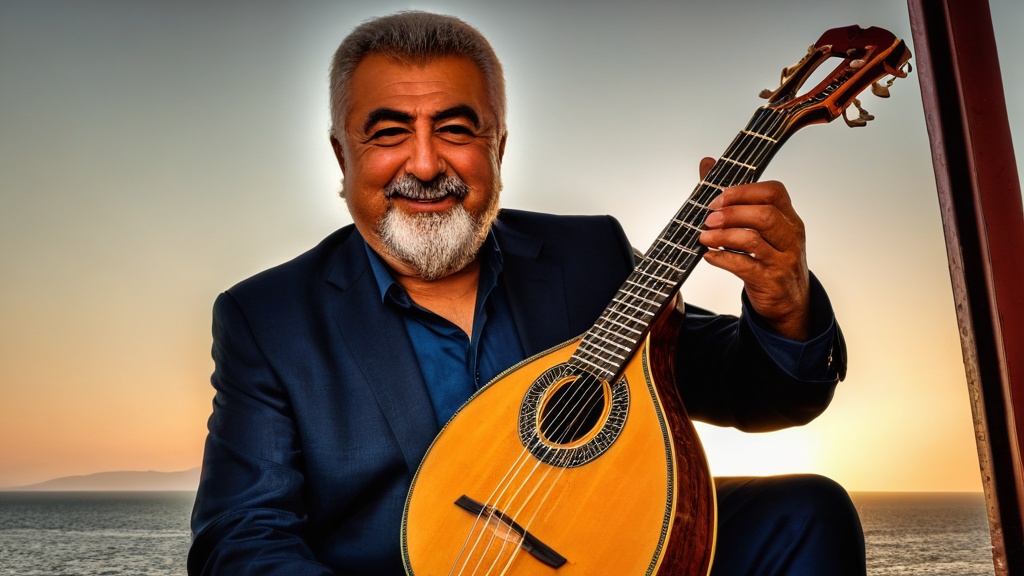
Creating the right tone and atmosphere when playing Greek bouzouki style on guitar takes attention to detail and a feel for expression. One important factor is dynamics; varying volume and intensity can help convey emotion in your playing. For example, try playing more softly during melancholic passages and louder during more rousing parts. You can find more ways to play with dynamics in a separate article.
This will not only improve your performance, but also draw your audience further into your music. It’s also important to pay attention to playing techniques such as tremolo and slides, which bring you closer to the sound of the bouzouki. By applying these techniques with sensitivity, you can create an authentic atmosphere that is characteristic of Greek music.
Improvisation is part of it too: by experimenting freely with melodies and rhythms, you can give traditional songs a unique interpretation.
Tips for Learning Greek Bouzouki Style on Guitar
If you’re interested in learning Greek bouzouki style on guitar, there are several tips that can help you make progress faster. First, it’s important to practice regularly; even short sessions can be effective if they’re consistent. Try to set aside time every day to practice specific techniques or songs, so that you gradually gain more confidence in your playing.
It can also be useful to use lesson materials or online tutorials that focus specifically on Greek music. Many resources are available that can help you learn the chords, scales and playing techniques that are unique to this style. Listening to authentic Greek music can also inspire and motivate you to keep learning.
Try out different artists and styles to get a broader understanding of what this rich musical tradition has to offer.
The Importance of Improvisation in the Greek Bouzouki Style on Guitar
Improvisation plays a crucial role in the Greek bouzouki style on guitar. It allows musicians to express their creativity and put their personal stamp on traditional songs. In many cases, improvisation is seen as a way to convey emotions that go beyond what written music can capture.
This makes it possible not only to express yourself, but also to connect with the audience on a deeper level. To improvise effectively within this style, it’s important to become familiar with the chords and scales that are used. When you understand them well, you can experiment more freely with melodies and rhythms as you play. If you’re looking for a broader approach, read how to learn to improvise in different styles.
It can also be useful to listen to other musicians and study their improvisation styles; this can inspire you to apply new ideas in your own playing. Ultimately, improvisation will not only improve your skills, but also contribute to a richer musical experience for both you and your listeners. In Indian music, too, you improvise within a fixed set of notes with plenty of ornamentation; you can read about that in raga guitar improvisation tips.
If you’re interested in playing Greek bouzouki style on guitar, it’s also worth learning more about the different types of guitars you can use to improve your musical skills. A useful article that can help you with this is Everything You Need to Know About Electric Guitars. This article offers extensive information about electric guitars, which can be handy if you’re considering broadening your musical horizons and trying out new styles.
Frequently asked questions about Greek bouzouki style on guitar
What is playing Greek bouzouki style on guitar?
Playing Greek bouzouki style on guitar is a playing style in which guitarists try to imitate the characteristic sounds and techniques of the Greek bouzouki on the guitar. This includes the use of specific chords, scales and rhythms that are typical of Greek music.
Which techniques are used when playing Greek bouzouki style on guitar?
Several techniques are used when playing Greek bouzouki style on guitar, including tremolo with a pick, slides between notes, plucking the strings and playing Greek modes (dromoi) such as Hijaz.
Which guitar is used for playing Greek bouzouki style?
Guitarists who want to play the Greek bouzouki style often use an acoustic guitar. Some prefer a classical guitar for its warm sound, while others use a steel-string guitar for a brighter sound.
Are there specific chords that are often used in Greek bouzouki style on guitar?
Mostly they are ordinary major and minor chords; the color comes mainly from the mode. With a melody in Hijaz on D, for example, you play D major as the home chord, alternating with Gm or Eb.
Which pieces of music lend themselves well to playing Greek bouzouki style on guitar?
Pieces from the Greek music tradition, such as rembetika and laïka, lend themselves well to playing Greek bouzouki style on guitar. Traditional Greek melodies and compositions by well-known Greek composers can also be arranged for this playing style.
How do you get a guitar close to the sound of a bouzouki?
Play the melody mostly on the four highest strings, because they have the same intervals as a bouzouki in C-F-A-D. Use a pick, choose a bright tone and play long notes with tremolo.
What is the difference between rebetiko and laïka?
Rebetiko is the urban folk music that emerged in the first half of the 20th century in places such as Piraeus and Athens. Laïka is the popular Greek music that grew out of it from the 1950s on, often with a larger band and an amplified bouzouki.
What is a Greek guitar?
A Greek guitar usually means the bouzouki: a Greek stringed instrument with a long neck, a rounded body and doubled strings. The modern four-course bouzouki is tuned C-F-A-D, with the same intervals as the four highest strings of a guitar.
Can you tune a guitar like a bouzouki?
You can: tune the four highest strings a whole step lower and you get C-F-A-D, just like on a four-course bouzouki. It isn’t necessary, though, because the intervals are already the same. In standard tuning you play the same shapes, just a whole step higher.
How many strings does a bouzouki have?
The modern bouzouki, the tetrachordo, has eight strings in four courses and is tuned C-F-A-D. The older trichordo has six strings in three courses and is usually tuned D-A-D. Because you play each course as a single string, a tetrachordo feels to your fingers like a four-string instrument.
Can a guitarist learn to play the bouzouki?
Yes, and you have a head start: the tetrachordo has the same intervals as the four highest strings of your guitar, so you’ll recognize many shapes and licks right away. You do have to get used to the doubled strings, the long, narrow neck and playing with tremolo. Start with simple melodies and play them on your guitar first.






Leave a Reply