
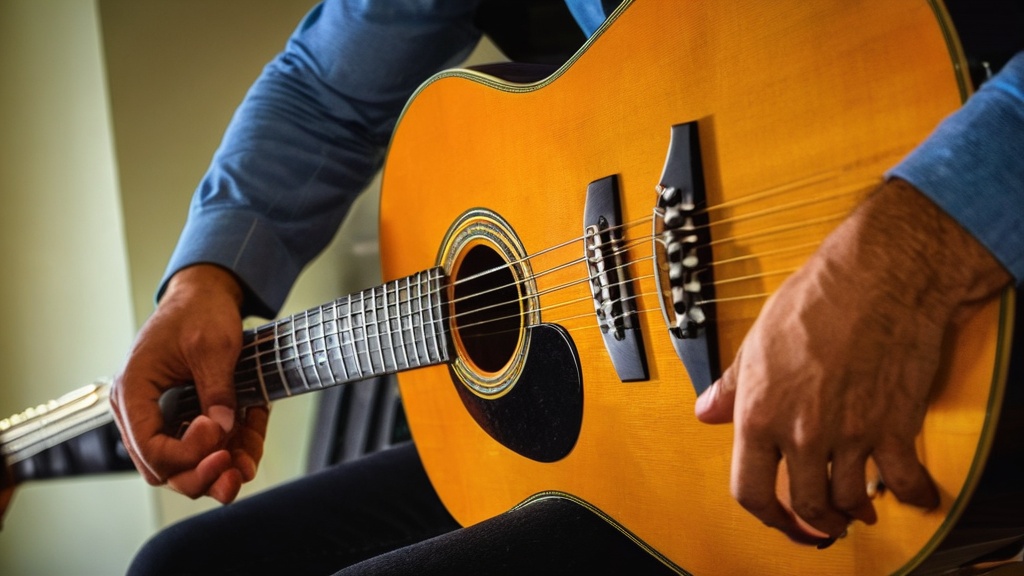

You play more dynamics on guitar by deliberately varying how hard, where and with what you strike the strings: soft and loud, close to the neck or near the bridge, with fingers or a pick, and with the volume knob on your guitar. That gives your playing contrast and keeps the listener engaged. Below you read which techniques work, and you find an exercise in five volume levels.
What are dynamics on guitar?
Dynamics on guitar refers to the variations in volume and intensity you can create while playing. It is an essential part of music that can strengthen the emotional impact of a piece. When you use dynamics, you are not just playing notes, you are bringing them to life by presenting them with different volumes and nuances.
This can range from soft, almost whispering passages to powerful, shouting chords. Using dynamics makes your playing more interesting and keeps the listener captivated. Dynamics is not only a matter of playing louder or softer; it is also about how you approach the notes.
The technique you use, the speed at which you play and even the way you move your fingers across the strings can all contribute to the dynamics of your playing. By working with these elements consciously, you can evoke a wide range of emotions and moods, which is essential for an engaging musical experience.
Summary
- Dynamics on guitar refers to the variation in volume and intensity while playing
- Dynamics are essential for conveying emotion and expression in music
- Different techniques such as fingerpicking and palm muting can be used to create dynamics on the guitar
- Finger and pick techniques can influence the dynamics of your guitar playing
- Effects pedals can strengthen or weaken the dynamics of your playing, depending on how you use them
- Tips for playing softer and louder passages on the guitar can help you master dynamics
- Expression and emotion are very important for conveying dynamics on the guitar
- Practicing dynamics is essential for improving your guitar playing
The importance of dynamics in music
Dynamics play a crucial role in music, because they help shape the structure and emotional depth of a piece. Without dynamics, music would be flat and monotonous, which makes it hard to hold the listener’s attention. Using different dynamic levels can build tension, convey emotion and even tell stories without words.
This makes it a powerful tool for every musician. Dynamics can also improve the interaction between musicians. When you play together with others, varying volume and intensity can help create a shared musical experience.
It allows you to respond to what others are doing and to form a dynamic whole together. This not only strengthens the musical collaboration, but also makes it possible to connect more deeply with the audience.
Different techniques for dynamics on guitar
There are several techniques you can use to bring dynamics into your guitar playing. One of the most obvious ways is to vary your picking force. By playing harder or softer, you directly influence the volume of the notes you play.
You can easily apply this to both chords and solos, for example by alternating a powerful strum with a subtle picking technique. You can also use techniques such as palm muting and harmonics to create dynamic effects. Palm muting, where you dampen the strings with your hand while you play, gives a muted tone that is perfect for quiet passages. You can read how to learn palm muting cleanly, with a basic exercise, in palm muting techniques for metal guitar.
Harmonics, on the other hand, can produce a sparkling, ethereal sound that is perfect for dramatic moments in your music. By combining these techniques, you can develop a rich palette of dynamic possibilities.
Using finger and pick techniques for dynamics
The choice between finger and pick techniques also affects the dynamics of your guitar playing. When you play with your fingers, you often have more control over nuances and subtle variations in volume. This allows you to play softer passages with a lot of expression, while still being able to strike harder when needed.
Finger techniques can also help create a warmer tone, which adds to the overall dynamics. Using a pick, on the other hand, has its own advantages. With a pick you can often strike harder, which results in a brighter and more powerful sound. You can read which thickness and material suit you in the overview of the best pick for beginners.
This can be especially effective in rock or pop, where energy and volume are essential. By alternating between finger and pick techniques, you create not only variation in tone, but also dynamic contrasts that take your playing to a higher level.
How using effects pedals can influence dynamics
Effects pedals are another way to influence dynamics on guitar. Pedals such as overdrive, distortion and compression can all contribute to the dynamic possibilities of your sound. Overdrive and distortion not only add an extra layer of texture to your sound, but can also help certain passages sound more powerful without you having to play harder. If you have little experience with pedals, start with the best effects pedals for beginners.
Compression is another important effect that can help you control dynamics. It makes softer notes easier to hear and prevents louder notes from standing out too much. This can be especially useful in situations where balance matters, such as playing in a band. Be careful, though: a compressor narrows the difference between soft and loud. If you want a lot of dynamics, set it lightly or leave it off.
By using effects pedals wisely, you can not only enrich your sound, but also improve the dynamics of your playing considerably.
Tips for playing softer and louder passages on guitar
When you work on playing both softer and louder passages, it is important to be aware of your technique and approach. Start by practicing different picking techniques to discover how you can vary volume without losing tone quality. For example, try playing a passage very softly with a light touch and notice how this changes the emotional impact.
It is also useful to experiment with where you strike the strings. Playing closer to the bridge can result in a brighter sound, while playing closer to the neck often sounds warmer. By applying these variations in combination with your picking technique, you can achieve a wide range of dynamic effects that make your playing unique.
The importance of expression and emotion in dynamics on guitar
Expression and emotion are inseparable from dynamics on guitar. When you play, it is important to apply not only technical skills, but also to put feeling into your music. Dynamics is a powerful way to convey emotion; by playing certain passages softer or louder, you can take the listener on an emotional journey. You can read about more ways to put feeling into your playing, such as articulation and timing, in the article on making your guitar playing more expressive.
Think about what you want to communicate with your music. Do you want to convey joy, sadness or maybe even anger? By working with dynamics consciously, you can strengthen these emotions and make sure your playing feels authentic.
This not only impresses your audience, but also helps you develop your own musical identity further.
Practicing dynamics in your guitar playing
Practicing dynamics is essential for every guitarist who wants to improve their playing. Start with simple exercises where you explore different volumes while playing chords or melodies. For example, try strumming a chord softly and gradually getting louder, and vice versa.
This helps not only with developing control over volume, but also with understanding how dynamics affect your music. It can also be useful to listen to other musicians and analyze how they use dynamics. Pay attention to how they vary their playing and which techniques they use to convey emotion.
Try applying these elements in your own playing and experiment with different styles and genres. By practicing consistently and challenging yourself, you will notice that your understanding and use of dynamics on guitar improves considerably.
If you are interested in ways to play more dynamics on guitar, it is also worth exploring the magic of jazz guitar music. Jazz guitar offers a wide range of techniques and styles that can help you improve your dynamic playing. For more information on how jazz guitar can inspire you and enrich your playing, take a look at the article on the magic of jazz guitar music. This article offers valuable insights and tips that can help you take your guitar playing to a higher level.
Exercise: play in five volume levels
Set a metronome to a relaxed tempo and choose one chord, for example G. Play four strums per measure and give yourself five levels:
- Very soft: just brush the strings, barely audible.
- Soft: calm, but all the strings ring out.
- Normal: your usual playing volume.
- Loud: firm, but still clean and without rattling strings.
- Very loud: as powerful as you can play without the sound distorting.
Play two measures per level, from 1 up to 5 and back down again. Once that works, try a gradual build over four measures without clear steps. Then apply it to a song you know: play the verse at level 2 and the chorus at level 4. You hear right away how much livelier it sounds.
If you play electric, also practice with the volume knob on your guitar. Turn it back to about 6 or 7 for a cleaner, softer tone and turn it all the way up for solos or a powerful chorus. With overdrive, that also changes the amount of distortion, without you having to step on a pedal.
Frequently asked questions about guitar dynamics
What are some ways to play more dynamics on guitar?
Some ways to play more dynamics on guitar are varying your picking force, using your right hand to mute the strings and using the volume and tone controls on your guitar or amp.
Why is it important to play dynamics on guitar?
Adding dynamics to your guitar playing brings more expression and emotion to your music. It allows you to create contrasts between soft and loud passages, which makes your playing more interesting and engaging. Combine it with good vibrato, as explained in improving your vibrato technique for more expression.
Which techniques can I use to improve my dynamics on guitar?
To improve your dynamics on guitar, you can work on your picking technique, master palm muting and experiment with different pickups and amp settings to create variation in volume and tone.
How can I improve my picking force on guitar?
You can improve your picking force on guitar by practicing regularly with controlled and varied strokes. Try playing both soft and loud passages and pay attention to the dynamics in your playing.
Can you practice dynamics with a metronome?
Yes. A metronome actually helps, because you often speed up without noticing when you play louder. Keep the tempo steady and change only the volume. That way you learn to control volume and tempo separately.
Do dynamics also work with a lot of distortion?
Less so, because distortion makes soft and hard strokes more alike. You get more dynamics back by using less gain and making the difference with your picking and the volume knob on your guitar.






Leave a Reply