

How long should you practice each day to learn guitar? As a beginner, you can get a long way with 20 to 30 minutes a day. Consistency matters more than total time: half an hour every day gives you more than three hours in a row once a week. More advanced players can practice longer, depending on their goals, as long as they take enough breaks.
Summary
- Beginners: practice 20 to 30 minutes a day, split into short sessions if you like.
- Advanced players: 30 minutes to a few hours a day, depending on goals and available time.
- Quality beats quantity: focused practice gives you more than playing for a long time while distracted.
- Short, frequent sessions work better than long sessions with weeks in between.
- Find a balance: listen to your body and schedule time to rest.
- Make a realistic plan that fits your daily routine and set a concrete goal for each session.
- Be patient and celebrate small victories to stay motivated.
The Right Mindset for Effective Practice
When you start practicing, the right mindset helps enormously. This means you focus not only on the result, but also on the process itself. It is important to see yourself as a learner who is constantly growing and developing.
This growth mindset helps you embrace challenges and learn from mistakes. Instead of getting frustrated when something doesn’t work right away, you see it as a chance to improve. This can boost your motivation and help you keep going, even when it gets hard.
It is also crucial to have realistic expectations. You need to understand that progress takes time and that not every practice session will be perfect. By setting yourself small, achievable goals, you can track your progress better and keep yourself motivated.
Celebrating small victories can boost your confidence and encourage you to keep going. With this mindset, you are better prepared to face the challenges of the learning process. You will find more ideas for sticking with it in the article about staying motivated while learning guitar.
The Importance of Regular Practice Sessions
Regular practice sessions are the key to success in any learning process. By practicing consistently, you not only build skills but also strengthen your memory and understanding of the material. It is better to practice for a short time every day than to schedule the occasional long session.
This regularity helps you anchor information better and keeps you moving forward in your development. Regular practice also creates a routine that helps you stay focused. When practicing becomes a fixed part of your daily life, you are more likely to stay motivated.
You don’t always have to set aside a huge amount of time; even short sessions can be very effective if they are repeated regularly. That way you don’t get overwhelmed and learning stays an enjoyable experience.
Finding the Right Balance Between Practice and Rest

A good balance between practice and rest is crucial for an effective learning process. Practicing too much without enough rest can lead to mental fatigue and even burnout. Your brain needs time to process and consolidate information.
By taking breaks regularly, you give yourself the chance to recharge and gain new energy for the next practice session. On the other hand, it is also important not to rest too much. Going too long without practicing can lead to a loss of skills and motivation.
Finding the right balance means listening to your body and mind. If you notice you are tired or frustrated, take a break, but make sure you return to your practice routine after a short while. This helps you stay in top shape both physically and mentally. If your fingertips or wrist hurt while playing, read how to prevent finger pain when learning guitar.
How Practice Time Affects the Learning Process
The amount of time you spend practicing has a direct effect on how fast and how effectively you learn. It is important to understand that quality is often more important than quantity. It is not only about how much time you spend practicing, but also how focused and purposeful that time is.
When you practice with your full attention, you can make progress faster than when you are distracted or not fully engaged in the activity. How you divide that time can also have a big impact. It is often more effective to schedule shorter, intensive sessions than long, drawn-out practice times.
This keeps your mind sharp and keeps you from getting bored or distracted. By being strategic with your practice time, you can get the most out of every session and see results faster.
Tips for Planning Practice Sessions
Planning practice sessions can be a challenge, especially if you lead a busy life. A good approach is to reserve specific times in your calendar for practice, just as you would for an important appointment. This not only helps build consistency, but also makes sure you give priority to your learning goals. You can read how to set up such a plan in making an effective guitar practice schedule. How to fit guitar into a full week, with an example of a fifteen-minute session, you can read in learning guitar for busy people.
Try to create a routine that fits your lifestyle and make sure it is achievable. It can also be useful to add variety to your practice sessions. This not only keeps things interesting, but also helps you work on different aspects of the skill you want to develop.
By alternating between techniques or exercises, you stay motivated and keep practice from becoming boring. Don’t forget to look back regularly at what is going well and where there is room for improvement; this can help you adjust future sessions. Prefer a ready-made plan? Then try this practice schedule for learning guitar in 30 days.
How Long Beginners and Advanced Players Should Practice Each Day

The ideal practice time differs between beginners and advanced players. For beginners, it is often advisable to schedule shorter sessions of about 20 to 30 minutes a day. This helps them not to feel overwhelmed and makes it easier to concentrate on specific skills or techniques.
It is important that they feel comfortable with the basics before moving on to more complex tasks. Advanced players, on the other hand, can benefit from longer sessions, ranging from 30 minutes to a few hours a day, depending on their goals and available time. For them, it is important to tackle more in-depth techniques and strategies, which can take more time.
However, even for advanced players it is essential to take breaks regularly and not get overtired. Finding the right balance between intensity and duration is crucial for lasting progress.
Example: How to Divide 30 Minutes of Practice Time
A fixed structure helps you make good use of your practice time. This is an example for a beginner with half an hour a day:
- 5 minutes of warming up: easy finger exercises and single notes to warm up your hands. You will find ideas in the warm-up exercises for guitar.
- 10 minutes of chords: practice two or three chords and especially the changes between them, for example G (320003), C (x32010) and D (xx0232).
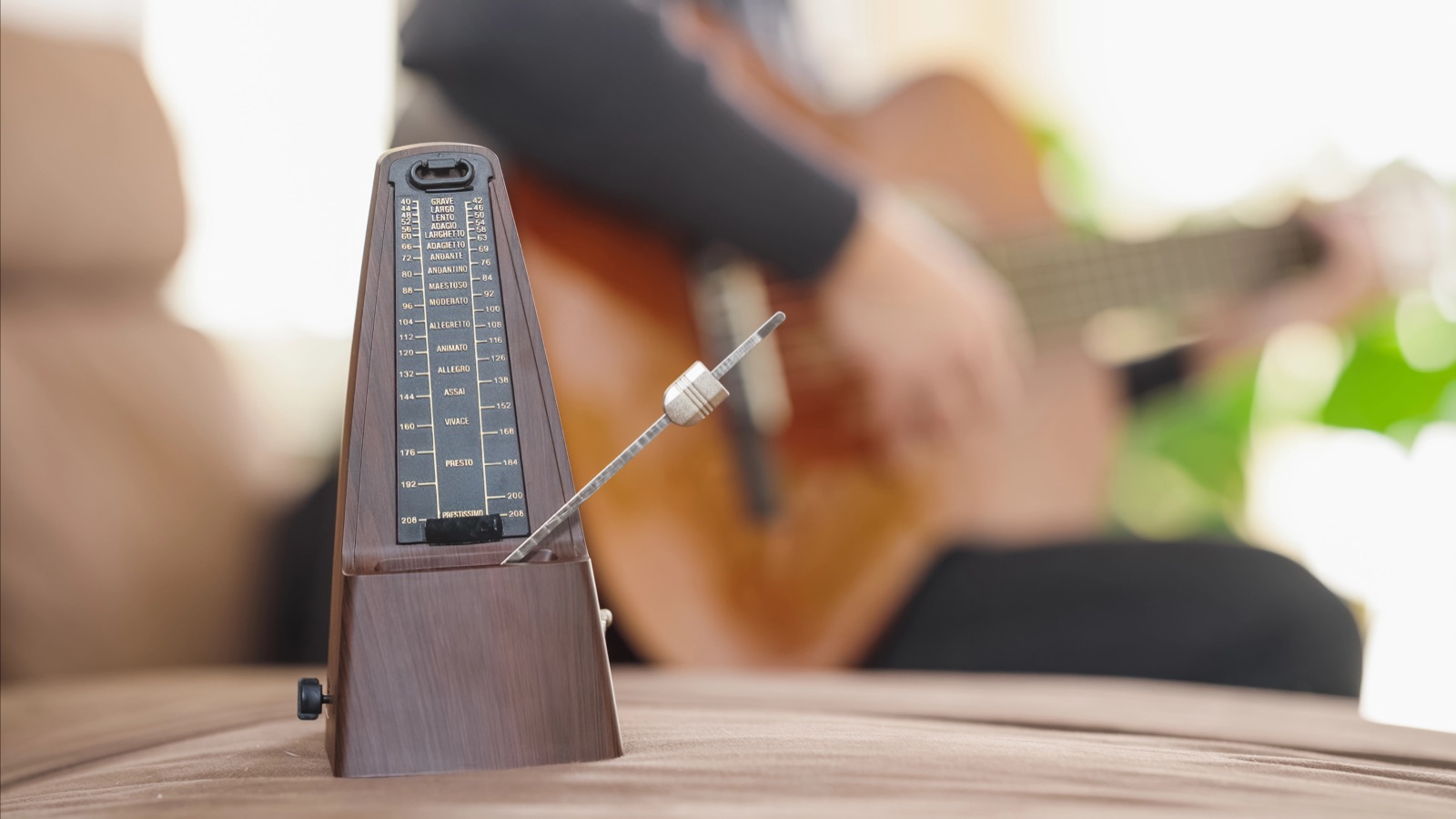
- 10 minutes of rhythm or a song: play a simple strumming pattern at a slow tempo, with a metronome if you like. You can read how to go about it in learning guitar with a metronome.
- 5 minutes of something new or free play: a new chord, a riff or just playing what you enjoy.
If you have less time, make the blocks shorter but keep the same order. If you play longer, add a block for technique or scales.
The Importance of Variety in Exercises
Variety in exercises is an important factor for effective learning. When you keep repeating the same exercises, it can lead to boredom and stagnation in your development. By including different kinds of exercises in your routine, you keep yourself challenged and motivated.
This can also help develop a wider range of skills and techniques. Variety also stimulates creativity and problem-solving skills. When you try different approaches, you discover new ways to tackle challenges and push yourself. You will find inspiration for variety in these 10 daily guitar exercises for beginners.
This can lead to unexpected insights and improvements in your performance. It is therefore important to regularly add new exercises or techniques to your routine, so that learning stays a dynamic and engaging process.
Monitoring Progress and Adjusting Practice Time
Monitoring your progress is crucial for improving your skills. By regularly keeping track of what is going well and where there is still room for improvement, you can work more specifically on your weak points. This can be as simple as keeping a journal in which you document your practice sessions, or using apps designed for this purpose. You can see which apps are suitable in the overview of the best apps for learning guitar.
It is also important to be flexible with your practice time and routine. If you notice that certain exercises are not giving the results you want or that your motivation is dropping, don’t be afraid to make changes. This can mean spending more time on specific techniques or restructuring your routine completely.
By proactively monitoring your progress and making adjustments, you stay on course toward your learning goals and make sure the process stays both effective and enjoyable.
If you are wondering how long you should practice each day to learn guitar, it is important to know that consistency and regularity are essential. It is advisable to practice daily, even if it is only 15 to 30 minutes a day, to make progress. For beginners it can be useful to start with simple chords and techniques. For more tips and tricks on playing guitar for beginners, you can read this article: How to play guitar for beginners: tips and tricks. This article offers valuable insights and advice that can help you develop your guitar skills effectively.
Frequently asked questions about how long to practice guitar
How long should I practice each day to learn guitar?
It is recommended to practice at least 20-30 minutes a day to learn guitar. Regular practice is important for building muscle memory and improving technique.
Is it better to practice longer sessions or several short sessions a day?
It is generally better to have several short practice sessions a day rather than one long session. This helps maintain concentration and prevents fatigue.
What if I have more time to practice?
If you have more time, you can extend your practice sessions to 45-60 minutes a day. It is important, however, to listen to your body and avoid fatigue.
Do I need to practice every day to learn guitar?
Regular practice is important for learning guitar. It is recommended to practice at least 5-6 days a week to make consistent progress.
What if I don’t have time to practice every day?
If you don’t have time to practice every day, try to practice at least 3-4 days a week. Try to schedule your practice sessions on days when you have more free time.
Is it normal for my fingertips to hurt when I’m just starting out?
Yes, in the first weeks the strings press into your fingertips and that feels sore. By practicing briefly and regularly, your fingertips gradually become tougher. Do stop if the pain becomes sharp, and take a break.
What can you practice if you only have ten minutes?
Choose one concrete goal, for example the change between two chords or one strumming pattern. First play freely for a minute and spend the rest of the time focused on that one thing. That way even a short session becomes useful practice time. For children this works best with a real song, such as these children’s songs with just two chords.






Leave a Reply