
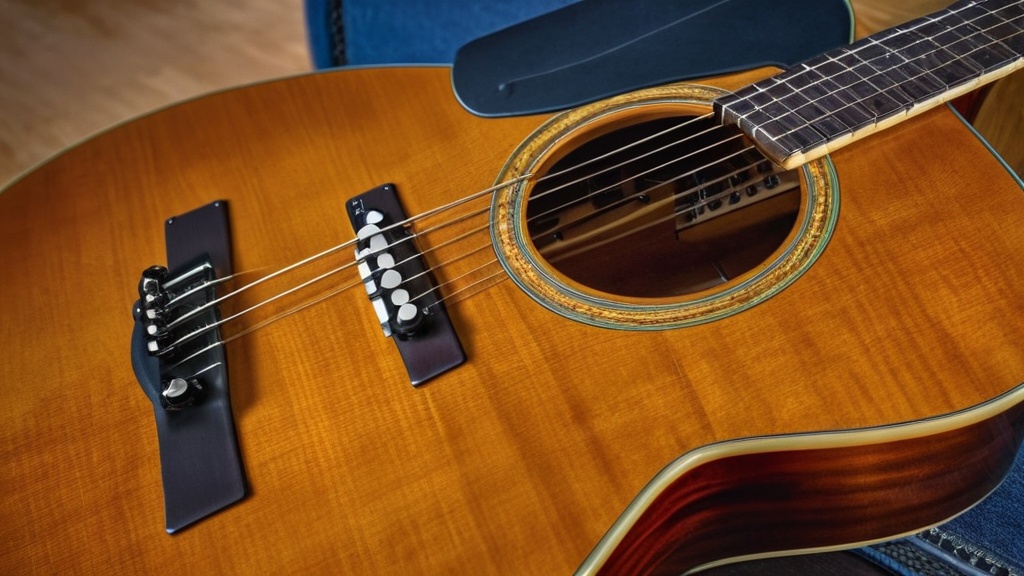

You make a chord chart for your own song in four steps: pick a key, take the chords that belong to it, put them in an order you like and write them down bar by bar for the verse and chorus. With easy chords like C, G, Am and F you already have enough for a complete song. After that you add a melody and lyrics. If you are writing a love song, you will find fitting chord sequences and lyric tips in writing a romantic song on guitar.
Chord charts form the backbone of a song. They provide the harmonic foundation that your melody and lyrics rest on, and they largely determine the emotion and mood. Without a well-thought-out chart, a song can quickly feel disjointed or boring. At the same time, they are a framework in which you can experiment, so you find your own sound step by step.
Summary
- A chord chart is the order of chords in a song and forms the basis of songwriting.
- The I, IV, V and vi chords from a single key are enough for most simple songs.
- Well-known progressions such as I-IV-V and I-V-vi-IV are a great starting point.
- Every music style has its own typical charts, from simple in pop and folk to extensive in jazz.
- Variation, rhythm, structure and repetition make a simple chart interesting.
- You write the melody and lyrics on top of the chart, using the chord tones as an anchor.
Basic Principles of Chord Charts
A chord chart is a series of chords that you play in a fixed order. The chords usually come from a single scale, so they sound good together naturally. How that works, you read in the explanation on harmony in guitar music.
The most commonly used chords are major and minor chords. Major chords such as C, G and D often sound cheerful and open, while minor chords such as Am, Em and Bm sound more melancholic. Seventh chords, ninth chords, sus chords and diminished chords add extra color and tension.
Every chord also has a function. The first chord (I, the tonic) feels like home. The fifth (V, the dominant) builds tension that wants to return to I. The fourth (IV, the subdominant) sits in between, and the sixth (vi) is the minor chord that adds a bit more feeling. Anyone who knows these roles makes more conscious choices. What those Roman numerals mean and how to fill them in for each key, you read in understanding chord progressions.
Step by Step: How to Make a Chord Chart for Your Own Song

- Pick a key. Start in a key with easy open chords, such as C, G or D. If it does not suit your voice, you can later put a capo on the neck: with G shapes and a capo on the second fret, you sound in A.
- Take the four main chords. Use the table below. With I, IV, V and vi you can already make a lot of songs.
- Choose an order. Try a well-known progression, or play the chords in different orders until something moves you.
- Decide on the structure. Give the verse and the chorus each their own chart, so they clearly differ from each other.
- Write it down. Put the chord for each bar between bar lines, for example | C | G | Am | F |. If there are two chords in one bar, each chord usually gets half of the beats.
| Key | I | IV | V | vi |
|---|---|---|---|---|
| C major | C | F | G | Am |
| G major | G | C | D | Em |
| D major | D | G | A | Bm |
| A major | A | D | E | F#m |
In G major you play all four chords as open chords, which makes it a great key for beginners. Bm and F#m are barre chords and therefore a bit harder.
Popular Chord Progressions to Start With
- I-IV-V (C-F-G or G-C-D): the basis of many rock, folk and blues songs.
- I-V-vi-IV (C-G-Am-F or G-D-Em-C): the well-known pop progression. “Let It Be” by The Beatles uses it in C (C-G-Am-F), and “Someone Like You” by Adele in A (A-E-F#m-D).
- vi-IV-I-V (Am-F-C-G): the same chords, but with a minor chord up front it immediately sounds more wistful.
- ii-V-I (Dm-G-C): the standard turnaround in jazz.
Play these charts on your guitar and see how they relate to your own style. A simple I-IV-V already changes when you add a minor chord to it. You can find more ideas in the tips for writing songs with 4 chords, and for practice material in easy songs with 3 chords.
Chord Charts for Different Music Styles
In pop music you often see simple, repeating charts that are easy to sing along to, such as I-V-vi-IV. Simplicity is not a weakness here; it is often exactly the strength of a song, as you read in the power of a simple song.
In rock you often hear powerful progressions with power chords, which strengthen the energy of the song. Folk and country usually keep it simple, so the story stays at the center. In jazz and progressive rock, charts are more complex, with extended chords, unusual progressions and key changes. Analyze how other artists build their charts; that often yields new ideas. How to play such changes in meter on guitar, you read in rhythms in progressive rock.
Adding Variation and Tension
It is tempting to repeat the same chart for the entire song. With some variation you hold the listener better:
- Change the order of the chords or add an unexpected chord.
- Add seventh or sus chords, for example G7 instead of G, for extra tension.
- Use a bridge with a different chart from the verse and chorus. How to build one, you read in making a bridge in a guitar song.
- Modulate: go to another key temporarily and then come back, or raise the last chorus. See learning modulation on guitar.
- Play with dynamics: start softly and build up to a more powerful chorus.
Rhythm and Strumming Patterns
The same chart sounds very different with a different rhythm. A simple strumming pattern gives calm and stability, a busier pattern more energy. Fingerpicking makes a chart more intimate. Tempo counts too: slow leaves room for emotion, fast gives excitement. So try each chart with a few patterns and tempos, and make sure you feel the beats well. How to do that, you read in counting rhythm on guitar.
Adding Melody and Lyrics

Once you have a chart, it is time for a melody. Use the notes of the chords as a basis: on those notes your melody naturally fits the accompaniment. Also play with rhythm, note values and syncopation to make the melody interesting. Let certain melodic phrases come back; that creates recognizability. How to match chords and vocal line, you read in combining chords and vocal lines.
When writing the lyrics, take the structure and rhythm of your chart into account. Look for words that fall naturally in the bar and keep a theme or story in mind, so the song becomes one whole. If you get stuck, these tips for finding inspiration for lyrics will help.
Structure and Repetition
A good song has a clear build with verses, choruses and possibly a bridge that follow each other logically. That structure helps tell your story and makes the song easy to follow. Repeating charts and melodies creates recognition, but look for the balance: too much repetition gets boring, too little feels chaotic.
Tips for Original Chord Charts
- Listen and analyze. Play popular songs, look at how their chart is put together and adapt it to your style.
- Combine genres. Borrow a chord or turn from another style or try an unusual key.
- Start from a feeling. Think about which emotion you want to convey; painting or poetry can inspire too.
- Collaborate. Other musicians bring ideas you would not come up with yourself.
- Dare to make mistakes. Sometimes the best idea comes from something that did not go as planned. Originality does not mean you have to reinvent everything; a fresh take on a familiar chart is often enough.
And above all, don’t forget to have fun while writing.
Frequently asked questions about making chord charts
What are chord charts?
Chord charts are a series of chords in a fixed order that you use to accompany a song. They show which chord you play in which bar and form the harmonic basis of a song.
Why are chord charts important for your own songs?
A chord chart gives your song structure and supports the melody. Easy charts also help beginners write songs quickly without much knowledge of music theory.
How do you make chord charts for your own songs?
Choose chords that fit the key of your song, decide the order and add variations if you like. Experiment with different orders, rhythms and tempos, and then put a melody and lyrics on top.
Which chords are often used in chord charts?
Commonly used are major and minor chords such as C, G, D, A, E, Am and Em. These are also easy to play and therefore suitable for beginners. F is a bit harder as a barre chord. Seventh chords and sus4 chords add extra variety.
Are there tools or programs available for making chord charts?
Yes, there are online tools and apps where you choose chords, adjust the order and have the chart played back. A notebook or a simple recording on your phone also works fine for capturing ideas.
How many chords do you need for a song?
Three or four chords are enough for a complete song. Many well-known songs run on the I, IV, V and vi from one key, for example G, C, D and Em.
How do you write down a chord chart?
Put the chord for each bar between bar lines, for example | G | D | Em | C |, and indicate which part of the song it belongs to. You can also put the chords above the lyrics, exactly above the syllable where you change.





Leave a Reply