
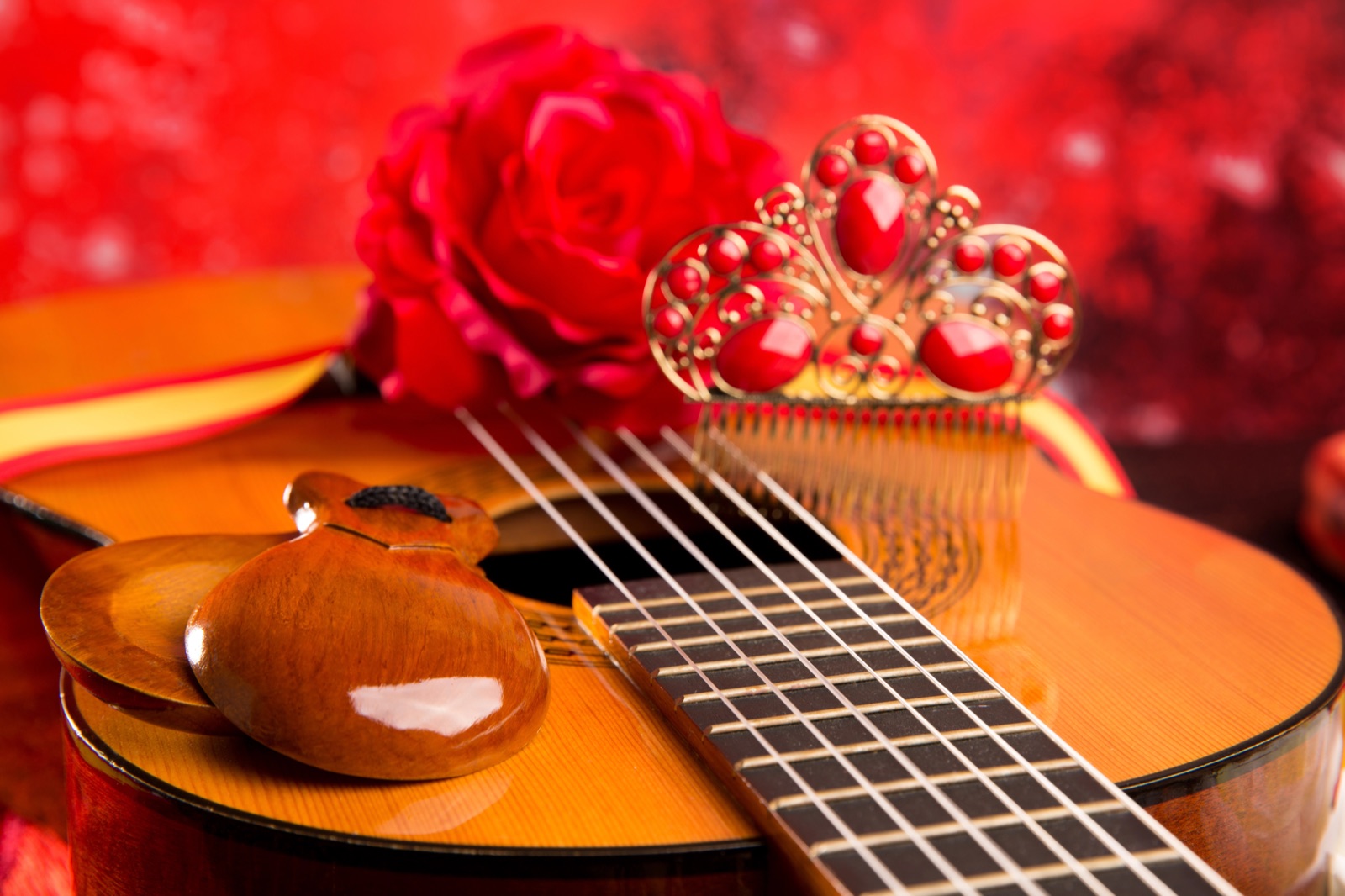

The best-known Spanish chord progression for guitar is the Andalusian progression: Am – G – F – E. You hear this descending series in flamenco, rumba and many pop songs, and you play it with four simple chord shapes. Below you learn the fingerings, the typical flamenco rhythm and how to use the progression in your own music.
Spanish chord progressions are a defining element of Spanish music, especially in genres such as flamenco and traditional Spanish folk music. These chords are often rich in emotion and have a unique sound that can take you straight to the sun-drenched streets of Spain. They are built from specific chords that together create a harmonious and expressive atmosphere. You also hear the eastern-sounding scale of flamenco in Greek music on the bouzouki.
When you learn these progressions, you gain insight not only into the Spanish musical style, but also into the techniques that make this music so special. The magic of Spanish chords lies in their ability to tell a story. They are often melancholic, but can also express joy and passion. Want to get to know the style more broadly? Then start with learning to play Spanish guitar music. That same minor harmony with dominant seventh chords returns in the Argentine tango guitar style.
This makes them perfect for both instrumental and vocal performances. Whether you are an experienced musician or just starting out, understanding these chords can considerably enrich your musical repertoire. It is an invitation to dive deeper into Spanish music and explore your own creativity.
Summary
- Spanish chord progressions are a series of chords often used in Spanish music styles such as flamenco and rumba.
- The basis of Spanish chord progressions is a combination of chords that create a typically Spanish sound, such as the flamenco cadence.
- Common chords in Spanish progressions include A minor, G major, F major and E major, often supplemented with D minor.
- To play Spanish chord progressions on the guitar, it is important to use the right fingering and technique, such as using the capo and playing rasgueado.
- Tips for practicing Spanish chord progressions include starting with simple progressions and slowly building up speed and complexity.
The basics of Spanish chord progressions
To start playing Spanish chord progressions, it is important to understand the basic principles. Most of these progressions are based on a combination of major and minor chords, often focusing on the harmonies typical of Spanish music. A common structure is the so-called “Andalusian progression”, which consists of a cycle of four chords: Am – G – F – E.
This progression forms the backbone of many Spanish songs and offers a solid basis for further exploration. Besides the Andalusian progression, there are other important elements to consider. Adding broken chords and arpeggios can enrich the sound further. Why these chords follow each other so well is covered in the article on understanding chord progressions.
Using open chords in combination with barre chords can also help you reach the typical sound of Spanish music. By combining these techniques, you can create an authentic sound that captures the essence of Spanish music.
Playing the Andalusian progression: fingerings
This is how you play Am – G – F – E. The numbers show the fret for each string, from the low E string to the high E string (x = don’t play, 0 = open string).
- Am: x02210
- G: 320003
- F: 133211 (barre) or the small F: xx3211
- E: 022100
Play each chord for four beats first and then for two. The F is usually the hardest for beginners; read how to learn to play barre chords if you want to master the full shape.
In flamenco the E often feels like the end point of the progression. That is because of the Phrygian scale on E, which gives the typical Spanish sound. Flamenco guitarists call this position “por arriba”; the same progression from A (Dm – C – Bb – A) is called “por medio”. A related sound is heard in the Arabic Hijaz scale; how to play it is covered in Arabic scales on guitar.
Common chords in Spanish progressions
When exploring Spanish chord progressions, you come across several common chords that are essential for creating that characteristic sound. The most used chords are A minor, G major, F major and E major, often supplemented with D minor. Each of these chords has its own unique sound and emotional impact, which contributes to the overall atmosphere of the music. If your E major doesn’t sound clear yet, first practice the fingering of the E major chord.
Another important aspect is the use of diminished and augmented chords. These chords add tension and variety to your progressions, making them more interesting to listen to and play. By experimenting with different combinations of these chords, you can develop your own unique sound inspired by the rich tradition of Spanish music.
How do you play Spanish chord progressions on the guitar?
Playing Spanish chord progressions on the guitar takes some practice and technique. Start by learning the basic chords and make sure you can play them well. It is important to let your fingers move smoothly across the strings, so you can switch easily between the different chords.
Take the time to practice each chord separately before putting them in a progression. An effective way to practice these chords is to play them in different rhythms. For example, try a simple strumming pattern while you play the chords. The step from G to F in particular takes practice; these tips for switching between chords faster help with that.
This not only helps you develop your timing, but also gives your playing more character. Don’t forget that it is important to play with feeling; let the emotion of the music flow through your fingers as you strike the chords. For the warm Spanish sound, it is best to play on a classical guitar; you will hear the difference between nylon and steel strings right away.
Tips for practicing Spanish chord progressions
When you start practicing Spanish chord progressions, a few tips can help you make progress faster. First, it is essential to practice regularly. Try to spend a few minutes on your technique every day, so you can make progress without becoming overwhelmed.
Consistency is the key to success in any musical discipline. It can also be useful to practice with a metronome. This helps you improve your timing and rhythm, which is crucial when playing Spanish music. How to do that step by step is covered in the article on learning guitar with a metronome.
Start slowly and gradually increase the speed as you gain confidence in your playing. Don’t forget to listen to yourself as well; record yourself and listen to your progress to identify any areas for improvement.
Adding rhythm to Spanish chord progressions
Rhythm plays a crucial role in bringing Spanish chord progressions to life. The typical rhythms used in this music range from fast and energetic to slow and melancholic. A popular technique is to use palmas (hand claps) or footsteps to add a percussive base to your playing. Typical of flamenco is also the rasgueado: you make a loose fist and let your fingers flick outward over the strings one by one, which gives you a fast, rattling strum. You can learn more techniques in learning to play flamenco guitar.
This can help raise the energy of the music and create an authentic Spanish feel. You can also experiment with different strumming and picking patterns to add variety to your playing. For example, try alternating downstrokes and upstrokes, or use arpeggios to create a more melodic approach.
By applying rhythm in different ways, you can personalize and deepen your interpretation of Spanish chord progressions even further.
Examples of well-known songs with Spanish chord progressions
There are countless well-known songs that use Spanish chord progressions, which underlines their popularity and influence in the music world. A classic example is “Entre Dos Aguas” by Paco de Lucía, which shows a masterful combination of technique and emotion. This piece uses various Spanish chords and rhythms that captivate the audience.
You also hear the Andalusian progression outside Spain. “Hit the Road Jack” by Ray Charles runs on Am – G – F – E, and the verse of “Sultans of Swing” by Dire Straits uses the same descending movement in Dm – C – Bb – A. Songs like these are ideal if you want to improve your skills and enjoy this sound at the same time. By studying and playing these songs, you can learn not only how to play Spanish chord progressions, but also find inspiration for your own compositions.
Using Spanish chord progressions in your own compositions
Once you are comfortable with Spanish chord progressions, you can start applying them in your own compositions. This is a great chance to express your creativity and explore unique musical ideas. Start by choosing a few favorite chords and experiment with different combinations and rhythms to create an original melody.
Remember that composing takes time and that it is important to be patient with yourself. Let yourself be inspired by existing songs, but also try to add new elements that reflect your personal style. By writing and experimenting regularly, you will notice that you get better and better at creating music that is both authentic and innovative.
With these insights into Spanish chord progressions, you are well on your way to mastering this beautiful music style and developing your own musical voice within the genre. So pick up your guitar, let the rich tradition of Spain inspire you and start exploring the endless possibilities these chords offer!
If you are interested in Spanish chord progressions for guitar, it is also worth learning about using a capo on the guitar. This tool can help you reach different pitches without forcing your fingers into awkward positions. For more information on how to use a capo effectively, you can read this article: Using a Capo on the Guitar. It offers useful tips and techniques that can take your guitar playing to the next level.
Frequently asked questions about Spanish chord progressions
What are Spanish chord progressions for guitar?
Spanish chord progressions are a series of chords often used in Spanish music and flamenco. These progressions have a characteristic, passionate sound that is typical of the Spanish music style.
Which chords are often used in Spanish chord progressions?
Common chords in Spanish chord progressions include Am, G, F, E and Dm. These chords are often used in different orders and combinations to create the typical Spanish sound.
How can I play Spanish chord progressions on the guitar?
To play Spanish chord progressions on the guitar, you can start by learning the basic chords that often appear in these progressions. Then you can practice different orders and rhythms to reach the typical Spanish sound.
Are Spanish chord progressions difficult for guitarists to learn?
Learning Spanish chord progressions can be challenging for beginning guitarists, but with enough practice and dedication they can certainly be mastered. It is important to be patient and practice step by step to get the technique under your fingers.
Are Spanish chord progressions only suitable for Spanish music?
Although Spanish chord progressions are often associated with Spanish music and flamenco, they can also be used in other music styles. Guitarists can adapt these progressions and integrate them into different genres to give their music a unique and passionate sound.
What is the Andalusian progression?
It is a descending series of four chords, in A minor: Am – G – F – E. It is the best-known Spanish chord progression and the basis of a lot of flamenco, but you also hear it in pop and rock.
Do I need a classical guitar for Spanish chord progressions?
No, you can play them on any guitar. A classical or flamenco guitar with nylon strings does give you the warm, authentic sound you know from Spanish music.




Leave a Reply