
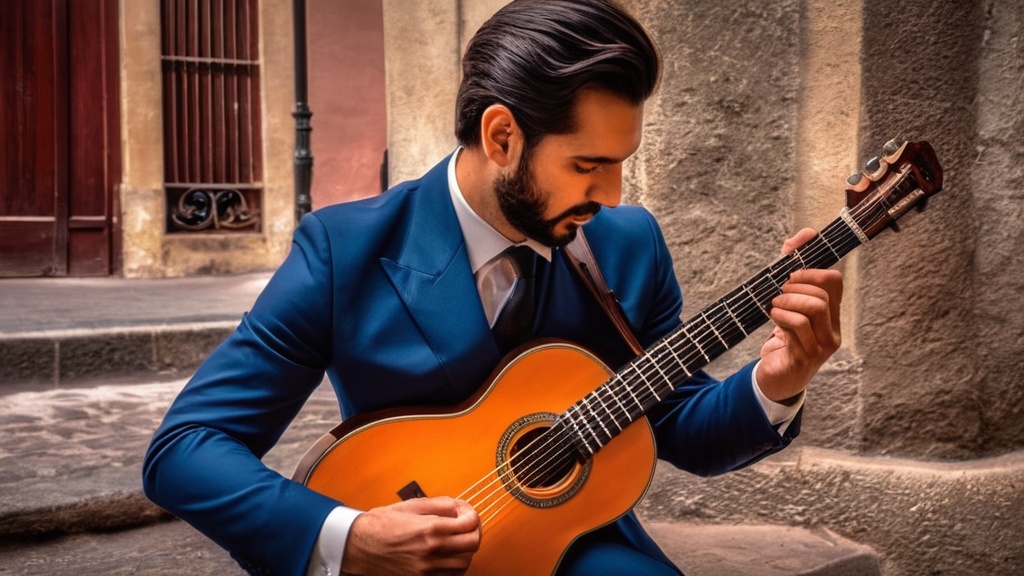

The Argentine tango guitar style is all about rhythm and drama: you play a tight, accented accompaniment rhythm (the marcato), alternated with the 3-3-2 rhythm of the milonga, and you complete it with arpeggios and melodic bass lines. Harmonically, tango is often in a minor key, with dominant seventh chords as the moment of tension. Below you can read where the style comes from, which rhythms and techniques you need and how to get started.
The history of tango guitar
The Argentine tango guitar style has its roots in the rich cultural melting pot of Buenos Aires at the end of the 19th century. This was a time of great social and economic change, in which immigrants from Europe, mainly from Italy and Spain, brought their musical traditions with them. The guitar, an instrument that had existed in various forms for centuries, found a new role within the emerging tango. Just as tango belongs to Buenos Aires, fado belongs to Lisbon; read here how to learn to play the Portuguese guitar for fado.
It became an essential part of the musical accompaniment, strengthening the emotional depth and drama of the dance and the singing. In the early years, tango was mainly a folk music style, played in the streets and on squares. The guitar was an accessible instrument for many musicians, which made it a popular choice for both professional and amateur performers.
As tango developed and gained more recognition, the guitar style evolved as well. The combination of different influences led to a unique musical language that captured the essence of tango: passion, sorrow and longing.
Summary
- The Argentine tango guitar style has its origins in the streets of Buenos Aires and Montevideo, where it was influenced by European and African music (such as the candombe) and by the habanera and the milonga.
- Characteristic elements of the Argentine tango guitar style include the use of bandoneon rhythms, the typical tango chords and the melodic phrases that reflect the emotion of the dance.
- Important techniques in the Argentine tango guitar style include the marcato rhythm, the 3-3-2 rhythm, arpeggios and the use of fingerpicking to emphasize the rhythmic and melodic aspects of the music.
- Big names in tango are the bandoneon players Aníbal Troilo and Astor Piazzolla and the singer Carlos Gardel; well-known tango guitarists include Roberto Grela and Juanjo Domínguez.
- The role of the guitar in traditional tango and in modern interpretation is essential, because the instrument supports and strengthens the melody, harmony and rhythmic foundation of the music.
Characteristic elements of the Argentine tango guitar style
The Argentine tango guitar style is recognizable by its specific rhythms and harmonies. One of the most striking features is the use of syncopation, in which the accents fall at unexpected moments. This creates a sense of tension and movement that fits the dance perfectly.
The style also uses complex chords and melodies that are often emotionally charged. The guitarist has to be able to convey these nuances, which allows a deeper connection with the audience. Another important element is the use of fingerpicking techniques, in which the guitarist plays with the fingers instead of a pick.
This produces a warmer sound and more expressiveness. The combination of rhythmic accompaniment and melodic lines makes it possible to play both solo and in an ensemble. This lets the guitar function both as a supporting instrument and as a soloist, which adds to the versatility of the Argentine tango guitar style.
Important techniques in the Argentine tango guitar style
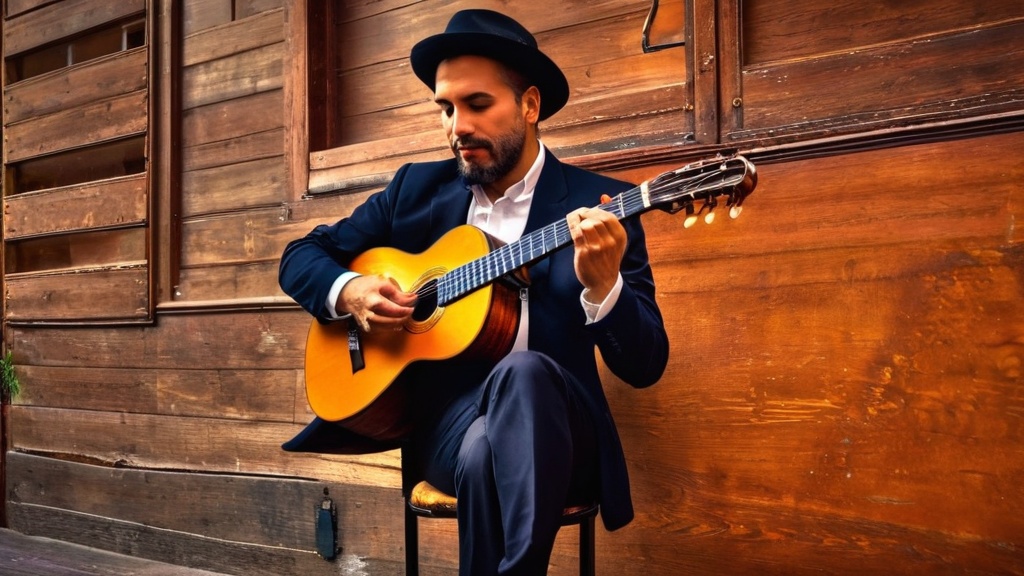
To master the Argentine tango guitar style, it is essential to get a handle on several techniques. One of the most important techniques is the use of arpeggios, in which the notes of a chord are played one by one instead of at the same time. This gives a flowing, melodic sound that fits the emotional expression of tango perfectly. If you have little experience with broken chords, first practice the basics with simple arpeggio exercises on guitar.
Mastering arpeggios lets you create rich harmonies that form the basis of many tango compositions. It is also important to work on your dynamics and articulation. In tango it is crucial to make subtle variations in volume and intensity, so you can convey the emotional charge of the piece.
This can be achieved with techniques such as palm muting, in which you press your hand on the strings to create a muted sound, or by putting accents on certain notes to give them extra force. Developing these techniques will help you take your playing to a higher level and find your own interpretation of the Argentine tango guitar style.
Basic rhythms: marcato and 3-3-2
Two rhythms form the basis of tango accompaniment on guitar:
- Marcato: you play four equal, short and accented strums per measure. This firm rhythm gives dancers something to hold on to.
- 3-3-2: you divide a measure of eight eighth notes into groups of 3, 3 and 2, with an accent on the first note of each group: beat 1, the “and” of beat 2 and beat 4. You hear this rhythm in the milonga and in much of the work of Astor Piazzolla.
Practice both rhythms on the sequence Am – Dm – E7 – Am (Am = x02210, Dm = xx0231, E7 = 020100). Play each chord for one measure and mute the strings briefly after each strum with the palm of your right hand for the short, sharp tango sound. Start slowly and use a steady tempo; how to build that up is covered in learning guitar with a metronome.
Influential artists in the Argentine tango guitar style
Several influential artists have played an important role in the development and popularization of the Argentine tango guitar style. One name that comes up often is Agustín Barrios Mangoré, a Paraguayan guitarist and composer known for his virtuosity and poetic compositions. He was not a tango musician in the strict sense, but his South American-flavored compositions for classical guitar inspire many guitarists who also play tango.
Barrios’ unique approach to melody and harmony has inspired many guitarists to explore his techniques and styles. A key figure for tango guitar is Roberto Grela, who played with bandoneon player Aníbal Troilo, among others. Another important name is Juanjo Domínguez, who is considered one of the best tango guitarists of his generation. His technical skills and deep knowledge of tango have allowed him to breathe new life into traditional pieces while putting his own stamp on the genre.
Domínguez has released numerous albums and has worked with various artists, building a bridge between traditional and modern interpretations of the Argentine tango guitar style.
The role of the guitar in traditional tango and modern interpretation
In traditional tango, the guitar plays a crucial role as an accompaniment instrument for both singing and dancing. It provides not only rhythmic support, but also melodic lines that tell the story of the song. The interaction between guitarists and other musicians, such as bandoneon players and violinists, is essential for creating the characteristic tonal color of tango.
This collaboration makes every performance unique, with room for improvisation and personal expression. In modern interpretations of tango the guitar has kept its place, but new influences and styles have also been integrated. Guitarists experiment with different genres, such as jazz and world music, which lets them explore new sounds and techniques. Brazilian bossa nova also shows how guitarists combine Latin American rhythms with jazz harmonies.
This has led to renewed interest in the Argentine tango guitar style, in which traditional and contemporary elements are brought together. As a result, the music keeps evolving and stays relevant for new generations of listeners.
The connection between the Argentine tango guitar style and other music genres
The Argentine tango guitar style is not just a stand-alone genre; it also has strong connections with other music styles. Influences of Spanish flamenco can be heard in some tango pieces, especially in terms of rhythm and technique. Flamenco guitarists use similar fingerpicking techniques and complex chords, which leads to an interesting cross-pollination between the two styles. You can hear how those flamenco harmonies sound on guitar as soon as you play the Spanish chord progressions.
Jazz has also had a considerable impact on the development of the Argentine tango guitar style. Many modern tango musicians incorporate jazz harmonies and improvisation into their playing, resulting in fresh compositions that feel both traditional and contemporary. This fusion has led to wider acceptance of tango in various musical circles, making the genre more accessible to an audience around the globe.
Tips for learning the Argentine tango guitar style
If you are interested in learning the Argentine tango guitar style, there are a few important tips that can help you develop your skills. First, it is essential to listen to a lot of tango music. By listening to different artists and styles, you gain a better understanding of the rhythms, melodies and harmonies that are characteristic of this genre.
Also try to attend live performances; this can inspire you and give you insight into how musicians interact with each other. It is also important to practice regularly with specific techniques that are essential for playing tango. Start with simple pieces and gradually work toward more complex compositions.
Focus on your fingering, dynamics and timing; these elements are crucial for creating an authentic tango sound. Consider taking lessons with an experienced guitarist who specializes in tango; one-on-one guidance can help you progress faster.
The popularity of the Argentine tango guitar style around the globe
The Argentine tango guitar style has gained popularity around the globe, especially in countries with strong musical traditions such as Spain, Italy and even Japan. At tango festivals, professional and amateur performers come together to share their love for this music style. The growing interest in dance lessons and workshops has also contributed to this popularity; people do not only want to listen to tango, but also to take part in this enchanting art form themselves.
Social media and streaming services have also played an important role in spreading the Argentine tango guitar style across borders. Guitarists share their performances on platforms such as YouTube and Instagram, reaching an audience around the globe. This digital accessibility has led to renewed interest in traditional tango music, while at the same time encouraging new generations of musicians to create their own interpretations.
As a result, the Argentine tango guitar style stays not only lively, but also relevant in our modern age.
If you are interested in the Argentine tango guitar style, you might also find the article on how to learn to play guitar: 5 tips for beginners interesting. This article offers valuable insights and practical tips for anyone who is just starting out with guitar. Whether you want to master the passionate sounds of tango or simply learn the basics of guitar playing, this guide can set you on the way to musical success.
Frequently asked questions about Argentine tango on guitar
What is the Argentine tango guitar style?
The Argentine tango guitar style is a specific way of playing guitar that originated in Argentina and is closely tied to tango music. It includes specific techniques, chords and rhythms that are typical of tango.
What are the characteristics of the Argentine tango guitar style?
Characteristic of the Argentine tango guitar style are the tight marcato rhythm, the 3-3-2 rhythm and specific chord progressions that create the typical tango atmosphere. A lot of attention is also paid to dynamics and expression in the playing.
Which guitar techniques are used in the Argentine tango guitar style?
In the Argentine tango guitar style you mainly use the marcato rhythm, the 3-3-2 rhythm, finger picking and arpeggios. Short, muted strums and accents on certain notes are part of it too. These techniques contribute to the characteristic sound of tango music.
Which chords and scales are commonly used in the Argentine tango guitar style?
The Argentine tango guitar style often uses chords such as dominant seventh chords, diminished chords and minor chords. Melodically, a lot of tango revolves around the harmonic minor scale and the Phrygian dominant mode derived from it. A simple sequence to start with is Am – Dm – E7 – Am.
Which influences have contributed to the development of the Argentine tango guitar style?
The Argentine tango guitar style has been influenced by various music styles, including flamenco, classical music and folk music from Argentina. These influences have contributed to the unique mix of techniques and sounds that are characteristic of the tango guitar style. You can read more about the classical guitar repertoire in famous classical guitar music.
What is the difference between tango and milonga?
The milonga is a related dance and music form from the same region, usually faster and lighter than the tango. Its rhythm is often based on the 3-3-2 pattern, whereas tango works more with the marcato. On guitar, the milonga is therefore a good way to practice that 3-3-2 rhythm.
Can you play tango on a steel-string guitar?
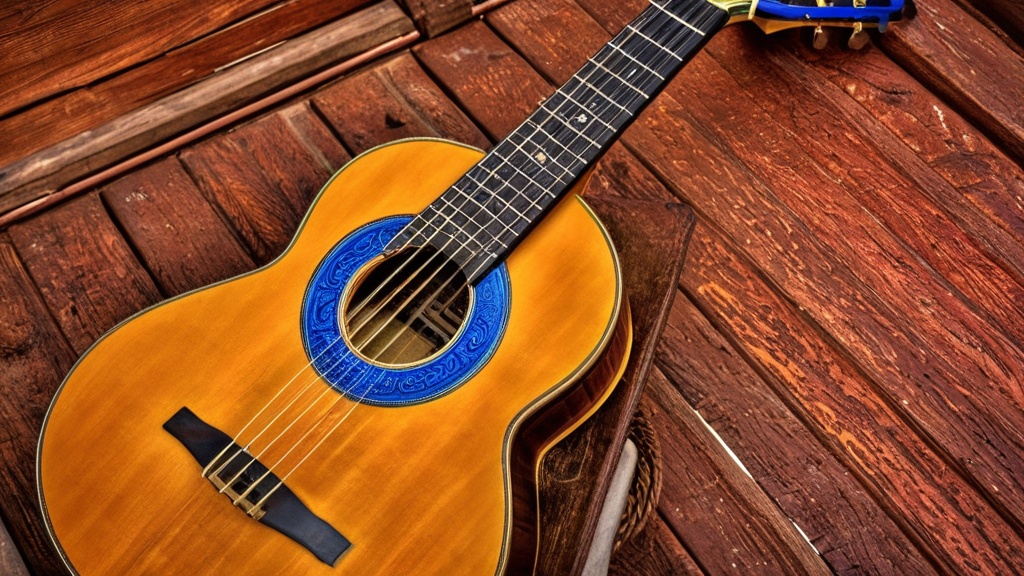
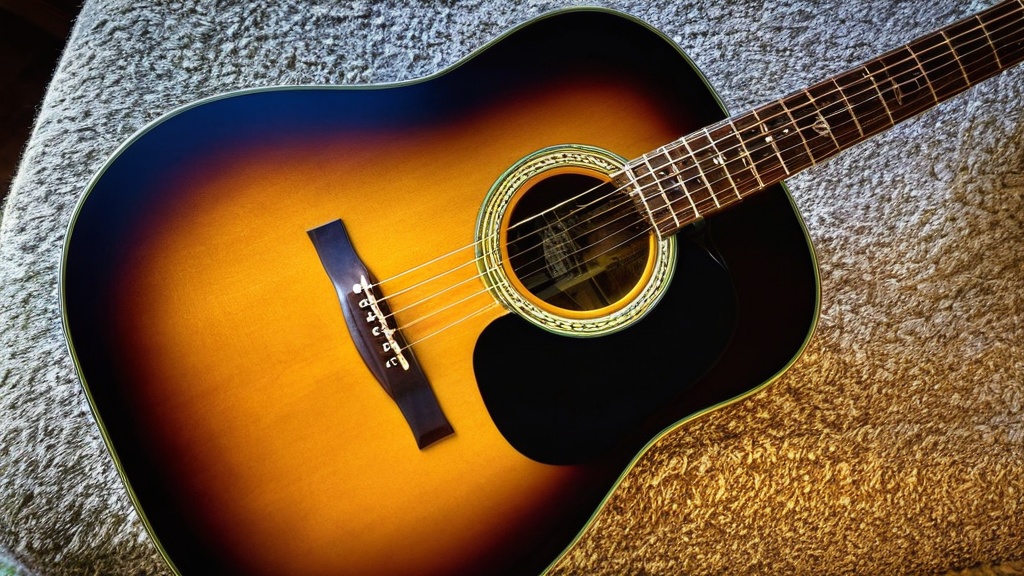
You can, but tango is traditionally played on a classical guitar with nylon strings. It gives the warm sound and makes fingerpicking and muted strums easier. You can read more about the choice in the difference between nylon and steel strings.



Leave a Reply