
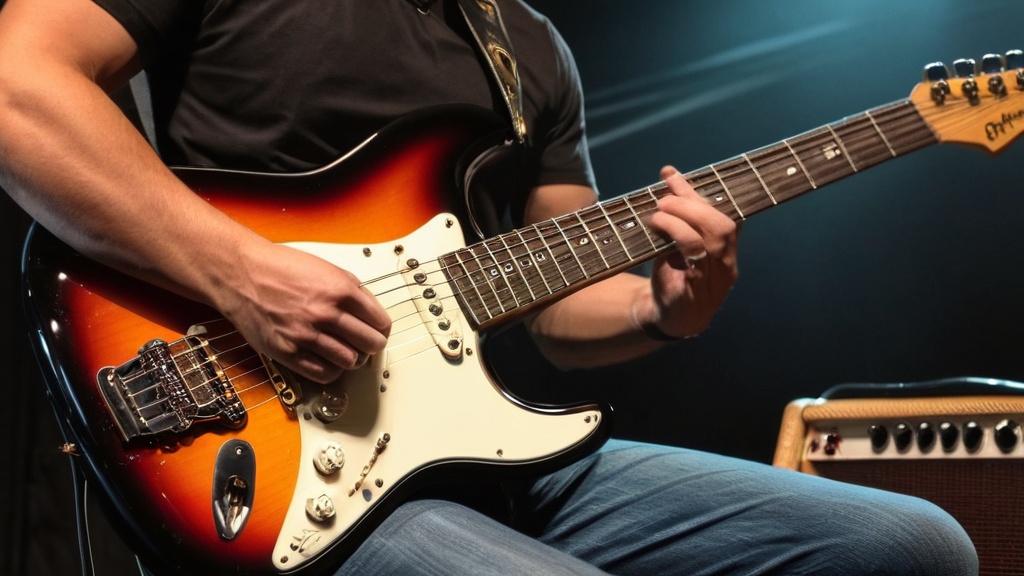

How do you learn tapping solos on guitar? Start with one simple pattern on one string: tap a note with your picking hand, pull off to a fretted note and add a hammer-on. Play that pattern slowly with a metronome until every note sounds equally loud, then shift it across different chords. That is how you build a complete tapping solo step by step.
Tapping on guitar is a technique that many guitarists use to create a unique and expressive sound. It involves tapping on the neck of the guitar with your fingers, usually with the right hand, to produce notes without plucking the strings. This technique can produce a wide range of sounds and melodies, which makes it a popular choice in many styles of music, from rock to jazz and even classical music. If you are completely new to this technique, start with the basic exercise from learning tapping on electric guitar.
Tapping can be used as a solo technique as well as in combination with other playing styles, which makes it a versatile addition to your guitar skills. Tapping existed earlier, but it became known to a large audience in the late 1970s through Eddie Van Halen, especially with the instrumental “Eruption” (1978). His innovative approach inspired countless musicians to explore the technique and develop their own style.
Tapping can not only help you play complex melodies, it also gives you the chance to add a wide range of dynamics and expression to your playing. It is a technique that lets you express your creativity and take your musical skills to a higher level.
Summary
- Tapping on guitar is a technique in which the guitarist taps on the neck of the guitar with both hands to produce notes.
- The basics of tapping solos include mastering the technique of tapping with your fingers and moving across the frets.
- Techniques for learning tapping solos include practicing simple patterns and gradually building up more complex melodies.
- The importance of timing and rhythm when playing tapping solos cannot be overstated, since it is the basis for a smooth and coherent performance.
- Developing speed and precision is essential for playing impressive tapping solos and requires consistent, focused practice.
The Basics of Tapping Solos
When learning tapping solos, it is important to master the basic principles first. This includes understanding the right finger placement and developing the right hand technique. Start with simple patterns where you tap on the neck with your right hand while touching the notes with your left hand.
This can feel a bit awkward at first, but with patience and practice you will find that you gain more and more control over the sound and speed. A good way to start is to practice a few simple licks or riffs that require tapping. These can range from simple melodies to more complex patterns.
It is crucial to start slowly and build up your tempo gradually as you gain confidence in your technique. Do not forget that the goal is not just to play fast, but also to produce a beautiful, clear sound. Building a good foundation will help you develop your tapping skills further.
A First Tapping Lick on the High E String
This exercise uses three notes per chord, in the style that Eddie Van Halen made famous:
- Place your index finger on fret 5 of the high E string and keep your ring finger ready above fret 8.
- Tap fret 12 with the middle finger of your picking hand and pull that finger slightly sideways off the string, so that fret 5 sounds.
- Hammer on with your ring finger on fret 8 and then tap fret 12 again.
Frets 12, 5 and 8 give the notes E, A and C: together an A minor chord. Then shift the pattern to F (tap 13, fret 5 and 8) and G (tap 15, fret 7 and 10) for a short chord sequence. Lightly mute the other strings with the palm of your picking hand, so they do not ring along. A variant is the tapped harmonic: you tap exactly twelve frets above a fretted note, right on the fret wire. How that works is covered in harmonics on guitar.
Techniques for Learning Tapping Solos

There are several techniques you can use when learning tapping solos. One of the most effective methods is using a metronome. This helps you improve your timing and rhythm, which is essential for playing tapping solos. New to this tool? Then start with this step-by-step guide to the metronome.
Start at a slower tempo and increase it gradually as you get more comfortable with the notes and patterns. Using a metronome keeps you consistent and helps you build a solid foundation. It is also important to explore different finger techniques.
Try, for example, using different fingers of your right hand to tap the strings. This can range from your index finger to your middle finger or even your ring finger. This variation lets you create different sounds and dynamics, which makes your playing more interesting.
Also experiment with different positions on the neck of the guitar; this can lead to new and surprising sounds that you can work into your solos.
The Importance of Timing and Rhythm
Timing and rhythm are crucial elements when playing tapping solos. Even if you play technically perfectly, a lack of timing can make your music sound less appealing. That is why it is essential to pay attention to how your notes relate to each other and to the rest of the music.
A good sense of timing helps not only with playing tapping solos, but also improves your overall musical skills. To improve your timing, you can do various exercises that focus on rhythmic patterns. Try, for example, playing tapping solos while moving a simple beat along with your foot.
This helps you develop a better sense of rhythm and makes your playing sound more coherent. You can also try playing together with other musicians; this forces you to listen to each other better and adjust your timing to theirs.
Developing Speed and Precision
Speed and precision are two important aspects of tapping that often go hand in hand. While you work on improving your tapping skills, it is important to consider both speed and precision. It is tempting to focus only on speed, but if you do not play accurately, this can lead to sloppy and unclear sounds.
So start with slow exercises where you play every note clearly before you try to go faster. An effective way to build speed is to use repetitive patterns or licks that you can practice. Start slowly and gradually increase the speed while making sure every note still sounds clear.
It can also be useful to build specific speed exercises into your daily practice sessions, such as playing scales or arpeggios with tapping techniques. By practicing consistently, you will find that both speed and precision improve. Fast arpeggios across several strings also combine well with sweep picking.
Using Different Scales and Chords

Exploring different scales and chords can open up a world of possibilities for your tapping solos. By using different scales, you can create unique melodies that fit different styles of music. Try, for example, the pentatonic scale, which is often used in rock music, or the harmonic minor scale for a more exotic sound.
Every type of scale has its own characteristic sound, which can add to the emotion and mood of your music. You can also experiment with different chords while playing tapping solos. By adding chords to your solos you can create a richer harmonic structure, which makes for a more interesting listening experience.
Try, for example, playing chords in combination with tapping licks; this can lead to surprising and creative musical ideas. Combining different scales and chords will not only improve your tapping skills, but also boost your overall musical creativity.
Practicing Tapping Solos
Practice makes perfect, and that certainly applies to tapping solos. It is important to set aside time regularly for focused practice, so you can keep improving. Start by choosing a few solos or licks you want to learn and divide them into smaller sections.
This makes it easier to master them step by step without being overwhelmed by their complexity. While you practice, make sure you pay attention to both technical aspects and musical expression. Try not only to play the notes correctly, but also notice how they sound in the context of the music.
Record yourself while you practice; this can give you valuable insight into where you can still improve and which parts are already going well. By practicing consistently and with purpose, you will find that your skills in tapping solos grow steadily.
Tips for Improving Your Tapping Technique
Several tips can help you improve your tapping technique. One important tip is to stay relaxed while you play. Tension in your hands or arms can lead to fatigue and even long-term injuries.
Make sure your posture is good and your hands can move freely without unnecessary tension. It is also useful to try new techniques or styles regularly. This not only keeps your practice sessions interesting, but also helps you develop versatility in your playing.
Try, for example, applying tapping techniques in musical styles other than the ones you normally play; this can lead to new inspiration and creative ideas. Finally, be patient with yourself during the learning process. Tapping can be challenging at first, but with perseverance and dedication you will eventually make significant progress.
Keep challenging yourself by adding new licks or techniques to your repertoire, and do not forget to have fun while you play!
If you are interested in learning tapping solos on guitar, it is also worth considering private lessons with a professional guitar teacher. This can help you refine your technique and make progress faster. You can read more on the page about private guitar lessons from a professional. There you will find valuable tips and guidance from experienced professionals who can help you take your guitar skills to a higher level.
Frequently asked questions about tapping solos
What is tapping on guitar?
Tapping on guitar is a technique in which the guitarist taps on the frets of the guitar with the fingers of the right hand (or the left hand for left-handed guitarists) to produce notes, instead of plucking the strings or striking them with a pick.
How do you learn tapping solos on guitar?
To learn tapping solos on guitar, it is important to start with simple exercises to get the technique under your fingers. This includes practicing tapping on the frets with the right finger placement and mastering the coordination between the left and right hand. You can then practice more complex solos and patterns step by step.
Which guitar techniques are useful to master before learning tapping solos?
Before you start learning tapping solos on guitar, it helps to already have some experience with other guitar techniques, such as playing chords, plucking strings and mastering hammer-ons and pull-offs. These techniques help build the skills and coordination you need to play tapping solos. You can also play smooth lines without tapping; read how to combine slides and legato in solos.
Which guitar styles use tapping solos?
Tapping solos are often associated with rock and metal, where guitarists use the technique to play fast, virtuosic solos. However, tapping is also used in other styles such as jazz, funk and experimental music. It is a versatile technique that can be applied in many different genres.
Which finger do you use for tapping?
Many guitarists tap with the middle finger of their picking hand, so they can keep holding the pick between thumb and index finger. Tapping with your index finger is also possible, but then you have to clamp the pick in your palm for a moment.
Can you also play tapping on an acoustic guitar?
Yes, but it is harder. Acoustic strings are thicker and usually sit higher, which makes tapped notes sound quieter. On an electric guitar with some gain, tapping sounds fuller and you do not have to tap as hard.





Leave a Reply