


Playing guitar like a pro is not about playing as fast as possible, but about control: tight timing, clean technique, a broad knowledge of chords and scales, and expression in every note. These tips are meant for guitarists who already have the basics down and want to go up a level. Still at the beginning? Then first follow the step-by-step plan for learning guitar or read the 5 tips for beginners.
Expanding your chords and scales further
As a beginning guitarist, it is essential to understand the fundamentals of playing guitar. This starts with learning chords and scales. Chords are combinations of notes played at the same time to form harmonies.
Scales are series of consecutive notes that form the basis for melodies and solos. Mastering chords and scales is crucial for building a solid foundation in guitar playing, since they are the building blocks for understanding music theory and developing a personal playing style. The first step in learning chords is mastering the basic chords, such as A, E, D, G, C and F.
These chords are fundamental to many popular songs and indispensable for developing playing skill. Learning scales is just as important for improving technique and understanding melodies. Regular practice with different scales improves your fingering and extends your reach on the guitar.
For advanced guitarists, it is important to expand your knowledge of chords and scales further. Besides the basic chords, it is worthwhile to study more complex chords, such as seventh chords (7, maj7 and m7), diminished chords and augmented chords. These chords add depth to your playing and make it possible to create more complex harmonies.
It is also important to experiment with various scales, such as the pentatonic scale, the blues scale and the Mixolydian scale. Expanding your knowledge of chords and scales widens your musical vocabulary and adds more expression to your playing. Understanding and mastering chords and scales is an ongoing process that is essential for every guitarist who wants to improve their skills.
Summary
- Chords and scales form the basis of playing guitar and are essential to learn.
- For advanced guitarists, it is important to keep working on technique and to practice regularly.
- Timing and rhythm are crucial for good guitar playing; practice with a metronome and play along with different styles of music.
- Expression and emotion add depth to your guitar playing; focus on feel and emotion while playing.
- Learn different playing styles and genres to broaden your musical horizons and improve your skills.
- Listen to and learn from other professional guitarists to improve your own playing and find inspiration.
- Keep learning and developing as a guitarist, and stay open to new techniques and styles.
The importance of technique and practice for advanced guitarists
As an advanced guitarist, it is important to keep working on your technique and practice. Technique covers everything, from your fingering and pick use to your posture and hand position. By practicing regularly and paying attention to your technique, you can improve your playing and prevent injuries.
It is also important to do different exercises to improve your technique, such as finger strength exercises, scale exercises and rhythm exercises. By practicing consistently, you can refine your technique and gain more control over your playing. Besides technique, practice is also essential for developing your musicality and creativity as a guitarist.
By practicing regularly, you can explore new playing styles, improve your improvisation skills and discover new music. Practice also lets you learn songs by heart and expand your repertoire. In short, technique and practice are indispensable for advanced guitarists who want to keep improving their skills. You can read how to approach this smartly for lead parts in this step-by-step plan for memorizing guitar solos. You will find concrete tips for that in learning guitar songs by heart.
Tips for improving your timing and rhythm while playing guitar

One of the most essential aspects of playing guitar is timing and rhythm. It is important to develop a good sense of timing, so you can play in time and work together with other musicians. A handy tip for improving your timing is to practice with a metronome.
A metronome helps you keep a consistent beat and lets you measure your timing accurately. It is also useful to practice with drum tracks or backing tracks to strengthen your sense of rhythm. Another tip for improving your timing is to listen to different styles of music and rhythms.
By listening to various genres, you can discover different rhythm patterns and work them into your own playing. It is also useful to experiment with syncopation and off-beat accents to develop your rhythm skills further. In short, improving your timing and rhythm takes consistency, patience and an open mind to different musical influences.
The importance of expression and emotion in your guitar playing
| Aspect | Importance |
|---|---|
| Expression | Important for conveying feeling and bringing the music to life. |
| Emotion | Helps create an emotional connection with the audience. |
| Dynamics | Vary volume and intensity to give the music more depth. |
| Timing | Playing notes at the right moment and the right speed is essential for expression. |
Besides technique and timing, expression and emotion are a crucial aspect of playing guitar. The ability to convey emotion through music is what sets a good guitarist apart from an ordinary one. One way to add expression to your playing is by using dynamics, ranging from soft passages to loud crescendos.
By using dynamics consciously, you can add emotion to your playing and take the listener on an emotional journey. Another way to add expression to your playing is by using vibrato, bends and slides. These techniques let you play notes expressively and give your playing more personality.
It is also important to pay attention to phrasing and articulation, so you can play notes with feeling and emotion. In short, expression and emotion are essential for creating a compelling musical experience as a guitarist.
The importance of learning different playing styles and genres
As a guitarist, it is valuable to explore different playing styles and genres to broaden your musical horizons. By learning different playing styles, such as fingerpicking, plucking, classical guitar or blues guitar, you can discover new techniques that can enrich your playing. Learning different genres, such as jazz, rock, folk or flamenco, can also help you pick up new musical ideas and stimulate your creativity. For flamenco, posture, rasgueado and the compás are explained in learning Spanish flamenco guitar.
Learning different playing styles and genres also lets you become a more flexible musician and add more versatility to your playing. By staying open to new musical influences, you can integrate unique elements into your own playing style and create a unique sound. In short, learning different playing styles and genres is a valuable investment in your musical development as a guitarist.
The importance of listening to and learning from other professional guitarists
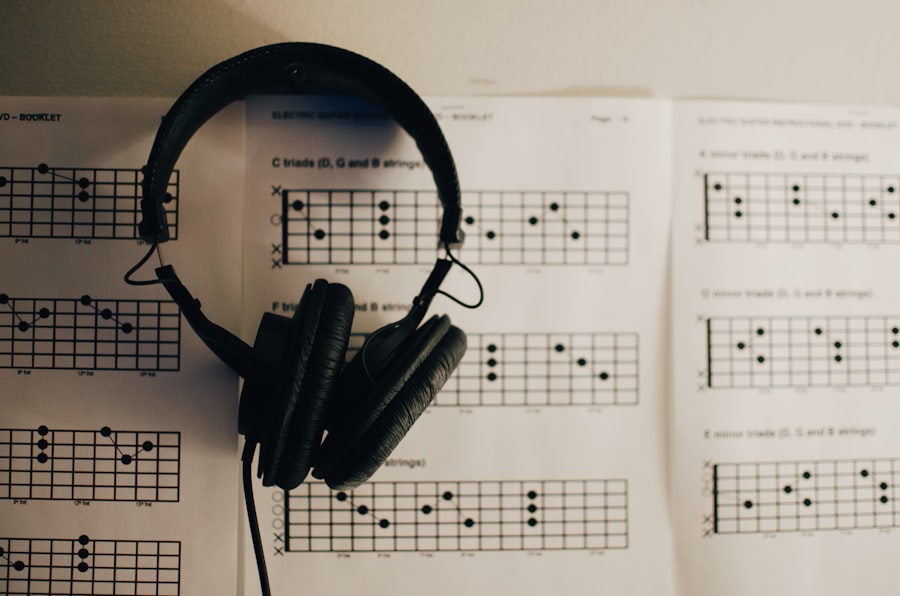
An effective way to improve your own playing is to listen to other professional guitarists and learn from them. By listening to different guitarists, you can discover new techniques, find inspiration for new songs and find new approaches to playing chords and solos. It is also useful to attend live performances or watch concert recordings to study the playing style and stage presence of other guitarists.
Following online lessons or masterclasses with renowned guitarists can also be a valuable source for improving your playing. Through direct instruction and feedback from experienced professionals, you can gain new insights that take your playing to a higher level. In short, listening to and learning from other professional guitarists is a valuable source of inspiration and growth as a musician.
The importance of continuing to learn and develop as a guitarist

Finally, it is crucial for every guitarist to keep challenging themselves, try new things and keep developing as a musician. This can mean learning new techniques, trying new songs or even collaborating with other musicians to make new music. By staying open to growth and change, you can bring freshness to your playing and avoid getting stuck in old habits.
Continuing to learn can also mean continuing to invest in knowledge of music theory, composition or recording technology. By building a broader understanding of music, you can add more depth to your playing and become more creative as a musician. In short, continuing to learn and develop as a guitarist is essential for keeping your passion and enjoyment in making music, as well as for achieving continued growth as an artist.
If you are interested in learning to play guitar and wonder how long it might take before you reach some skill, the article “How Long Does It Take to Learn Guitar?” is definitely worth a read. This article offers useful insights and practical tips that can help you set a realistic timeline and goals for your learning process. It is essential reading for every beginning guitarist who wants to start their journey well informed.
Frequently asked questions about playing guitar like a pro
What are the best ways to learn to play guitar?
There are several ways to learn to play guitar, including taking lessons with a professional guitar teacher, using online tutorials and teaching yourself with the help of instruction books.
Is it better to learn acoustic or electric guitar?
It depends on your personal preference and musical goals. Acoustic guitars are often suitable for beginners because of their simplicity and portability, while electric guitars are better suited to specific styles of music such as rock and metal.
What are some essential skills for learning to play guitar?
Some essential skills for learning to play guitar are learning chords, scales, rhythm and timing, and developing finger strength and dexterity.
Is it important to learn music theory when learning to play guitar?
Although it is not absolutely necessary, learning music theory can significantly improve your understanding of music and guitar playing. It can help you understand chords, scales and melodies, and compose your own music.
What are some tips for learning to play guitar effectively?
Some tips for learning guitar effectively are practicing regularly, being patient, learning songs you enjoy, finding a good balance between technique and musicality, and seeking inspiration from other guitarists.
When are you an advanced guitarist?
There is no official threshold. You are usually at an advanced level when you switch smoothly between open chords and barre chords, play tightly in time, and can play melodies or solos over a chord progression. From that point on, the focus shifts from learning new chord shapes to timing, tone and expression.
How do you practice most effectively as an advanced guitarist?
Work with a fixed practice schedule in which you alternate technique, timing and repertoire, and practice difficult passages slowly with a metronome first. Record yourself regularly: a recording reveals timing mistakes and stray noises that you miss while playing.






Leave a Reply