


To learn rockabilly riffs on guitar, start with the boogie shuffle over three chords (I-IV-V), then add palm muting, double stops and a clear, twangy tone with slapback delay. After that, learn the riffs of classics such as “Blue Suede Shoes” by Carl Perkins and play them tight and up to tempo. Below you will find the basics, a first riff in tab, the right technique and tips for your sound.
What Is Rockabilly?
Rockabilly is a genre that has its roots in the mid-1950s and is a mix of country and rhythm and blues. It is a style often marked by an energetic beat, a strong rhythm section and a prominent role for the guitar. The riffs in rockabilly are crucial because they form the basis of most songs. For tips on complementing that rhythm section well, see playing with a drummer and bass player.
They not only give a song its melodic structure, but also add to its overall mood. The recognizability of these riffs makes them an essential part of the genre, which is why they often get stuck in your head. The riffs are important not only for the musical build-up, but also a way for guitarists to show their creativity and technical skills.
Rockabilly is not just about playing chords; it is also about creating catchy melodies that appeal to the audience. This makes the genre especially attractive to both musicians and listeners. The combination of rhythm and melody in the riffs keeps rockabilly music feeling energetic and lively.
Summary
- Rockabilly is a mix of country, rhythm and blues and rock ‘n’ roll, with an emphasis on fast, energetic riffs that form the basis of the genre.
- The basics of playing rockabilly guitar include mastering chords such as A, D and E, and using scales such as the pentatonic scale.
- It is essential to use the right technique when playing rockabilly riffs, including palm muting and mastering the right picking technique.
- Iconic rockabilly riffs to learn on guitar include “Blue Suede Shoes” by Carl Perkins and “Mystery Train” in the version by Elvis Presley.
- Effects and amps for playing rockabilly riffs can include reverb, slapback delay and a clean, twangy amp sound.
The Basics of Playing Rockabilly Guitar: Chords and Scales
When playing rockabilly guitar, it is essential to understand the basics of chords and scales. Most rockabilly songs are built around simple chords, often in the form of the I-IV-V progression. This means you can play a large number of songs with just three chords. For examples outside rockabilly, see this overview of easy songs on guitar with 3 chords.
Learning these chords is the first step toward mastering the genre. It is important to practice both open chords and barre chords, because both techniques are often used in rockabilly music. Besides chords, scales are also crucial for developing your skills as a rockabilly guitarist.
The pentatonic scale is especially popular in this genre, because it adds a bluesy feel to your playing. By experimenting with different scales and how they are used in riffs, you can develop your own style further. Understanding how chords and scales work together helps you not only with playing existing songs, but also with creating your own unique sound.
Your First Rockabilly Riff: The Boogie Shuffle
A good first riff is the boogie shuffle you hear in countless rock ‘n’ roll and rockabilly songs. You play it on two strings: the open A string as the root, and on the D string you alternate between the 2nd fret (the fifth) and the 4th fret (the sixth). Play each note twice in a shuffle rhythm (long-short) and lightly mute the strings with the heel of your hand.
D|--2--2--4--4--2--2--4--4--|
A|--0--0--0--0--0--0--0--0--|
E|--------------------------|
You move the same pattern up one string for the other chords: for D you play the open D string with the 2nd and 4th fret on the G string, for E the open low E string with the 2nd and 4th fret on the A string. Put those three together in a 12-bar blues in A (four bars of A, two bars of D, two bars of A, one bar of E, one bar of D and two bars of A), and you have the foundation under many classic rockabilly songs. For more simple riffs to practice with, see rock guitar riffs for beginners.
Why the Right Technique Matters for Rockabilly Riffs
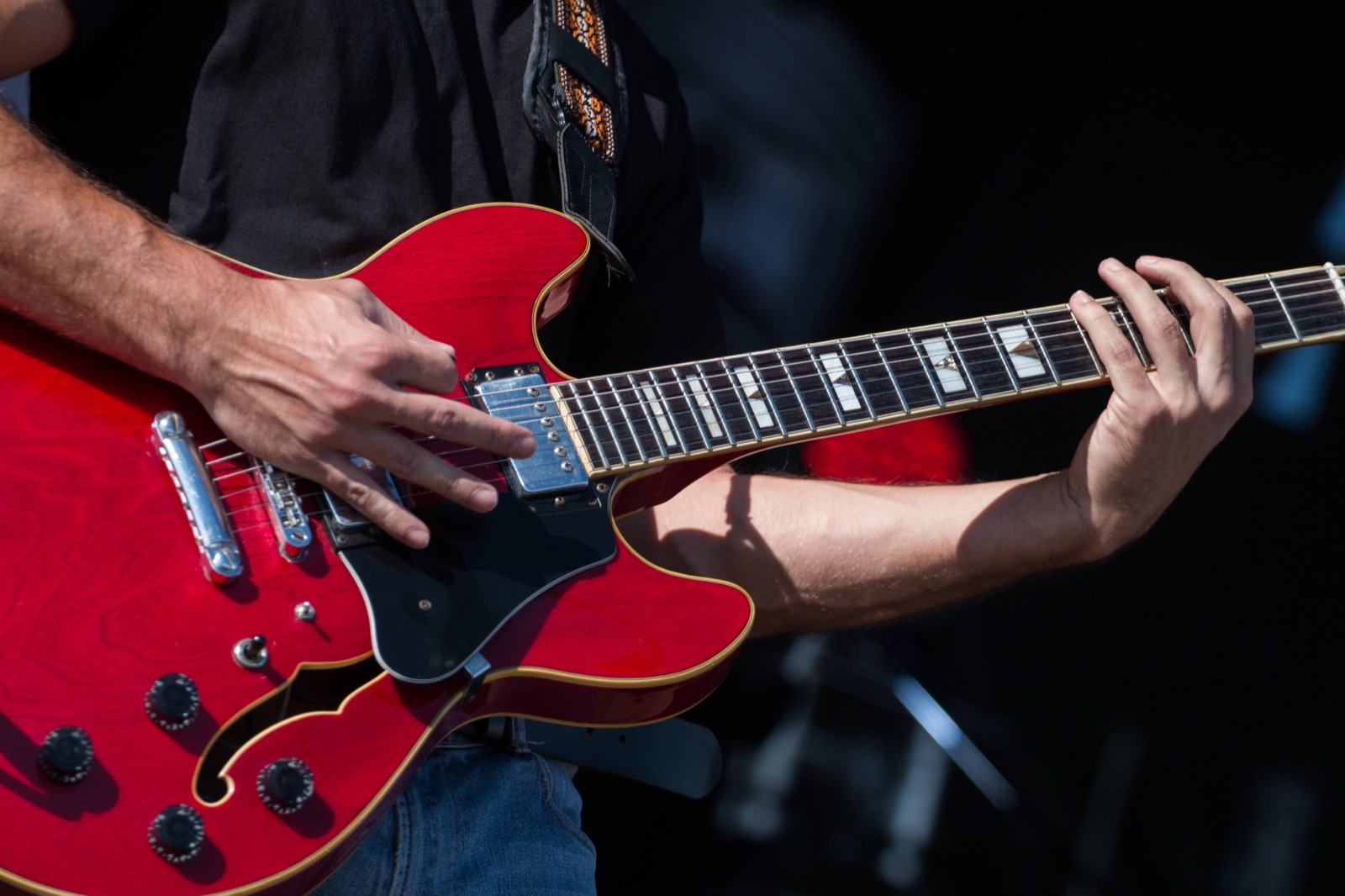
Technique plays an undeniable role in playing rockabilly riffs successfully. Good technique makes your riffs sound smooth and precise. This includes things like fingering, picking technique and the use of palm muting. How palm muting works is covered in palm muting techniques; for rockabilly you mute more lightly and play with less gain.
Mastering these techniques lets you reproduce the characteristic rockabilly sound, which is often defined by a sharp, clear guitar tone. Timing is also crucial in rockabilly. The rhythmic elements are what make the music so energetic, and good timing makes sure your riffs lock in with the rest of the band.
Practicing with a metronome can help improve your timing and make sure you always play at the right tempo. By paying attention to technique and timing, you not only sound better, but also get more enjoyment out of playing rockabilly.
Iconic Rockabilly Riffs to Learn on Guitar
There are countless iconic rockabilly riffs that every guitarist should learn. One of the most recognizable is the riff of “Rock Around the Clock” by Bill Haley & His Comets. This riff is simple but powerful, and forms the basis for many other songs in the genre.
Learning this riff not only helps you improve your technique, but also gives you insight into how riffs are built. Another must-learn riff is the one from “Blue Suede Shoes” by Carl Perkins, which Elvis Presley also recorded shortly afterward. This riff combines elements of blues and rock ‘n’ roll, which is typical of rockabilly.
By practicing these riffs, you gain a better understanding of the style and develop your own playing technique. It is important not only to learn these iconic riffs, but also to understand how they contribute to the overall structure and energy of a song.
Using Effects and Amps for Rockabilly Riffs
The sound you produce as a rockabilly guitarist is strongly influenced by the effects and amps you use. A typical rockabilly sound is often characterized by a clear, sharp tone with a touch of reverb. You can get this by using specific amps known for their warm sound, such as tube amps.
These amps give you not only volume but also a rich tone that fits the energetic style of rockabilly perfectly. Effects pedals can also play an important role in creating your sound. A light overdrive can help add that characteristic crunch to your riffs, while reverb adds depth and space to your sound. Typical for rockabilly is slapback delay: one short, fast repeat of each note, known from Elvis Presley’s early Sun recordings with guitarist Scotty Moore. How to connect and set up such effects is covered in these tips for effects pedals.
Experimenting with different combinations of effects can lead to unique tones that highlight your personal style. By paying attention to both amps and effects, you can refine your rockabilly sound further and set it apart.
Tips for Practicing and Perfecting Rockabilly Riffs on Guitar
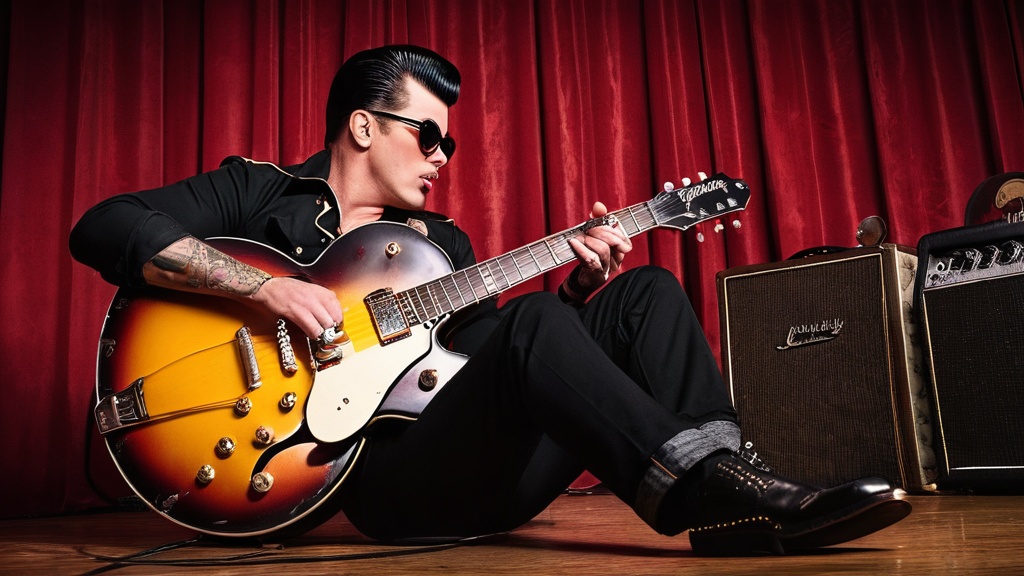
Practice makes perfect, and that certainly applies to perfecting rockabilly riffs on guitar. A good way to start is to set aside time regularly for focused practice sessions. Begin by choosing a few riffs you want to learn and focus on those specific pieces during your practice time.
Breaking riffs into smaller sections can help you master them better. It is also useful to challenge yourself by playing with other musicians or jamming along with existing songs. This not only helps improve your timing and technique, but also gives you valuable feedback on how you sound in a band context.
Do not forget to be patient with yourself; it takes time to master new techniques and riffs. By practicing consistently and challenging yourself, you will find that your skills improve quickly.
How to Create Your Own Rockabilly Riffs
Creating your own rockabilly riffs can be an exciting challenge. Start by experimenting with the basic chords and scales typical of the genre. Try different combinations and play with rhythms to discover something new.
It can also help to draw inspiration from existing songs; analyze what you like about certain riffs and try to work elements of them into your own music. Improvisation is also a powerful tool for creating new riffs. Take the time to play freely without pinning yourself down to specific chords or structures.
This can lead to surprising ideas you might not otherwise have discovered. Do not be afraid to take risks; sometimes the best riffs come from spontaneous moments of creativity.
Why Listening to and Learning From Rockabilly Music Matters as a Guitarist
As a guitarist, listening to rockabilly is essential for your development in this genre. By listening to different artists and styles, you get a better understanding of the variations within rockabilly and how different guitarists create their sound. This can be inspiring and give you new ideas for your own playing.
Analyzing songs also helps you master techniques and styles better. Try not only to listen to the melodies, but also notice how guitarists structure their riffs and which techniques they use. This will not only improve your playing, but also deepen your appreciation of the genre.
By actively listening to rockabilly you can keep developing as a musician and find new inspiration for your own creations.
If you are interested in learning to play rockabilly riffs on guitar, it is also worth looking at other ways to improve your guitar skills. One useful article that can help is Learn to Play Guitar Songs: Tips and Tricks. This article offers valuable tips and techniques you can apply to refine your playing and learn new songs faster. Whether you are a beginner or already have some experience, these tips can help you take your guitar playing to the next level.
Frequently asked questions about learning rockabilly riffs
What is rockabilly music?
Rockabilly is a style of music that emerged in the 1950s and is a mix of rock ‘n’ roll and country music. It is marked by fast rhythms, catchy melodies and often the use of the upright bass.
What are rockabilly riffs?
Rockabilly riffs are recognizable, characteristic guitar licks typical of the rockabilly style. They are often marked by fast, rhythmic chords and melodies.
How can I learn to play rockabilly riffs on guitar?
To learn to play rockabilly riffs on guitar, it is important to start by learning the basic chords and techniques that define the rockabilly style. You can then practice playing well-known rockabilly songs and copying the riffs in them.
Which guitar techniques matter when playing rockabilly riffs?
When playing rockabilly riffs, techniques such as palm muting, fast chord changes, playing double stops and hybrid picking (pick and fingers at the same time) are important. It is also important to pay attention to the timing and rhythm of the riffs.
What gear do I need to play rockabilly riffs?
To play rockabilly riffs on guitar you need an electric guitar and an amp. A pick and possibly a tremolo arm can also be handy for certain techniques. If you do not yet know the differences between solid body, semi-hollow and hollow body guitars, read everything about electric guitars.
Which guitar suits rockabilly best?
Rockabilly is often played on hollow body and semi-hollow guitars, such as those from Gretsch, and on guitars with single-coil pickups such as the Fender Telecaster. They give the clear, twangy sound that goes with the style. You can also learn the riffs perfectly well on the electric guitar you already have. What a semi-acoustic guitar is and how it differs from a solid body is covered in a separate article.
What is the difference between rockabilly and rock ‘n’ roll?
Rockabilly is one of the earliest forms of rock ‘n’ roll and grew out of country and rhythm and blues, mainly in the southern United States. It usually sounds stripped down, with guitar, upright bass and sometimes drums. Rock ‘n’ roll is the broader term and also includes songs with piano, saxophone and a heavier R&B sound.




Leave a Reply