
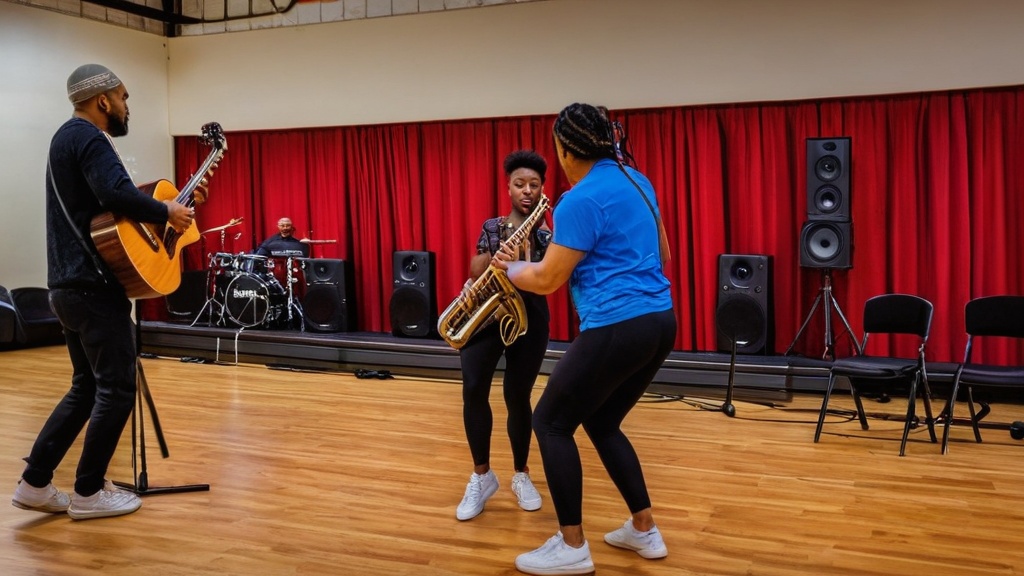

The easiest way to practice rhythm by clapping and playing guitar at the same time is in steps: first you clap the rhythm while counting out loud, then you play the same rhythm on the guitar, and finally you alternate clapping and playing without the count ever stopping. Because you need both hands while playing, you then replace the clap with a percussive tap on the strings or tap the beat with your foot. That way you connect your inner pulse to what your hands are doing. If you mainly want to learn to play tightly against a steady click, read how to learn guitar with a metronome.
Why practicing rhythm by clapping works
Rhythm is the backbone of music. When you clap and play guitar, you develop not only your musical skills but also your understanding of rhythmic structures. By combining these two elements, you learn to bring your body and mind into sync, which is essential for every musician.
Practicing rhythm by clapping while you play guitar helps you develop a better sense of timing. This is crucial, especially when you play with other musicians. After all, you want everyone on the same wavelength, and that starts with you.
Clapping rhythms can also be a playful way to spark your musical creativity. It makes learning new songs more fun and interactive. By clapping while you play, you force yourself to actively think about the structure of the music.
This can lead to a deeper understanding of the songs you play and can help you develop new ideas for your own compositions. It’s a powerful way to improve both your technical skills and your musical intuition.
Summary
- Practicing rhythm by clapping and playing guitar at the same time is very important for developing a good sense of timing and coordination.
- The basic principles of rhythm and timing are essential for being able to combine clapping and guitar playing.
- Various techniques can be used to combine clapping and guitar playing, such as using percussive elements on the guitar.
- Training coordination and timing is crucial for improving your sense of rhythm and being able to play complex rhythms.
- Developing a feel for rhythm and groove takes consistent practice and perseverance, but can lead to strong musical expression.
The basic principles of rhythm and timing
Rhythm is the organization of sound in time. It consists of different elements such as time signatures, note values and accents. Once you understand these basic principles, you can apply them to your guitar playing and clapping.
Timing is crucial here; it’s not only about playing the right notes, but also about playing them at the right moment. This means you need to learn to listen to the music and adapt to the tempo and dynamics. A good way to learn the basic principles of rhythm is to practice with a metronome.
This helps you keep a steady beat and improve your timing. Start with simple rhythms and gradually build up complexity. Try different time signatures, such as 4/4, 3/4 or 6/8, and experiment with clapping rhythms while you play in these time signatures on your guitar. You can read exactly how to count those beats and time signatures in counting rhythm on guitar.
This will deepen not only your understanding of rhythm, but also your ability to play different musical styles.
Techniques for combining clapping and guitar playing
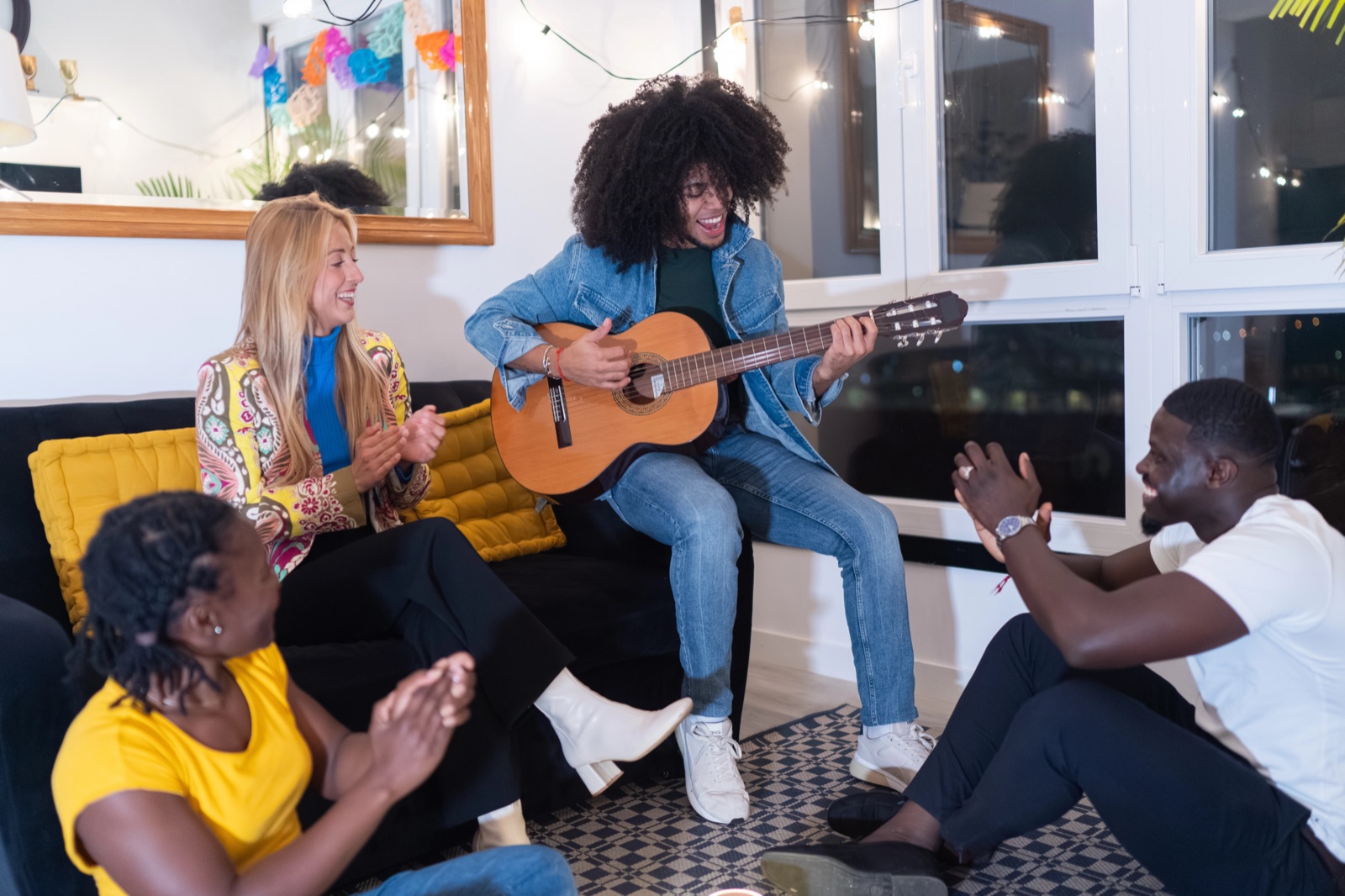
Combining clapping and guitar playing takes some practice, but there are several techniques you can use to make the process easier. One effective method is to clap the rhythm first before you play it on the guitar. This helps you get the rhythmic pattern into your head without being distracted by the technical side of guitar playing.
Once you’ve got the rhythm down with clapping, you can gradually add it to your guitar playing. Another technique is to use different accents while clapping and playing. For example, try clapping the first beat of every measure louder than the other beats.
This creates a dynamic effect that makes the music livelier. You can also experiment with syncopation, where you place accents at unexpected moments. This can give your playing an interesting twist and helps you think outside the box.
Basic exercise: clapping and playing in four steps
- Count and clap. Count 1-2-3-4 out loud at a slow tempo, for example 70 bpm, and clap on every beat. Tap along with your foot.
- Clap only beats 2 and 4. Keep counting out loud, but now clap only on 2 and 4. That’s the backbeat you hear in many pop and rock songs.
- Play the same on the guitar. Take one chord, for example Em (022000) or G (320003), and strum down on every beat while your foot keeps tapping.
- Replace the clap with a tap. Play the chord on beats 1 and 3 and on beats 2 and 4 lay your picking hand flat on the strings for a muted, percussive tap. This makes your guitar sound like someone is clapping along.
If you can do that without hesitating, alternate by measure: one measure of clapping, one measure of playing, without the count ever stopping. After that you can practice it with easy songs with three chords.
Training your coordination and timing
Coordination is an essential part of combining clapping and guitar playing. It takes practice to make both hands work independently of each other while still coming together as one harmonious whole. A good way to train this coordination is to use slow tempos combined with simple rhythms.
Start by playing open chords on the guitar while performing a simple clapping rhythm. As you gain confidence, you can increase the speed and add more complex rhythms. It’s also important to pay attention to your posture and hand movements while practicing.
Make sure you’re relaxed and that there’s no tension in your hands or shoulders. This will help not only with coordination, but also with preventing injuries in the long run. Take regular breaks while practicing to give yourself a chance to recover and refocus.
Developing a feel for rhythm and groove
A good feel for rhythm and groove is what really brings music to life. It’s not only about following a strict beat, but also about creating a certain flow that appeals to the listener. To develop this feel, it’s important to listen to lots of different styles of music and immerse yourself in diverse rhythmic patterns.
Try different genres, such as funk, jazz or reggae, and pay attention to how the rhythm structures are built. You can also challenge yourself with improvisation exercises where you both clap and play guitar. This helps not only with developing creativity, but also with strengthening your intuitive sense of rhythm. Good starting points are funk rhythms and reggae rhythms, because the accents there often fall off the beat.
For example, try playing a simple melody on the guitar while performing a more complex clapping rhythm. This will force you to think outside the box and find new ways to interpret music.
Applying rhythm exercises in different music styles
Rhythm exercises aren’t limited to one specific music style; they can be applied in almost any genre. Whether you play rock, pop, blues or folk, understanding rhythmic structures will always be useful. Start by choosing a song from a genre that appeals to you and analyze its rhythm structure.
Then try to apply the same structure in your own playing by adding clapping. For example, if you’re playing a rock song, you can experiment with strong claps on the downbeats while playing chords. In a folk song, you might use more syncopation to create a playful feel.
By applying these techniques in different styles, you develop not only versatility as a musician, but also learn how rhythm can vary depending on the context.
Tips for improving your sense of rhythm with clapping and guitar
There are several strategies you can use to improve your sense of rhythm further. An important tip is to play with other musicians regularly. This gives you valuable experience and also helps you develop a better sense of timing and teamwork. You’ll find handy agreements for this in the tips for playing with other guitarists.
When you work with others, you’re forced to listen to their rhythms and adapt. Recording yourself while you practice can also be useful. By listening back to yourself, you gain insight into where your timing may not be quite right or where there’s room for improvement. You don’t need much for that: with free recording software you can hear right away whether your clap and your strum land together.
Don’t be afraid to make mistakes; it’s all part of the learning process. Keep experimenting with different clapping and playing techniques until you find what works for you.
The importance of consistent practice and perseverance
Consistency is the key to success in any musical discipline, and that certainly applies to combining clapping and guitar playing. Create a practice routine that works for you and stick to it, even when it gets hard or progress seems slow. By regularly making time for these exercises, you’ll notice that both your coordination and your sense of rhythm improve significantly.
Perseverance is also crucial; there will be moments when frustration shows up or when things don’t go as planned. It’s important not to see these challenges as obstacles, but as opportunities to grow as a musician. Stay motivated by setting yourself goals and celebrating small victories along the way.
In the end, all this effort will pay off in a stronger sense of rhythm and improved musical ability that will help you in all your musical adventures.
If you’re interested in improving your rhythm skills by practicing clapping and playing guitar at the same time, it’s also worth exploring the magic of jazz guitar music. Jazz guitar offers a unique approach to rhythm and timing, which can help you develop your musical skills further. For more information on how jazz guitar can inspire you and improve your sense of rhythm, take a look at the article The Magic of Jazz Guitar Music. This article offers insight into the rich world of jazz and how it can enrich your guitar playing.
Frequently asked questions about practicing rhythm by clapping
What is practicing rhythm by clapping and playing guitar at the same time?
Practicing rhythm by clapping and playing guitar at the same time is an exercise in which you both play the rhythm of a song on the guitar and clap the rhythm with your hands. This helps improve your timing and coordination.
Why is it important to practice rhythm by clapping and playing guitar at the same time?
Practicing rhythm by clapping and playing guitar at the same time helps develop strong timing and coordination, which is essential for playing music. It also lets you master more complex rhythm patterns and improves your overall musical skills.
How can I practice rhythm by clapping and playing guitar at the same time?
To practice rhythm by clapping and playing guitar at the same time, you can start with simple rhythm patterns and chords on the guitar. Try clapping the rhythm of the song while you play the chords on the guitar. Gradually you can increase the difficulty by adding more complex rhythm patterns and chords.
Are there benefits to practicing rhythm by clapping and playing guitar at the same time?
Yes, practicing rhythm by clapping and playing guitar at the same time has several benefits. It helps improve your timing, coordination and rhythmic skills. It also lets you play more complex pieces of music and strengthens your overall musical skills.
How can I clap if I need both hands for the guitar?
You take turns clapping and playing, for example one measure of clapping and one measure of playing. While playing, you take over the clap with a muted tap of your picking hand on the strings, or you tap the beat with your foot. You can also have someone else clap while you play.
On which beats is it best to clap?
Start by clapping on all four beats of a 4/4 measure. Then clap only on beats 2 and 4, the backbeat of many pop and rock songs. If that works, also try clapping the eighth notes between the beats.




Leave a Reply