
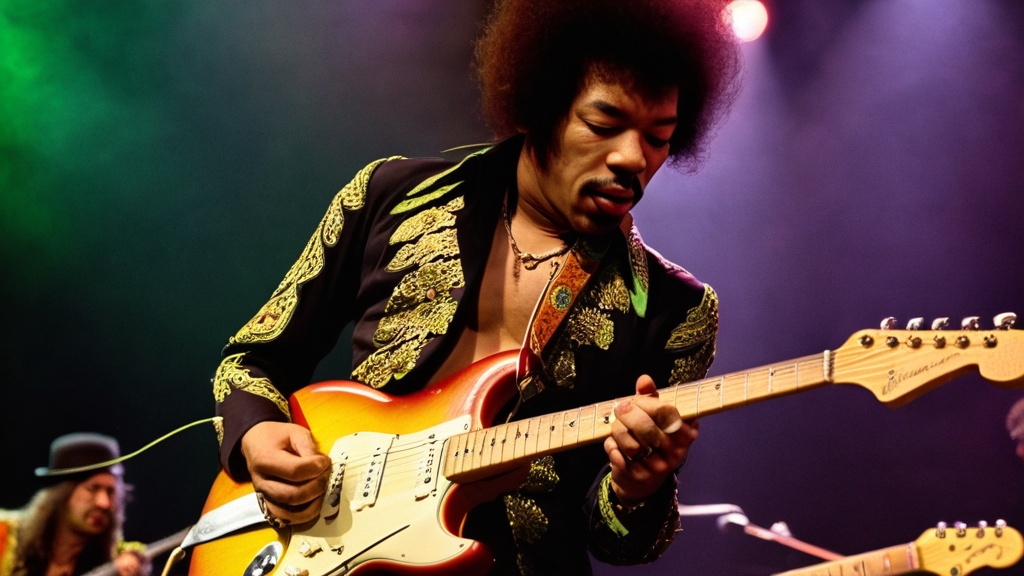

If you want to play like Jimi Hendrix, it comes down to a few recognizable building blocks: blues licks from the minor pentatonic scale with big bends and a wide vibrato, chords you decorate with hammer-ons and small melodies, your thumb over the neck for the bass note, the famous Hendrix chord E7#9, and a sound with fuzz, wah-wah and a cranked Marshall. Start with his rhythm playing in songs like “The Wind Cries Mary” and “Little Wing,” and work on the solos after that.
What Makes Jimi Hendrix’s Style Unique?
Jimi Hendrix is often considered one of the greatest guitarists of all time, and his style is a unique mix of rock, blues and psychedelic music. When you listen to his music, you notice right away the powerful emotion and technical skill he put into his playing. His approach to the guitar was revolutionary; he combined complex chords with unmatched virtuosity.
Hendrix had an unmistakable flair for creating melodies that were both accessible and challenging, which gave his music broad appeal. What makes his style so special is the way he blended traditional blues elements with innovative techniques. He often used open chords and played with unprecedented dynamics, resulting in a sound that was both raw and refined.
If you dig into his music, you will notice that he did not just play the guitar, he used the instrument as an extension of his emotions. This lets you, as a listener, feel a deeper connection to his music, because every note is soaked in feeling and passion.
Summary
- Jimi Hendrix is known for his unique style of guitar playing, which draws on blues, rock and psychedelic music.
- He made extensive use of effects such as fuzz, wah-wah and feedback to create his signature sound.
- Hendrix was known for his characteristic riffs and licks, which were often based on blues and pentatonic scales.
- The use of vibrato and bending was essential for creating the expressive and emotional tone of Hendrix’s guitar playing.
- Hendrix was a master at creating unique sounds by combining different effects and playing techniques.
The Hendrix Chord and the Thumb Over the Neck
A few typical Hendrix elements you can practice right away:
- The Hendrix chord (E7#9). This tense-sounding chord, known from “Purple Haze,” is played as x7678x. Your middle finger takes the E on the A string (7th fret), your index finger the G# on the D string (6th fret), your ring finger the D on the G string (7th fret) and your pinky the G on the B string (8th fret).
- Thumb over the neck. Hendrix often fretted the bass note on the low E string with his thumb. That kept his other fingers free for embellishments within the chord.
- Embellished chords. In “Little Wing” and “The Wind Cries Mary” he holds a chord shape and plays hammer-ons, pull-offs and double stops around it. Rhythm and melody flow into each other that way.
- A half step down. On many recordings and at concerts, Hendrix tuned his guitar a half step down. If you want to play along with the original recordings, tune down too.
The Use of Effects
One of the most striking aspects of Hendrix’s sound is his use of effects. He was a pioneer in using different pedals and gear to transform his guitar sound. Think of the wah-wah pedal, which he used masterfully to create expressive sounds that amplified the emotional impact of his music.
By combining these effects, he could produce a wide range of sounds, from screaming solos to dreamy, ethereal tones. If you want to start working with effects yourself, it is important to experiment with different combinations. For example, try a fuzz pedal together with a delay effect to add depth to your sound.
Hendrix’s use of effects was not just technical but also artistic; he knew exactly when and how to use them to create the right atmosphere. This side of his playing invites you to be creative and discover your own sound through the right effects.
Playing Characteristic Riffs and Licks
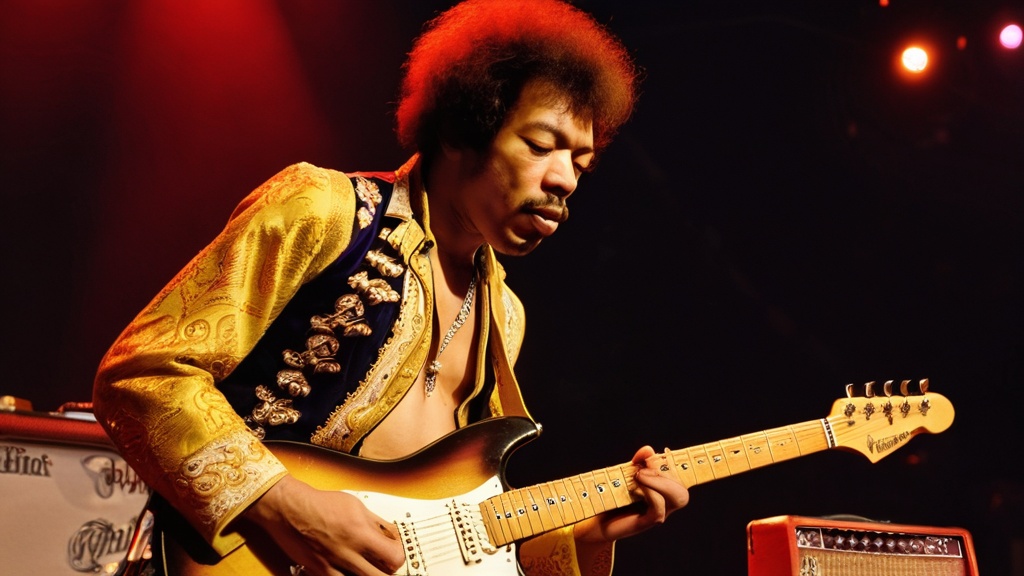
Hendrix is known for his iconic riffs and licks that are etched into the history of rock music. From the powerful opening of “Purple Haze” to the soulful melodies in “Little Wing,” his riffs are not only recognizable but also technically challenging. These characteristic phrases are often built from a combination of notes that blend perfectly with the underlying chords, which gives them an unmistakable impact.
If you want to learn to play these riffs, it is essential to pay attention to the nuances in his technique. Hendrix often used slides, hammer-ons and pull-offs to bring his licks to life. By applying these techniques, you can better capture the energy and emotion in his music. A step-by-step approach to training these legato techniques can be found in practicing hammer-ons and pull-offs.
Take the time to study every detail; even the smallest variations can make a big difference in how authentic your playing sounds.
Using Vibrato and Bending
Vibrato and bending are two techniques that are essential for imitating Hendrix’s unique playing style. Vibrato adds an extra layer of expression to every note you play, while bending lets you subtly change the pitch of a note, which creates an emotional impact. Hendrix was a master at applying these techniques; he used them not only to enrich melodies but also to find his own voice as a guitarist.
To get these techniques under your fingers, it is important to practice patiently. Start by playing a few simple notes and experiment with different vibrato speeds and intensities. Try different ways of bending too; for example, you can bend a note up for a dramatic effect or down for a more melancholy sound. You can find focused exercises in improving your vibrato technique and learning slides and bends on electric guitar.
By using these techniques regularly in your playing, you will notice that you gain more control over your sound and that you are able to convey more emotion.
Creating Unique Sounds
Hendrix was not afraid to leave the beaten path when it came to creating unique sounds. He experimented with different techniques and gear to develop a sound that was completely his own. From using feedback to combining different guitar and amp settings, he was always looking for ways to create something new and exciting.
This desire for innovation is what set him apart from other guitarists of his time. If you are inspired by Hendrix’s creativity, I encourage you to experiment yourself too. Try different guitar settings and effects to find out what works for you.
Think about how you can develop your own sound by combining elements from different music styles. The most important thing is to allow yourself to fail and try again; many of the most interesting sounds come from unexpected experiments.
Improvising Like Jimi Hendrix
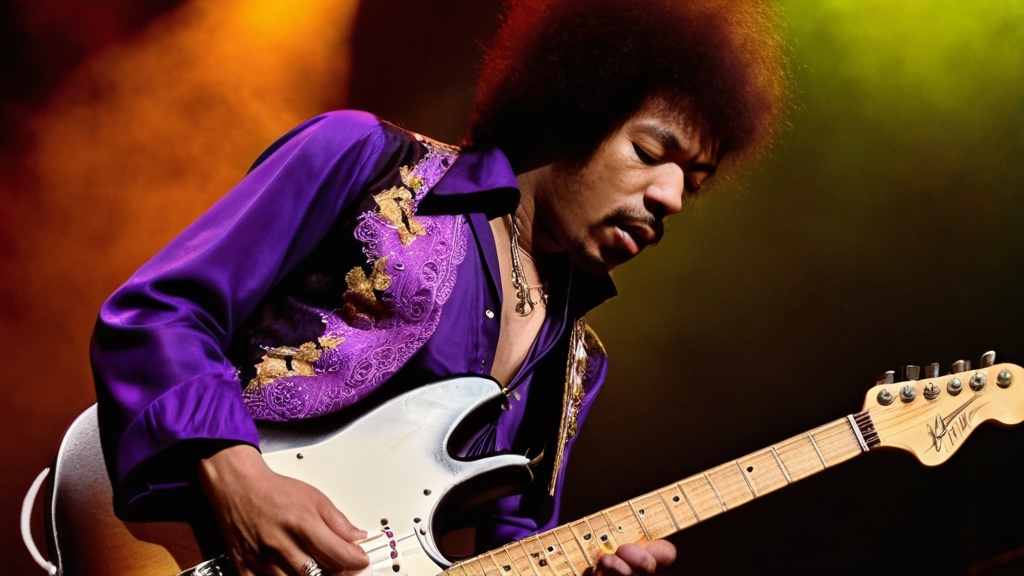
Improvisation was a crucial part of Hendrix’s playing style. He had an unmatched ability to create new melodies and solos on the spot that fit perfectly with the music he was playing in. This ability to improvise freely gave him the freedom to express his emotions fully and made every live performance unique. If you want to learn to improvise over a blues progression yourself, start with blues improvisation on guitar.
It is important for you as a musician to develop this skill too; improvisation can help you find your own voice as an artist. To get better at improvising, you can start by practicing different scales and chords. Then try combining these elements in spontaneous jam sessions with other musicians or even solo. You can find a step-by-step plan with positions, metronome and backing tracks in practicing scales for improvisation.
The goal is to challenge yourself and step outside your comfort zone. Don’t forget that improvisation doesn’t always have to be perfect; what matters is that you express yourself and enjoy the process.
Mastering the Right Technique
Although creativity and expression are essential for playing like Hendrix, mastering the right technique is crucial too. Hendrix had a solid foundation in guitar technique, which allowed him to play complex riffs and solos with ease. It is important that you also spend time developing your technical skills, such as fingering, speed and precision.
Start by practicing basic skills such as chords, arpeggios and scales before moving on to more advanced techniques such as sweep picking or tapping. Regular practice will not only improve your technique, but also build your confidence as a guitarist. Don’t forget that even the greatest musicians once had to develop their technique; consistency and dedication are the key to success.
The Importance of Expression and Feeling
Ultimately, playing like Jimi Hendrix is all about expression and feeling. His music was soaked in emotion, which allowed him to connect with his audience on a deep level. When you play, it is important that you show not only technical skills, but also work your own emotions and experiences into your music.
This makes your playing authentic and unique. Take the time to think about what music means to you and how you can translate that into your guitar playing. Whether it is joy, sadness or frustration, try to capture these feelings in every note you play.
By making yourself vulnerable and bringing honesty into your music, you will notice that your playing has more impact on others and that you develop further as a musician. By bringing these elements together, including style, effects, riffs, techniques and above all expression, you can shape your own musical journey inspired by Jimi Hendrix. Don’t let rules limit you; dare to be creative and discover what your unique sound is!
Hendrix played mostly a Fender Stratocaster, although a Gibson Flying V and an SG also made appearances. If you want to know how the Gibson Les Paul, the great counterpart of the Strat, shaped rock music, read the history of Les Paul guitars. Curious how a contemporary approached the blues? Take a look at Eric Clapton’s guitar style.
Frequently asked questions about playing like Jimi Hendrix
How do you play like Jimi Hendrix on guitar?
Start with the minor pentatonic and the blues scale, practice bends and a wide vibrato, learn to embellish chords with hammer-ons and your thumb over the neck, and play with a fuzz or overdrive sound. For his rhythm playing, “The Wind Cries Mary” and “Little Wing” are a good start.
Which guitar techniques did Jimi Hendrix use?
Jimi Hendrix was known for his innovative guitar techniques, including the use of feedback, wah-wah pedal, vibrato, hammer-ons, pull-offs and the use of chords in a unique way.
Which gear did Jimi Hendrix use?
Jimi Hendrix often used a Fender Stratocaster, a Marshall amp and a wah-wah pedal, complemented by effects such as the Fuzz Face, the Uni-Vibe and the Octavia. He also experimented with feedback and distortion to create his signature sound. John Mayer also gets a lot out of a Stratocaster and works Hendrix influences into his chord playing, as you can read in this analysis of John Mayer’s guitar style.
Which songs are characteristic of Jimi Hendrix’s playing style?
Songs such as “Purple Haze,” “Voodoo Child (Slight Return),” “All Along the Watchtower” and “Little Wing” are characteristic of Jimi Hendrix’s playing style and showcase his unique guitar techniques and sound.
How can I practice Jimi Hendrix’s playing style?
To practice Jimi Hendrix’s playing style, you can start by learning his songs and studying his techniques. It is also important to experiment with feedback, vibrato and the use of chords in a creative way.
Did Jimi Hendrix play left-handed?
Yes. Hendrix was left-handed and mostly played a right-handed Stratocaster that he flipped over and restrung, with the thick E string at the top again. As a result, the knobs and the tremolo arm were on the top side for him. Whether you are better off choosing a left-handed guitar or flipping a right-handed one is covered in a separate guide.
Is Jimi Hendrix’s style suitable for beginners?
As a first step it is tough, as a goal it is very suitable. First make sure you have mastered open chords, barre chords and the pentatonic scale. After that, parts such as the chords of “Hey Joe” and the opening of “Purple Haze” are well within reach.





Leave a Reply