
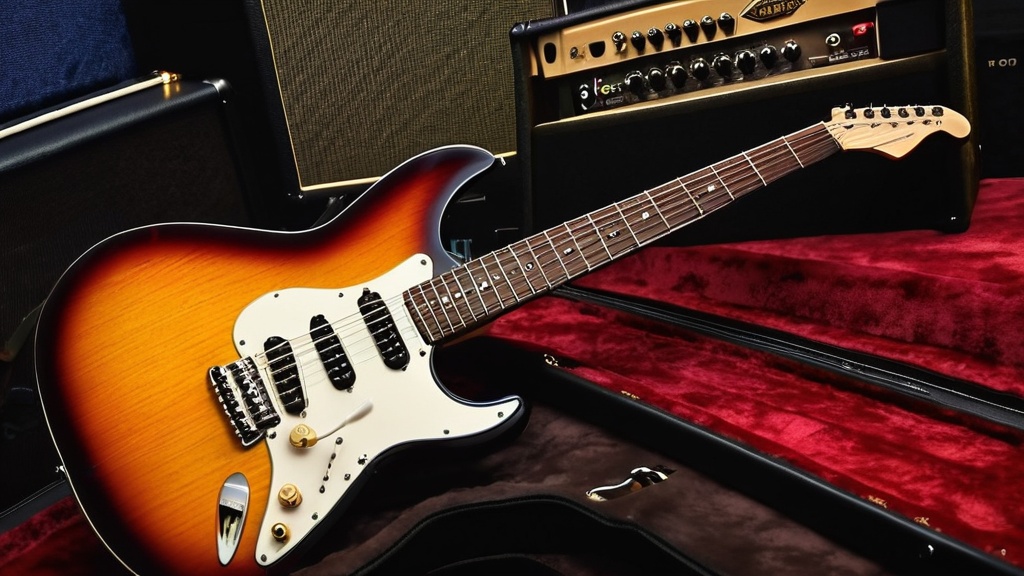

Progressive rock rhythms on guitar revolve around odd time signatures such as 5/4 and 7/8, syncopation and time signature changes within a song. The key is to count in small groups of two and three, practice slowly with a metronome and listen a lot to bands like Rush, Yes and Dream Theater. Below you will find the techniques, examples and an exercise to start with.
What Makes Progressive Rock Rhythms Different?
Progressive rock rhythms on guitar are an essential part of the genre, which is known for its complex structures and unconventional approach to music. Unlike traditional rock, which often uses simple, repetitive rhythms, progressive rock offers a wide range of rhythmic possibilities. These range from odd time signatures to syncopation and polyrhythm.
The guitarist in a progressive rock band often plays a crucial role in creating this layering, not only supporting the melody but also adding to the rhythmic complexity of the song. The rhythms in progressive rock are often designed to surprise and challenge the listener. That can mean working with different tempos and dynamics as a guitarist, which makes for a unique experience for both the musician and the audience.
Alternate tunings and unusual chords add another layer to the rhythmic structure, making the music even more intriguing. It is this combination of technical skill and creative expression that makes progressive rock so appealing to musicians and listeners alike.
Summary
- Progressive rock rhythms on guitar are often complex and challenging, with unusual time signatures and rhythmic patterns.
- Influences of progressive rock on guitar rhythms include jazz, classical music and world music, resulting in an eclectic mix of styles.
- Techniques for playing progressive rock rhythms on guitar include fingerpicking, tapping, and the use of complex chords and arpeggios.
- Examples of well-known progressive rock songs with complex guitar rhythms are “2112” by Rush and “The Dance of Eternity” by Dream Theater.
- Learning to play progressive rock rhythms on guitar takes patience, practice and listening to many different kinds of music for inspiration.
The Influences of Progressive Rock on Guitar Rhythms
The influences of progressive rock on guitar rhythms are diverse and come from different musical traditions. An important source of inspiration is classical music, which is often characterized by complex harmonies and layering. Many progressive rock bands have integrated elements of classical music into their compositions, resulting in rhythms that are not only challenging to play, but also rich in emotion and depth.
This has led to a unique style that pushes the boundaries of traditional rock music. Jazz and world music are also important influences on the rhythms in progressive rock. Jazz, with its improvisation, syncopation and sometimes unusual time signatures (think of Take Five in 5/4), has inspired many guitarists to think outside the box. If you still want to practice the basics of rock, you can start with simple rock riffs like Smoke on the Water and Iron Man.
World music often introduces rhythms that are not common in Western music, which adds an extra dimension to progressive rock. By combining these influences, guitarists can create unique rhythmic patterns that keep the listener engaged and surprised.
Techniques for Playing Progressive Rock Rhythms on Guitar
Mastering the techniques for playing progressive rock rhythms on guitar takes dedication and practice. One of the most important techniques is the use of arpeggios, where you play the notes of a chord one at a time instead of all at once. This can help create the ethereal atmosphere often associated with progressive rock. You play fast arpeggios across several strings with sweep picking; sweep picking exercises for advanced players will help you with that.
It is also important to experiment with different picking techniques, such as fingerpicking or using a pick, to bring variety to your playing. Another technique that is essential for playing progressive rock rhythms is working with odd time signatures. This means you need to learn to play in time signatures such as 5/4 or 7/8, which can feel like a challenge at first.
It is crucial to develop your timing and sense of rhythm so you can master these complex structures. Exercises with a metronome can help, because they force you to stay consistent while working with different rhythmic patterns.
Well-Known Progressive Rock Songs with Complex Guitar Rhythms
There are countless progressive rock songs known for their complex guitar rhythms. A classic example is “Roundabout” by Yes, with an acoustic intro by Steve Howe and tight, syncopated interplay between guitar and bass. The guitar parts in this song are challenging and require a high degree of technical skill, which makes it a favorite among guitarists who want to dig deeper into progressive rock.
Another example is “Kashmir” by Led Zeppelin, which has a hypnotic groove that comes from the combination of several rhythmic elements. The guitar riff moves in groups of three beats, while the drums keep playing in 4/4. The guitar parts are simple but effective, and they show how powerful a good rhythm can be in creating a gripping musical experience. These songs are not only inspiring for guitarists, they also give insight into how complex rhythms can be integrated into powerful compositions. If prog rock is still a step too far, practice your rhythm first on easy rock classics on guitar.
How Can You Learn to Play Progressive Rock Rhythms on Guitar?
Learning to play progressive rock rhythms on guitar can be a challenging but rewarding experience. A good way to start is by listening to different bands and songs within the genre. Try to analyze and play back the rhythmic structures and techniques you hear.
This not only helps you develop your ear, but also gives you insight into how other musicians build their guitar parts. It is also useful to use learning material aimed specifically at progressive rock. There are plenty of books, online courses and video tutorials that focus on the techniques and styles typical of this genre. An overview of the best guitar books for beginners and advanced players helps you choose which instruction book fits your level.
By practicing in a structured way and challenging yourself with new techniques, you can improve your skills as a guitarist considerably.
Exercise: Counting Odd Time Signatures
A measure in 5/4 or 7/8 feels less strange when you divide it into groups of two and three beats. If you are not yet comfortable with counting, first read how counting rhythm on guitar works.
- 7/8: count 1-2, 1-2, 1-2-3 and put an accent on every 1. On every beat, play a muted power chord on E (E5: 022xxx) and strike the accented beats a little harder.
- 5/4: count 1-2-3, 1-2. You can hear that division in Take Five by the Dave Brubeck Quartet.
- 7/4: the bass riff of Money by Pink Floyd is in 7/4; count along as 1-2-3-4, 1-2-3.
First set the metronome to a slow tempo with one click per eighth note. Once that works, alternate a few measures of 4/4 with one measure of 7/8; you often come across changes like that in prog rock. You can read how to use the metronome smartly in learning guitar with a metronome.
Tips for Improving Your Progressive Rock Guitar Rhythms
To improve your progressive rock guitar rhythms, it is important to practice regularly with a focus on timing and precision. A good tip is to practice with a metronome, so you learn to stay consistent while playing different rhythmic patterns. Start slowly and gradually build up speed as you gain confidence in your playing.
It can also be useful to play with other musicians or with backing tracks. This not only helps you improve your timing, but also teaches you how to fit your guitar parts into a larger musical context. Playing with others can also be inspiring and give you new ideas for your own music.
The Importance of Timing and Rhythm in Progressive Rock
Timing and rhythm are crucial in progressive rock. The complexity of the rhythmic structures requires musicians to be extremely precise in their playing. A small deviation can disrupt the whole dynamic of a song.
That is why it is essential to develop a good sense of timing, so you can contribute effectively to the overall sound of the band as a guitarist. Strong timing also adds to the emotional impact of the music. Progressive rock is often about telling stories or conveying deeper feelings, and the way rhythm is used can strengthen that message.
By being deliberate about timing and rhythm, you can not only get better technically, but also grow artistically as a musician.
Combining Different Guitar Rhythms in Progressive Rock Songs
A characteristic aspect of progressive rock is the ability to combine different guitar rhythms within one song. This can lead to surprising twists and dynamic changes that keep the listener engaged. Combining rhythms can mean, for example, alternating between 4/4 and 7/8 time signatures, or using different picking techniques to add variation. For atmospheric, building chord patterns from a related genre, you can also practice post-rock chord progressions.
Experimenting with these combinations can lead to unique musical ideas and new compositions. As a guitarist, it is important to be open to creativity and challenge yourself to think outside the box. By bringing different rhythms together, you can not only improve your technical skills, but also contribute to the evolution of the genre itself.
In short, progressive rock offers a fascinating world full of complex guitar rhythms and techniques that can inspire any guitarist. By immersing yourself in this style of music and practicing actively, you can not only improve your skills, but also enjoy the rich musical experience that progressive rock has to offer.
Progressive rock rhythms on guitar can be a challenge for beginners and advanced guitarists alike. These complex rhythms require a good command of the basic skills on the guitar. For those who are just starting out and want to build their skills, it can be useful to begin with a structured course. An excellent resource for this is Guitar lessons for beginners: learning the basics. This course offers a solid foundation that is essential for understanding and playing the more advanced rhythms used in progressive rock.
Frequently asked questions about progressive rock rhythms
What are progressive rock rhythms on guitar?
Progressive rock rhythms on guitar are complex and often asymmetrical rhythms that are characteristic of the progressive rock genre. These rhythms can range from complex time signatures to unusual accents and syncopation.
How can I learn to play progressive rock rhythms on guitar?
To learn to play progressive rock rhythms on guitar, it is important to start by mastering basic rhythms and chords. Then you can work on developing your timing, playing complex time signatures and integrating syncopation into your playing.
Which guitar techniques are important for playing progressive rock rhythms?
For playing progressive rock rhythms on guitar, techniques such as alternate picking, string skipping, tapping, and the use of chords with complex fingerings are important. Mastering dynamics and playing complex time signatures is also essential.
Which bands are known for their progressive rock rhythms on guitar?
Bands like Rush, Dream Theater, Yes, Genesis and King Crimson are known for their use of complex and innovative progressive rock rhythms on guitar. These bands have influenced the development of the genre and contributed to the popularity of complex rhythms in progressive rock.
How do you count a measure in 7/8?
Divide the seven eighth notes into groups, usually 2+2+3 (1-2, 1-2, 1-2-3) or 3+2+2. Put an accent on the start of each group and first practice slowly with a metronome that clicks eighth notes.
Can I play progressive rock rhythms as a beginner?
Yes, as soon as you have mastered basic chords and power chords and play tightly in 4/4. Start with simple riffs in 5/4 or 7/8 at a slow tempo and only then build up speed and more complex parts.




Leave a Reply