
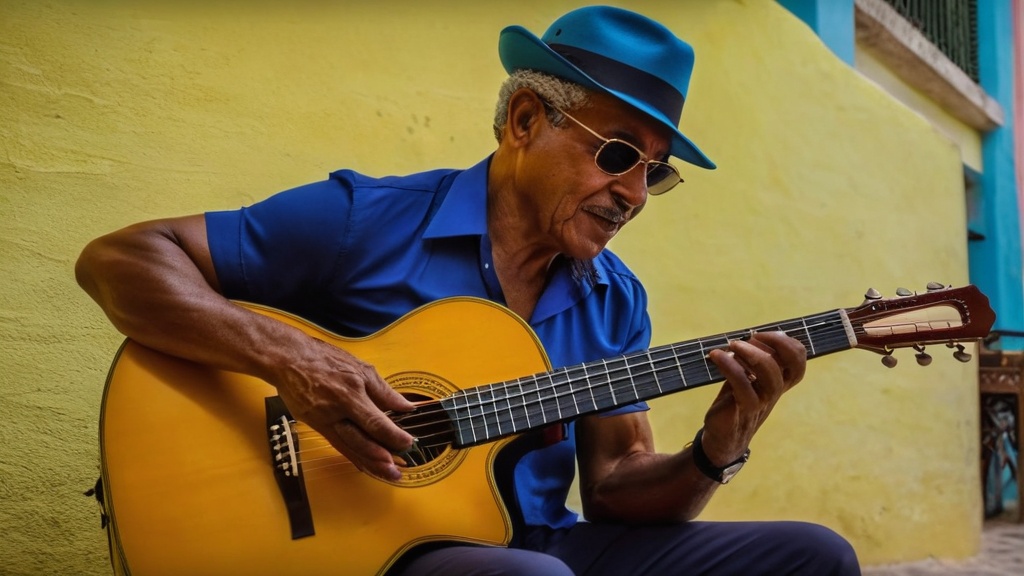

The best way to practice Cuban guitar rhythms is to start from the clave: a five-stroke pattern spread over two measures that son, salsa and cha-cha-cha lean on, among others. Clap the clave first, then play a simple chord progression with short, muted strums and put the accents on the clave strokes. After that, move on to the typical rhythms of son, bolero and guajira.
The history of Cuban guitar rhythms
The history of Cuban guitar rhythms is a fascinating story deeply rooted in the cultural diversity of the island. Cuban music is a melting pot of influences, including African, Spanish and indigenous elements. This mix has produced a unique musical tradition that has won over the world.
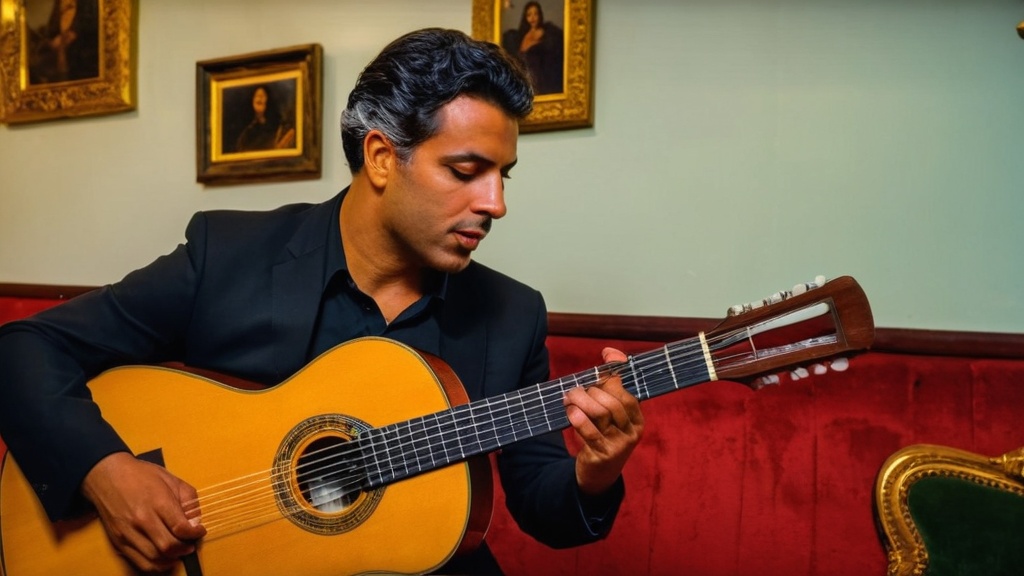
The guitar, although not native to the island, quickly became part of Cuban musical culture. In the 19th century the guitar began to play a prominent role in genres such as son, bolero and guajira. These styles are not only melodic but also rhythmically complex, which gives the guitar a central role in creating the characteristic Cuban sound.
Over the years, various guitar techniques and rhythms have emerged, each with its own story and meaning. The influence of the African slaves who were brought to Cuba is clearly audible in the syncopation and polyrhythm that are typical of Cuban music. Spanish colonial influences also contributed to the development of guitar technique and style. Want to explore that African side further? Then take a look at African guitar grooves.
The result is a rich musical tradition that not only reflects Cuban culture but has also influenced countless musicians and genres worldwide.
Summary
- Cuban guitar rhythms originate in Afro-Cuban musical traditions, with influences from Spanish and African music.
- Practicing Cuban guitar rhythms helps you develop rhythmic skills and understand the complex rhythms of Cuban music.
- Well-known Cuban guitar rhythms include son, bolero, rumba and mambo, each with its own specific rhythmic patterns and characteristics.
- Important tips include listening to authentic Cuban music, using a metronome and practicing different rhythm patterns.
- Combining Cuban guitar rhythms with other music styles can lead to interesting and unique musical creations. It is important to stay open to different influences and styles.
- Rhythmic precision is essential when playing Cuban guitar rhythms, since this music style revolves around complex rhythmic structures and polyrhythm.
- Using percussion instruments can help strengthen your sense of rhythm and your understanding of the rhythmic patterns in Cuban music.
- It is important to experiment and develop your own style within Cuban guitar rhythms, by adding personal interpretations and creative elements.
Why practicing Cuban guitar rhythms matters
Practicing Cuban guitar rhythms is crucial for every guitarist who wants to master this lively music style. It is not only about learning chords or melodies; it is about understanding the rhythmic structures that make this music so unique. By practicing regularly, you develop not only your technical skills but also your sense of timing and groove. Want to strengthen that foundation first? Then start with exercises for timing and rhythm feel. Practicing funk rhythms on guitar will also help you play syncopation and muted strums tightly.
This is essential, because Cuban music depends heavily on rhythmic precision and nuance. Once you get these rhythms under your fingers, you will find that you can play with other musicians and create an authentic sound. Practicing these rhythms also helps you gain a deeper understanding of the cultural context in which they arose.
Every rhythm tells a story and reflects the history and traditions of the Cuban people. By immersing yourself in these rhythms, you gain more appreciation not only for the music but also for the culture behind it. This can inspire you to be more creative in your own playing and to explore new musical ideas.
The clave: the rhythmic foundation
Almost all Cuban dance music revolves around the clave, a rhythm pattern of five strokes spread over two measures. In the 3-2 son clave you count it like this: measure 1 on 1, 2-and and 4, measure 2 on 2 and 3. Reverse the measures and you have the 2-3 clave. In the rumba clave, the third stroke shifts an eighth note later to 4-and. If counting like this still feels tricky, first read how counting rhythm on guitar works.
Exercise: clapping the clave and strumming
- Clap the 3-2 son clave slowly along with a metronome until you can repeat the pattern without thinking.
- Play a simple chord progression such as C-F-G7-F, two beats per chord, with short, muted strums.
- Now put accents on the strums that coincide with the clave, while the metronome or a drum machine marks the beats.
- Next, try the rhythm of the tumbao bass: play the root note on 2-and and 4 instead of on beat 1.
Different Cuban guitar rhythms and their characteristics
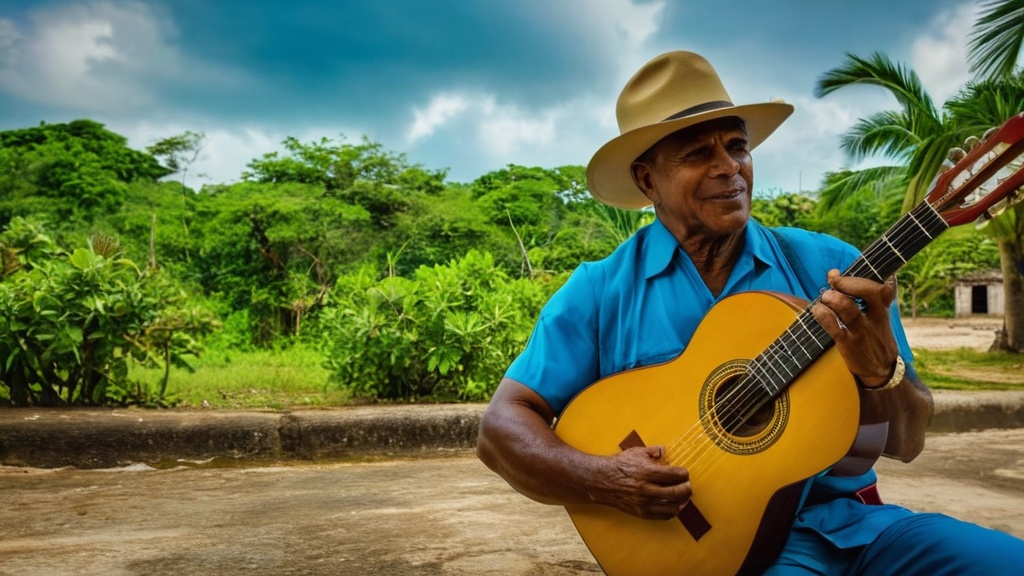
Cuban guitar rhythms are incredibly diverse and range from fast and energetic to slow and melancholic. One of the best-known rhythms is the son, which is often characterized by a 2/4 or 4/4 time signature with a strong emphasis on the second beat. This rhythm is the basis for many popular Cuban music styles and has found its way into genres such as salsa and jazz.
The son uses syncopation, which means the accents fall at unexpected moments, creating a playful and lively atmosphere. Another important rhythm is the bolero, which is often slower and has more emotional depth. The bolero is characterized by a 4/4 time signature with a soft, romantic melody.
This rhythm lends itself excellently to expressive guitar parts and can vary in tempo and dynamics. There are also rhythms such as guajira and cha-cha-cha, each with its own unique characteristics. Guajira often has a more rural feel, while cha-cha-cha is known for its danceable groove and syncopated accents.
Tips for practicing Cuban guitar rhythms
When you start practicing Cuban guitar rhythms, a few tips can help you make progress faster. First, it is important to start slowly. Try playing the rhythms at a slower tempo before you speed them up.
This helps you get the right technique and timing under your fingers without overwhelming yourself. Use a metronome to keep your tempo consistent and to improve your sense of timing. It can also be useful to listen to recordings of master guitarists. You can read how to build up the tempo step by step in learning guitar with a metronome.
By studying their playing style, you can gain valuable insights into how they approach certain rhythms. Try to imitate their techniques and experiment with different variations. Remember that it is important to be patient; developing good technique takes time and dedication.
Use short practice sessions in which you can concentrate on specific rhythms or techniques, so that you stay focused and do not get overwhelmed.
Combining Cuban guitar rhythms with other music styles
One of the finest aspects of Cuban guitar rhythms is their versatility and their ability to adapt to other music styles. By combining these rhythms with elements from other genres, you can make unique musical creations that are both innovative and recognizable. Think, for example, of integrating Cuban rhythms into jazz or rock.
This can lead to interesting cross-pollination in which the energy of Cuban music is blended with the improvisation of jazz or the power of rock. When combining styles, it is important to be open-minded and willing to experiment. Try different chords and melodies while keeping the Cuban rhythms. A related Latin American style to combine with is Brazilian bossa nova.
This can lead to surprising results and new musical ideas. It can also help to work with musicians from different genres; their perspectives can inspire you to step further outside your comfort zone and discover new sounds.
The importance of rhythmic precision when playing Cuban guitar rhythms
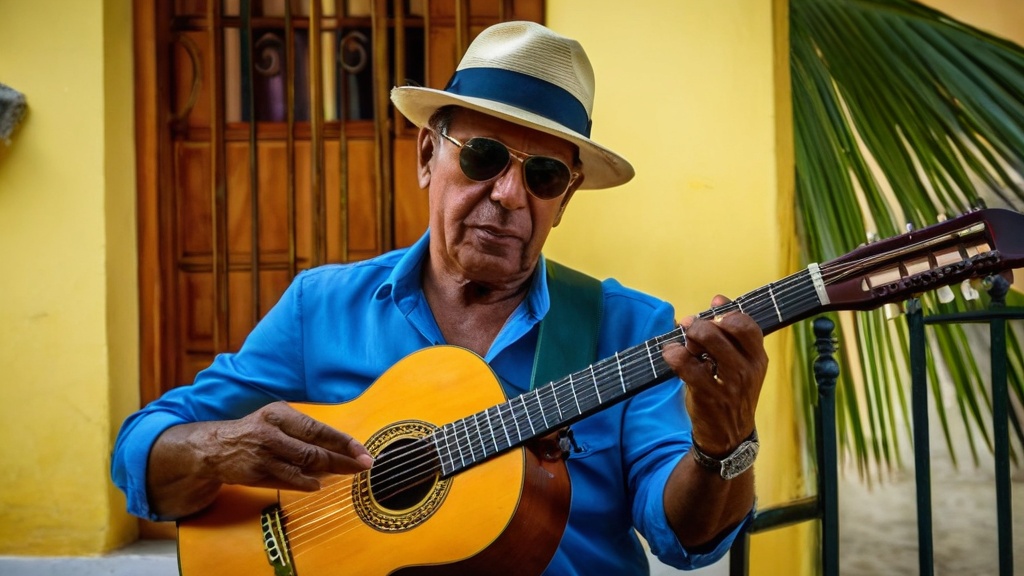
Rhythmic precision is essential when playing Cuban guitar rhythms. This music style leans heavily on syncopation and complex rhythmic patterns, which means that even small mistakes in timing or accentuation can make a big difference in how the music sounds. Developing a sharp sense of timing not only helps when playing with other musicians but also keeps your music lively and energetic.
To improve rhythmic precision, it is useful to practice regularly with a metronome or drum machine. This helps you refine your timing and make sure you are always in sync with the rest of the band. Recording yourself while playing can also provide valuable feedback; that way you can hear where your playing may be inconsistent and improve on it. You will find free programs for this in this overview of free recording software.
Using percussion instruments when practicing Cuban guitar rhythms
Percussion instruments play a crucial role in Cuban music and can be a great addition to your practice sessions. By adding percussion instruments such as congas, bongos or cajón to your exercises, you can get a better understanding of the rhythmic structures underlying Cuban guitar rhythms. Playing together with percussion not only helps develop your own timing but also adds an extra dimension to your playing.
If you do not have access to percussion instruments, you can also use clapping or stomping to imitate the basic rhythms while you play. This helps you get more involved in the music and strengthens your sense of groove. Practicing together with other musicians who play percussion can also lead to a dynamic interaction that is both educational and inspiring.
Developing your own style within Cuban guitar rhythms
Developing your own style within Cuban guitar rhythms is an exciting process that promotes creativity and self-expression. As you learn and practice different rhythms, you may start to discover elements that resonate with your personal musical preferences. This can lead to unique interpretations or even new compositions that reflect your voice as a musician.
To shape your own style further, it is important to challenge yourself and think outside the box. Experiment with different techniques, chords and melodies while staying true to the essence of Cuban rhythms. Let yourself be inspired by other genres or musicians, but do not forget to stay true to what appeals to you as an artist.
Ultimately, this search for your unique sound will lead not only to personal growth as a musician but also to a deeper connection with the rich tradition of Cuban music.
If you are interested in practicing Cuban guitar rhythms, it is also worth broadening your horizons with other guitar styles. A fascinating article that can inspire you is The electric guitar of Metallica: an icon in the metal world. This article offers an in-depth look at the influential role of the electric guitar in metal and can help you develop your guitar skills further by exploring different styles and techniques. By immersing yourself in diverse music genres, you can become a versatile guitarist and create your own unique playing style.
Frequently asked questions about Cuban guitar rhythms
What are Cuban guitar rhythms?
Cuban guitar rhythms are rhythmic patterns typical of Cuban music styles such as son, salsa and rumba. These rhythms are often played on the guitar and form the basis of Cuban music.
How can I practice Cuban guitar rhythms?
To practice Cuban guitar rhythms, it is important to start by learning the basic rhythms and chords that are characteristic of Cuban music. You can then practice by playing various Cuban songs and working on the specific rhythms and techniques that go with them.
Which techniques are important when practicing Cuban guitar rhythms?
When practicing Cuban guitar rhythms, it is important to pay attention to techniques such as using syncopation, playing chords with a specific rhythmic feel and mastering the different strumming patterns that are typical of Cuban music.
Are there specific online resources or courses available for practicing Cuban guitar rhythms?
Yes, there are various online resources and courses aimed at learning Cuban guitar rhythms. These can range from free tutorials on platforms such as YouTube to paid online courses that go deeper into the specific techniques and styles of Cuban music.
What is the difference between the 3-2 and the 2-3 clave?
It is the same pattern of five strokes. The 3-2 clave starts with the measure with three strokes, the 2-3 clave with the measure with two strokes. Which side you use depends on the melody and phrasing of the song.
Which song works well for practicing Cuban rhythms?
Guantanamera is a good start. You can accompany it with just C, F and G7, so all your attention can go to the rhythm and the accents.



Leave a Reply