
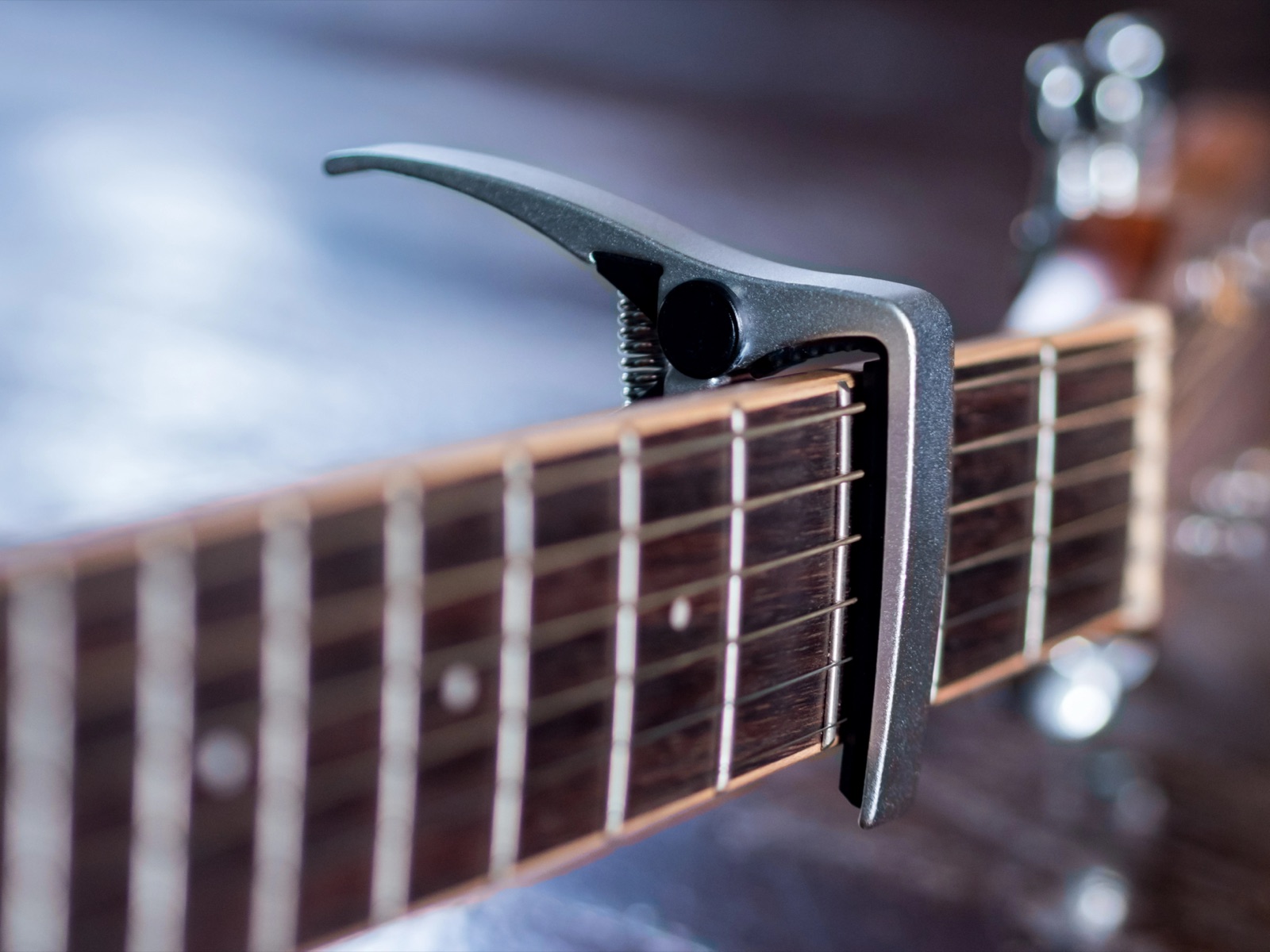

The best capo for beginners is a spring-clamp capo like the Kyser Quick-Change: you put it on the neck with one hand and move it in a second. If you want more control over the pressure, choose a Shubb or a G7th Performance 3, so your guitar goes out of tune less easily. Above all, pay attention to your type of guitar: a classical guitar has a flat fretboard and needs a flat capo.
What does a capo do?
A capo is a handy tool that you clamp onto the neck of a guitar to raise the pitch of the strings. By placing the capo on a certain fret, you can change the sound of your guitar without having to change the chords themselves. This lets you play in different keys without adjusting your chords.
For many guitarists, especially beginners, a capo is an indispensable tool that helps them play more easily and expand their musical options. Using a capo can also boost creativity. When you play with a capo, you can discover new sounds and chords that you might not have tried otherwise.
This can lead to unique musical ideas and a fresh approach to playing your favorite songs. A capo can also make certain songs easier to play, especially if they were originally written in a higher or lower key than you can comfortably play.
Summary
- A capo is a tool used to raise the pitch of a guitar’s strings, which makes chords easier to play.
- Using a capo can make learning chords and playing songs simpler and faster for beginner guitarists.
- When choosing the best capo for your guitar, it is important to consider factors such as the type of guitar, the neck width and the tension of the capo.
- Good capos for beginning guitarists are the Kyser Quick-Change, the Shubb and the G7th Performance 3. The Dunlop Trigger is a spring clamp similar to the Kyser.
- When using a capo, it is important to choose the right position, put the capo on properly and tune your guitar regularly to avoid mistakes.
The benefits of using a capo as a beginner guitarist
For beginners, using a capo can open up a world of possibilities. One of the biggest benefits is that it lets you play in different keys easily without having to learn complex fingerings. This is especially handy for people who are just starting out on guitar and are not yet familiar with all the chords and their variations.
With a capo you can easily find the key that suits your voice or the singer’s voice. A capo also makes chords easier to play. Many popular songs are written in keys that can be challenging for beginners. This works best if you already have a decent grip on the basic chords.
By using a capo, you can play these songs in a more accessible key, which builds your confidence and helps you progress faster. It can also help keep your motivation up, because you can play songs you like sooner. Many well-known songs are played with a capo, such as a number of easy Ed Sheeran songs.
How do you choose the best capo for your guitar?
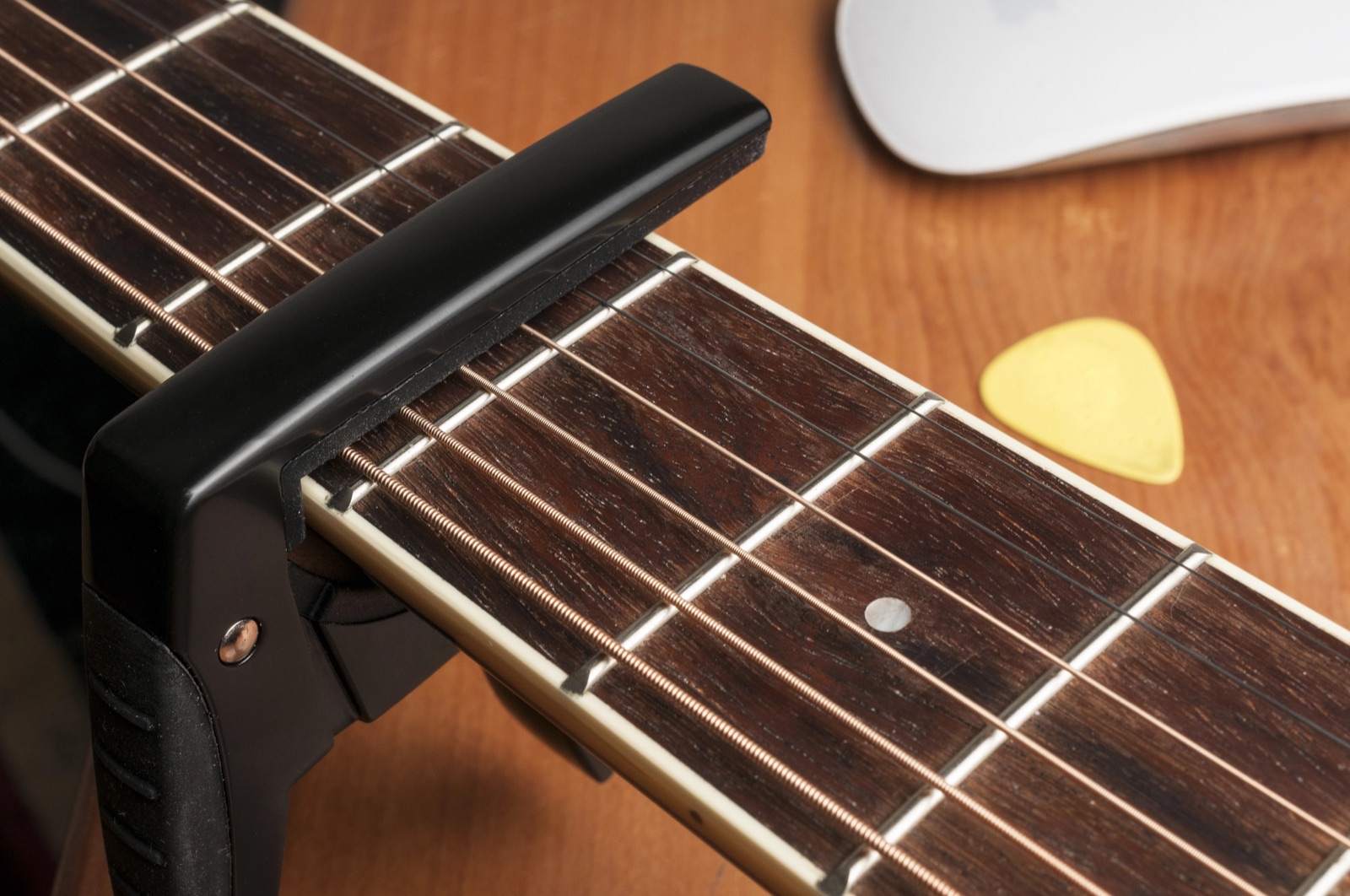
When choosing the best capo for your guitar, there are several factors to consider. First, it is important to look at the type of guitar you have. There are different kinds of capos available, such as clip-on capos, screw capos and elastic capos.
Clip-on capos are popular for their ease of use and quick attachment, while screw capos offer more stability but take a bit longer to put on. You should also look at the quality of the capo. A good capo must be sturdy enough to press the strings down properly without making them buzz or warp.
Aluminum capos are light and durable, while cheap plastic capos wear out faster. The sound depends mostly on the pressure: too little pressure causes buzzing, too much pressure pulls the strings out of tune. Try different kinds to see which one best suits your playing style and guitar.
Which capo fits your guitar?
- Steel-string acoustic guitar: a curved capo that follows the curve of the fretboard. Most standard models are made for this.
- Electric guitar: also a curved capo. Some brands make a separate version for electric guitars, because the neck is thinner and the strings are lighter. A clamp that is too tight quickly pulls those strings out of tune.
- Classical guitar with nylon strings: a flat capo, because the fretboard is flat and wider. Look for the classical version of the model.
- 12-string guitar: a capo that is wide enough and presses evenly on all the string pairs.
If you play several guitars, a capo with adjustable pressure is the most flexible. If you don’t know the basics of using one yet, first read how to use a capo, which includes a table of capo positions and keys.
Top 3 capos for beginning guitarists
As a beginner, choosing the right capo can feel overwhelming, but a few models are especially well recommended for newcomers. First on the list is the Kyser Quick-Change Capo. This capo is easy to use and can be attached and removed quickly with one hand, which is ideal for beginners who don’t have much experience with capos yet.
Another excellent choice is the Shubb Capo. With an adjustment screw you set the pressure once, and after that you snap it shut with a lever. That way it presses just hard enough, without pulling the strings out of tune. It also suits different types of guitars, which makes it a versatile option for beginners who may want to switch to other types of guitar in the future.
Finally, there is the G7th Performance 3 Capo, which is known for its innovative design and ease of use. You squeeze it shut until the strings sound just right and release it with a release lever, so you decide the pressure yourself every time. This makes it a great choice for beginners who want to focus on their playing without worrying about technical problems.
Tips for using a capo while playing
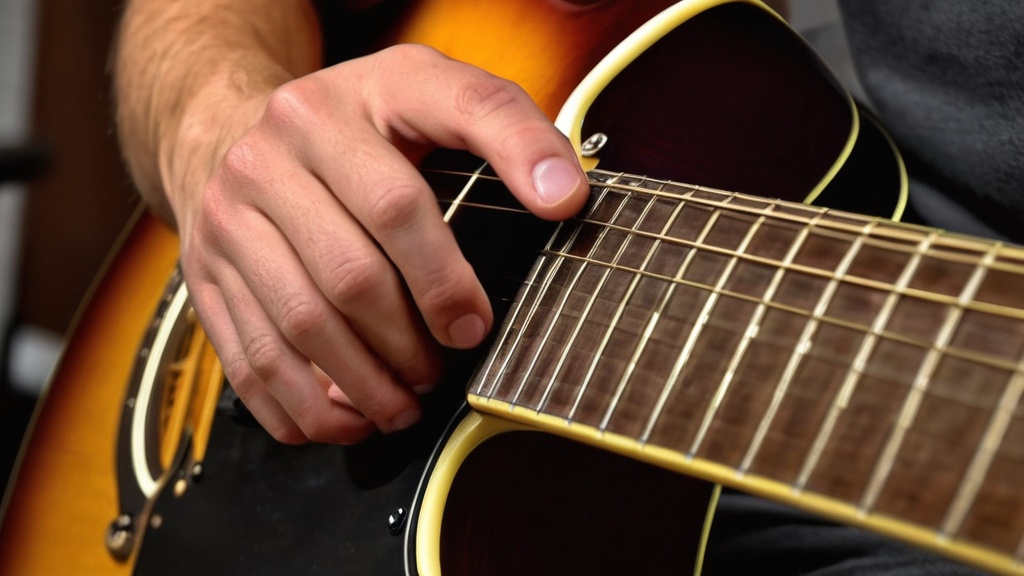
When you play with a capo, a few tips can help you get the most out of this tool. First, it is important to make sure the capo is placed on the right fret and applies even pressure on all the strings. This prevents some strings from sounding dull or not ringing properly. Then check with a clip-on tuner whether all the strings are still in tune.
Take a moment to make sure everything is in place before you start playing. It is also useful to experiment with different capo positions. By placing the capo on different frets, you can discover how it changes the sound of your guitar and which keys suit your voice best. This often brings new ideas when writing your own songs with a capo too.
This can also help you discover new chords and progressions that you might not have tried otherwise.
Common mistakes when using a capo and how to avoid them
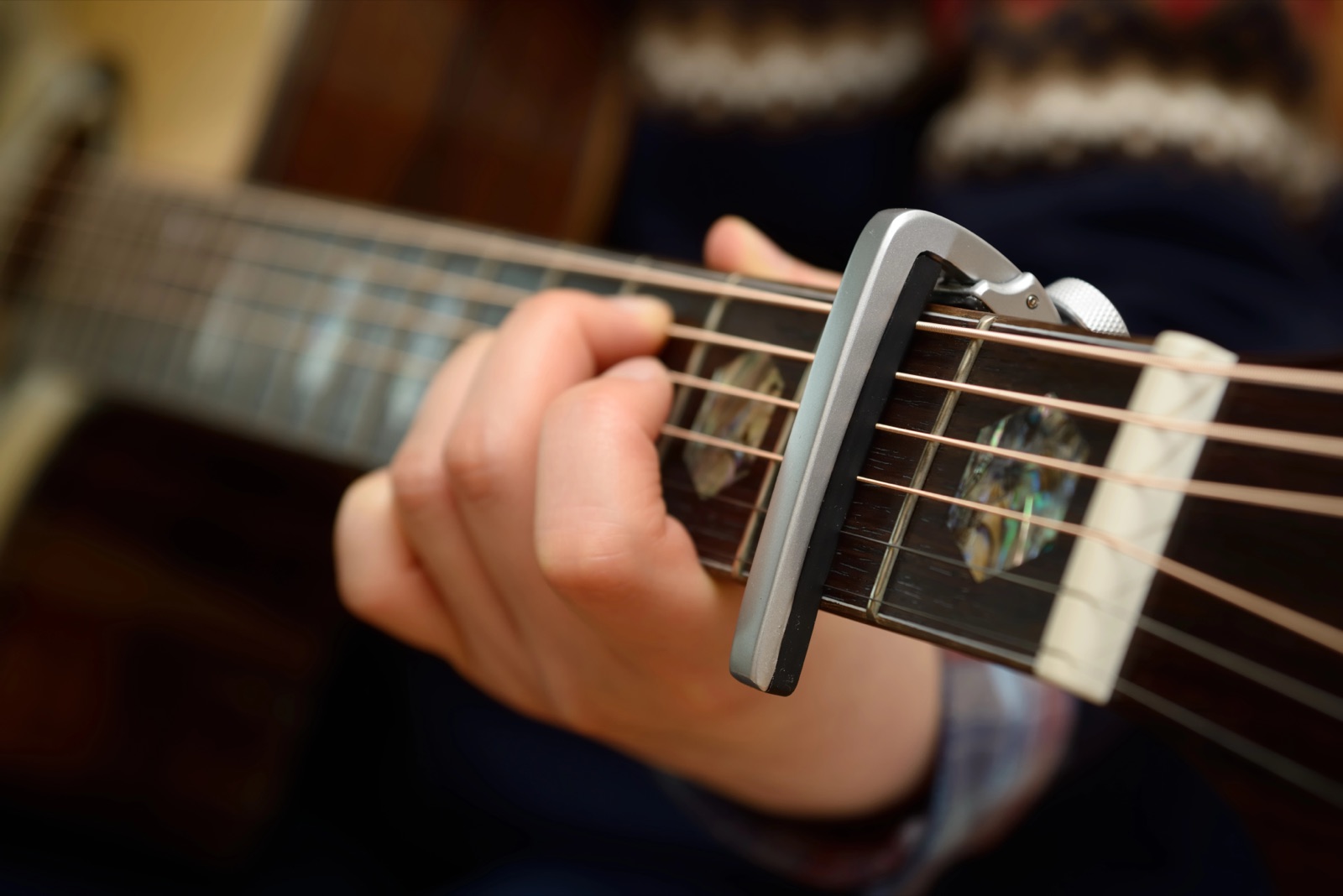
There are a few common mistakes beginners make when using a capo, and it is important to recognize and avoid them. One common mistake is placing the capo wrongly, for example too far from the fret or not straight across the strings. This can lead to distorted sounds or even strings that don’t ring properly.
Make sure you place the capo close to the fret and check that it is on firmly. Another mistake is not retuning the guitar after the capo is on. A capo can pull the strings slightly sharp, especially if it is too tight.
Don’t forget that every time you move the capo, you also need to check that your chords still sound right in the new key. If your guitar keeps sounding out of tune even without a capo, take a look at how to keep your guitar from going out of tune.
How do you maintain your capo so it lasts longer?
To make sure your capo lasts a long time, regular maintenance is essential. Clean the capo now and then to remove dirt and oil from your hands. This prevents buildup that can affect how it works.
Use a soft cloth for this and avoid harsh cleaning products that can damage the material. It is also important to check regularly for wear or damage to the capo. If you notice parts coming loose or the mechanism no longer working smoothly, consider replacing the capo.
A well-maintained capo will not only perform better, it will also contribute to a better sound while you play.
Alternative ways to change chords without a capo
Although a capo is a great tool, there are also alternative ways to change chords without using one. A popular technique is to use barre chords, where you press down several strings at once on the same fret with one finger. This can be challenging at first, but with practice you can make progress quickly. You can read how to approach them in learning barre chords for beginners.
Another option is to combine open chords with transposing. This means learning how to move chords to other keys by simply adjusting the fingering, without using a capo. This takes a bit more knowledge of music theory, but can ultimately give you more flexibility in your playing. A good start is understanding chord progressions.
By using these alternative techniques alongside a capo, you can develop your guitar skills further and get more control over how you make music. Whether you choose a capo or other methods, the most important thing is that you enjoy playing and keep experimenting with new sounds and styles.
If you are just starting out on guitar and looking for the best capos for beginners, it is also useful to know which songs you can play easily. A related article that can help with this is 10 easy country guitar songs for beginners. This article offers a list of songs that are perfect for beginners and that you can practice with your new capo. Combining the right accessories with accessible songs can greatly improve your guitar-playing experience. These easy songs with 3 chords also go well with a capo.
Frequently asked questions about capos for beginners
What is a capo and why would I use one?
A capo is a tool you place on the neck of your guitar to raise the pitch of the strings. This makes it easier to play chords in different keys without changing the fingering.
Which capos are best suited for beginners?
For beginners, capos with a simple design and easy operation are the best fit. Choose a capo that stays firmly on the neck of the guitar and is easy to move.
What are some popular capo brands for beginners?
Some popular capo brands for beginners are Kyser, Dunlop, Shubb and G7th. These brands offer affordable, good-quality capos that are suitable for beginners.
Do I need to consider the type of guitar when choosing a capo?
Yes, it is important to consider the type of guitar when choosing a capo. Some capos are designed specifically for classical guitars, acoustic guitars or electric guitars. Make sure you choose a capo that fits your type of guitar.
Which capo do you need for a classical guitar?
A classical guitar has a flat, wide fretboard. A curved capo for a steel-string acoustic doesn’t press all the strings down properly on it, so some strings start to buzz. Choose a flat capo instead, often sold as the classical version of the model.
Why does my guitar sound out of tune with a capo?
Usually the capo is too tight or too far from the fret, which pulls the strings slightly sharp. Place the capo right behind the fret, use no more pressure than needed, and retune once the capo is on.


Leave a Reply